Showing posts with label bailouts. Show all posts

Friday, September 21, 2012

Former FDIC Chair Bair: Bank Bailout Was ‘Overkill’

Moneynews:

The billions of taxpayer dollars spent to bailout big banks was largely unnecessary, according to Sheila Bair, former Federal Deposit Insurance Corp. chairwoman.

In an excerpt from her new book “Bull by the Horns: Fighting to Save Main Street From Wall Street and Wall Street From Itself,” which was published by Fortune, Bair writes “with the exception of Citi, the commercial banks' capital levels seemed to be adequate.”

“Without government aid some of them might have had to forgo bonuses and take losses for several quarters, but still, it seemed to me that they were strong enough to bumble through,” she writes.

That the U.S. government showered Wall Street with cash during the financial crisis as people were losing their homes and jobs continues to be a hot button issue. Many Americans blame the banks for the crisis and argue that Washington could have and should have done more for the people and less for those who created the problem.

Bair seems to agree and this is not a new position for her.

Last October, the San Francisco Chronicle reported that Bair spoke at the National Asian American Coalition conference about her disappointment that so little appears to have been done for the millions of homeowners still in distress.

“I wish I could say things have gotten better, but I don't see that they have. The loan programs are not doing what they need to. Part of the problem is a not very well-functioning mortgage services industry. The resources are not there. The training is not there. The commitment is not there,” the Chronicle quoted her as saying.

Consistent with that sentiment, Bair writes in the book, “We used up resources and political capital that could have been spent on other programs to help more Main Street Americans.”

She admits that there was a lot less information available when the bailout decision was made and that that uncertainty played a factor in how the situation was handled.

Still, she writes, “In retrospect the mammoth assistance to those big institutions seemed like overkill. I never saw a good analysis to back it up.”

Related:

Economist Schiff: QE3 is Coming and Will Worsen Our ‘Depression’

The Student Loan Debt Bubble Is Creating Millions Of Modern Day Serfs

Obama Blocking the Economic Recovery… And Stutistics: What the Media Is Not Telling you About Obama’s Unemployment Record

Why We Have No Budget and Why It Can’t Be Balanced

Obama’s Own Statements on His Vision and Beliefs… in Video

EPA Mandates Motorists Buy At Least 4 Gallons of Gas at Ethanol-15 Pumps

Friday, January 13, 2012

Audit of the Federal Reserve Reveals $16 Trillion in Secret Bailouts

This gives a new meaning to " gov’t. corruption"!!!!

No wonder they didn't want to be Audited..

Audit of the Federal Reserve Reveals $16 Trillion in Secret Bailouts - unelected.org - Click: The Silver Bear Cafe

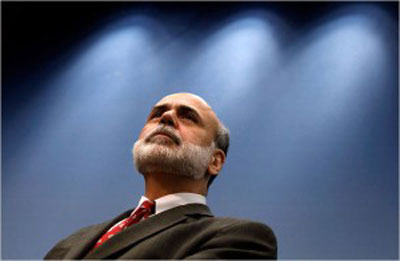
The first ever GAO (Government Accountability Office) audit of the Federal Reserve was carried out in the past few months due to the Ron Paul, Alan Grayson Amendment to the Dodd-Frank bill, which passed last year. Jim DeMint, a Republican Senator, and Bernie Sanders, an independent Senator, led the charge for a Federal Reserve audit in the Senate, but watered down the original language of the house bill (HR1207), so that a complete audit would not be carried out. Ben Bernanke(pictured to the right), Alan Greenspan, and various other bankers vehemently opposed the audit and lied to Congress about the effects an audit would have on markets. Nevertheless, the results of the first audit in the Federal Reserve’s nearly 100 year history were posted on Senator Sander’s webpage earlier this morning.

What was revealed in the audit was startling:

$16,000,000,000,000.00 had been secretly given out to US banks and corporations and foreign banks everywhere from France to Scotland. From the period between December 2007 and June 2010, the Federal Reserve had secretly bailed out many of the world’s banks, corporations, and governments. The Federal Reserve likes to refer to these secret bailouts as an all-inclusive loan program, but virtually none of the money has been returned and it was loaned out at 0% interest. Why the Federal Reserve had never been public about this or even informed the United States Congress about the $16 trillion dollar bailout is obvious - the American public would have been outraged to find out that the Federal Reserve bailed out foreign banks while Americans were struggling to find jobs.

To place $16 trillion into perspective, remember that GDP of the United States is only $14.12 trillion. The entire national debt of the United States government spanning its 200+ year history is "only" $14.5 trillion. The budget that is being debated so heavily in Congress and the Senate is "only" $3.5 trillion. Take all of the outrage and debate over the $1.5 trillion deficit into consideration, and swallow this Red pill: There was no debate about whether $16,000,000,000,000 would be given to failing banks and failing corporations around the world.

In late 2008, the TARP Bailout bill was passed and loans of $800 billion were given to failing banks and companies. That was a blatant lie considering the fact that Goldman Sachs alone received 814 billion dollars. As is turns out, the Federal Reserve donated $2.5 trillion to Citigroup, while Morgan Stanley received $2.04 trillion. The Royal Bank of Scotland and Deutsche Bank, a German bank, split about a trillion and numerous other banks received hefty chunks of the $16 trillion.

"This is a clear case of socialism for the rich and rugged, you’re-on-your-own individualism for everyone else." - Bernie Sanders (I-VT)

When you have conservative Republican stalwarts like Jim DeMint(R-SC) and Ron Paul(R-TX) as well as self identified Democratic socialists like Bernie Sanders all fighting against the Federal Reserve, you know that it is no longer an issue of Right versus Left. When you have every single member of the Republican Party in Congress and progressive Congressmen like Dennis Kucinich sponsoring a bill to audit the Federal Reserve, you realize that the Federal Reserve is an entity onto itself, which has no oversight and no accountability.

Americans should be swelled with anger and outrage at the abysmal state of affairs when an unelected group of bankers can create money out of thin air and give it out to megabanks and super-corporations like Halloween candy. If the Federal Reserve and the bankers who control it believe that they can continue to devalue the savings of Americans and continue to destroy the US economy, they will have to face the realization that their trillion dollar printing presses will eventually plunder the world economy.

The list of institutions that received the most money from the Federal Reserve can be found on page 131 of the GAO Audit and are as follows..

Citigroup: $2.5 trillion ($2,500,000,000,000)
Morgan Stanley: $2.04 trillion ($2,040,000,000,000)
Merrill Lynch: $1.949 trillion ($1,949,000,000,000)
Bank of America: $1.344 trillion ($1,344,000,000,000)
Barclays PLC (United Kingdom): $868 billion ($868,000,000,000)
Bear Sterns: $853 billion ($853,000,000,000)
Goldman Sachs: $814 billion ($814,000,000,000)
Royal Bank of Scotland (UK): $541 billion ($541,000,000,000)
JP Morgan Chase: $391 billion ($391,000,000,000)
Deutsche Bank (Germany): $354 billion ($354,000,000,000)
UBS (Switzerland): $287 billion ($287,000,000,000)
Credit Suisse (Switzerland): $262 billion ($262,000,000,000)
Lehman Brothers: $183 billion ($183,000,000,000)
Bank of Scotland (United Kingdom): $181 billion ($181,000,000,000)
BNP Paribas (France): $175 billion ($175,000,000,000)
and many many more including banks in Belgium of all places

View the 266-page GAO audit of the Federal Reserve(July 21st, 2011): http://www.scribd.com/doc/60553686/GAO-Fed-Investigation

Source: http://www.gao.gov/products/GAO-11-696
FULL PDF on GAO server: http://www.gao.gov/new.items/d11696.pdf
Senator Sander’s Article: http://sanders.senate.gov/newsroom/news/?id=9e2a4ea8-6e73-4be2-a753-62060dcbb3c3

Source: unelected.org  - Click: The Silver Bear Cafe

(The Motto of the Silver Bear Cafe is: "Serving up a heaping helping of the Truth, with a generous side of Common Sense")

Saturday, December 3, 2011

Have You Heard About The 16 Trillion Dollar Bailout The Federal Reserve Handed To The Too Big To Fail Banks?

The Daily Show With Jon Stewart Mon - Thurs 11p / 10c
America's Next TARP Model
www.thedailyshow.com
Daily Show Full Episodes Political Humor & Satire Blog The Daily Show on Facebook

Video:  America’s Next TARP Model – with Jon Stewart on the Daily Show

What you are about to read should absolutely astound you. During the last financial crisis, the Federal Reserve secretly conducted the biggest bailout in the history of the world, and the Fed fought in court for several years to keep it a secret.

Do you remember the TARP bailout? The American people were absolutely outraged that the federal government spent 700 billion dollars bailing out the "too big to fail" banks. Well, that bailout was pocket change compared to what the Federal Reserve did. As you will see documented below, the Federal Reserve actually handed more than 16 trillion dollars in nearly interest-free money to the "too big to fail" banks between 2007 and 2010. So have you heard about this on the nightly news? Probably not. Lately Bloomberg has been reporting on some of this, but even they are not giving people the whole picture. The American people need to be told about this 16 trillion dollar bailout, because it is a perfect example of why the Federal Reserve needs to be shut down. The Federal Reserve has been actively picking "winners" and "losers" in the financial system, and it turns out that the "friends" of the Fed always get bailed out and always end up among the "winners". This is not how a free market system is supposed to work.

According to the limited GAO audit of the Federal Reserve that was mandated by the Dodd-Frank Wall Street Reform and Consumer Protection Act, the grand total of all the secret bailouts conducted by the Federal Reserve during the last financial crisis comes to a whopping $16.1 trillion.

That is an astonishing amount of money.

Keep in mind that the GDP of the United States for the entire year of 2010 was only 14.58 trillion dollars.

The total U.S. national debt is only a bit above 15 trillion dollars right now.

So 16 trillion dollars is an almost inconceivable amount of money.

But some other dollar figures have been thrown around lately regarding these secret Federal Reserve bailouts. Let's take a look at them and see what they mean.

$1.2 Trillion

A recent Bloomberg article made the following statement....

The $1.2 trillion peak on Dec. 5, 2008 -- the combined outstanding balance under the seven programs tallied by Bloomberg -- was almost three times the size of the U.S. federal budget deficit that year and more than the total earnings of all federally insured banks in the U.S. for the decade through 2010, according to data compiled by Bloomberg.

The $1.2 trillion figure represents the peak outstanding balance on these loans, not the total amount of all the loans. On December 5, 2008 the "too big to fail" banks owed this much money to the Federal Reserve. Many of them could not pay these short-term loans back right away and had to keep rolling them over time after time. Each time a short-term loan got rolled over that represented a new loan.

$7.7 Trillion

Bloomberg is reporting that the Federal Reserve had made a total of $7.77 trillion in financial commitments to the big banks by the end of March 2009....

Add up guarantees and lending limits, and the Fed had committed $7.77 trillion as of March 2009 to rescuing the financial system, more than half the value of everything produced in the U.S. that year.

But as mentioned above, a one-time limited GAO audit of the Federal Reserve that was mandated by the Dodd-Frank Wall Street Reform and Consumer Protection Act covered an even broader time period and revealed even more bailout loans.

According to the GAO audit, $16.1 trillion in secret loans were made by the Federal Reserve between December 1, 2007 and July 21, 2010. The following list of firms and the amount of money that they received was taken directly from page 131 of the GAO audit report....

Citigroup - $2.513 trillion
Morgan Stanley - $2.041 trillion
Merrill Lynch - $1.949 trillion
Bank of America - $1.344 trillion
Barclays PLC - $868 billion
Bear Sterns - $853 billion
Goldman Sachs - $814 billion
Royal Bank of Scotland - $541 billion
JP Morgan Chase - $391 billion
Deutsche Bank - $354 billion
UBS - $287 billion
Credit Suisse - $262 billion
Lehman Brothers - $183 billion
Bank of Scotland - $181 billion
BNP Paribas - $175 billion
Wells Fargo - $159 billion
Dexia - $159 billion
Wachovia - $142 billion
Dresdner Bank - $135 billion
Societe Generale - $124 billion
"All Other Borrowers" - $2.639 trillion

This report was made available to all the members of Congress, but most of them have been totally silent about it. One of the only members of Congress that has said something has been U.S. Senator Bernie Sanders.

The following is an excerpt from a statement about this audit that was taken from the official website of Senator Sanders....

"As a result of this audit, we now know that the Federal Reserve provided more than $16 trillion in total financial assistance to some of the largest financial institutions and corporations in the United States and throughout the world"

So where is everyone else?

Why aren't leading Republicans and leading Democrats crying bloody murder over this report?

This scandal should have been front page news for months when it was revealed.

But it wasn't.

And Guess what?

Not only did the Federal Reserve give 16.1 trillion dollars in nearly interest-free loans to the "too big to fail" banks, the Fed also paid them over 600 million dollars to help run the emergency lending program. According to the GAO, the Federal Reserve shelled out an astounding $659.4 million in "fees" to the very financial institutions which caused the financial crisis in the first place.

In addition, it turns out that trillions of dollars of this bailout money actually went overseas. According to the GAO audit, approximately $3.08 trillion went to foreign banks in Europe and in Asia.

So why were our dollars being used to bail out foreign banks while tens of millions of American families were deeply suffering?

That is a very good question.

Also, it is important to remember that many of these bailout loans were made at below market interest rates, and this enabled many of these financial institutions to rake in huge profits.

According to a recent Bloomberg article, the big banks brought in an estimated $13 billion by taking advantage of the Fed’s below-market rates....

While the Fed’s last-resort lending programs generally charge above-market interest rates to deter routine borrowing, that practice sometimes flipped during the crisis. On Oct. 20, 2008, for example, the central bank agreed to make $113.3 billion of 28-day loans through its Term Auction Facility at a rate of 1.1 percent, according to a press release at the time.

The rate was less than a third of the 3.8 percent that banks were charging each other to make one-month loans on that day. Bank of America and Wachovia Corp. each got $15 billion of the 1.1 percent TAF loans, followed by Royal Bank of Scotland’s RBS Citizens NA unit with $10 billion, Fed data show.

So once the financial crisis was over, were adjustments made to the financial system to make sure that this type of thing would never happen again?

Of course not.

Today, the "too big to fail" banks are larger than ever. The total assets of the six largest U.S. banks increased by 39 percent between September 30, 2006 and September 30, 2011.

So now they are more "too big to fail" than ever.

But this is what happens when we allow unelected central bank bureaucrats to run our financial system.

Most Americans do not realize this, but the truth is that the Federal Reserve is not part of the government. In fact, it is about as "federal" as Federal Express is. The Federal Reserve has admitted that they are a privately owned institution in court many times, and you can see video of a Federal Reserve employee admitting that the Federal Reserve is privately owned right here.

The Federal Reserve is an out of control monster that is throwing around trillions of dollars whenever it wants to. Nobody should be allowed to do this. Nobody should be allowed to give bailouts to banks and corporations without the express permission of the U.S. Congress and the president of the United States.

This is a point that I made in my article yesterday. The Federal Reserve decided this week that it is going to provide "liquidity support" to Europe. If the American people do not like this move, that is just too bad. We do not get a say in the matter.

Are you starting to understand why I keep pushing the idea that it is time to shut down the Federal Reserve?

Please share this information about the secret 16 trillion dollar Federal Reserve bailout with your family and your friends.

If we can get enough people to wake up, perhaps there is still time to change the direction that this country is headed.

From the Economic Collapse Blog

Video: The Fed Grants $7.77 Trillion in Secret Bank Loan - Now Do You Understand Occupy Wall Street?

Kucinich bill seeks to end the Federal Reserve:

Kucinich bill seeks to end the Federal Reserve!
http://www.godlikeproductions.com/forum1/message1718844/pg1
Kucinich bill seeks to end the Federal Reserve
http://www.rawstory.com/rs/2011/12/01/kucinich-bill-seeks-to-end-the-federal-reserve/

Related:

WHAT THE HELL? The U.S. Secretly loaned 7.7 TRILLION To Banks Without Interest. Then Borrowed Back WITH Interest
http://www.godlikeproductions.com/forum1/message1718942/pg1

America's Next TARP Model
http://www.thedailyshow.com/watch/thu-december-1-2011/america-s-next-tarp-model

A Bloomberg report reveals that the U.S. government loaned banks $7.7 trillion in secret bailout funds at no interest and then borrowed the money back at interest.
Bloomberg reports 7.7 trillion in loans to big banks and Wall Street
http://reading-sage.blogspot.com/2011/11/bloomberg-reports-77-trillion-in-loans.html?m=1pg1

h/t to Jean Stoner

Thursday, October 27, 2011

Obama’s Student Loan Plan: Implements Limited Forgiveness and Some Other Changes

Excerpt: 

It is also a part of the plan that monthly payments be capped at a level of 10 percent of the money that left over when all taxes are paid and basic necessities taken care of. This cap has been at 15 percent, which takes a lot more money out of the pockets of citizens and out of the economy.

Understanding Obama Student Loan Forgiveness

President Barack Obama will undoubtedly be remembered for his healthcare reform legislation that was recently passed by Congress. However, there is another program that is much less well known that could affect far more people directly. This is the Obama student loan forgiveness program.

Under the terms of this program, anyone who makes his monthly payments for twenty years after leaving college is eligible to have his/her remaining balance forgiven. At least, this applies to anyone with Federal Direct loans, Stafford loans, and Perkins loans. Those who take out their loans from private lenders such as Sallie Mae are still responsible for repaying their loans in total.

Individuals who spend ten years in public service positions become eligible to have their loans forgiven at that point rather than having to wait the full twenty years. This means that their debt is forgiven in half the time and their debt reduced significantly sooner.

It is also a part of the plan that monthly payments be capped at a level of 10 percent of the money that left over when all taxes are paid and basic necessities taken care of. This cap has been at 15 percent, which takes a lot more money out of the pockets of citizens and out of the economy.

There are also programs in place that allow teachers to work for just five years in elementary or high schools that have been designated as low income schools by the Dept. Of Education. This applies to FFEL loans and to Direct loans.

Military personnel are also able to achieve forgiveness for their student loans if they have a degree. This program works for members of all five branches of service, including the Coast Guard and Reserves.

A final option is to apply for income based repayment terms. While it is probably best to sign up for this early in the life of the loan, older loans may still qualify for this lower payment plan. Of course, the clock starts all over when one signs up for this option. That means that someone who has worked in public service for eight years and signs up for income based repayment must work another ten years in public service instead of the two he/she would have had left.

Student loans are a fact of life for the vast majority of college graduates. This is especially true of those who go beyond a bachelor's degree and take graduate level classes. Sadly, the much higher pay they were promised if they pursued their education to its fullest has not materialized. The economic recession has made this fact even worse for most.

The Obama student loan forgiveness program is intended to help ensure that individuals do not wind up broke because they chose to continue their education. While nobody will see his/her loan just disappear overnight, payments have been lowered and the time shortened that one must pay before the remaining balance is forgiven. Public service workers and teachers are eligible for forgiveness at much faster rates due to the nature of their jobs.

Achieving Student Loan Forgiveness Through One’s Career

For those who wish to get their college degree but are not as financially stable to do so, student loans are definitely a great thing to have. However, the large interest rates of such as well as the length of time it takes to pay for them can make them a financial burden in the long run. This has been the trend until student loan forgiveness programs were introduced.

Some people might not know this fact, but it is actually possible to get a student loan forgiven. An effective way to do so is by getting a job that entitles one to avail of the opportunity to get the loans lessened up to a certain degree.

Here are some of the occupations one can take up and expect the possibility of loan forgiveness.

1. Volunteers - Some of the organizations in the community today can offer a student loan forgiveness opportunity for their volunteers. This is available in exchange for a specified length of time in service.

2. Military personnel - Aside from being able to serve the country, a military man also gets to avail of student loan repayment. However, this is limited to the Army and Air Force as well as their corresponding national guards. The Navy also offers this for its members.

3. Doctor or lawyer - Certified practitioners in both the legal and medical fields can choose from a variety of options to get their student loans forgiven as well. Since it takes up to a six-figure amount for them to finish their degree and be able to practice fully, forgiveness loans are definitely a blessing for them.

4. Teacher - Teaching is a profession greatly honored by the government considering how valuable education is. Because of this, complete loan forgiveness is also offered for those who teach in public elementary, middle and high schools.

Student loans that are set on an income-based repayment plan can take up a maximum of 25 years. This seems like a long time. However, someone who pays dutifully every month without missing a beat might be able to lessen the entire term of the loan.

Knowing all these, a student can take time to assess what college degree to take up and career to build. Of course, it is still very important to take note of what one really enjoys doing, but the financial part of the process is also something to think about in order to reach the ultimate state of financial stability.

White House officials said Obama will provide student loan relief in two ways:

First, he will accelerate a measure approved by Congress that reduces the maximum required payment on future student loans from 15 percent of discretionary income annually to 10 percent. The White House wants it to go into effect in 2012, instead of 2014. In addition, the White House says remaining debt would be forgiven after 20 years, instead of 25.

About 1.6 million borrowers could be affected.

Second, he will allow borrowers who have a current loan from the Federal Family Education Loan Program and a direct loan from the government to consolidate them into one loan. The consolidated loan would carry an interest rate of up to a half percentage point less than before. This could affect 5.8 million more borrowers.

Washington Posts Wonkblog: There is a Bush-Era Backstory on Obama’s ‘New’ Student Debt Proposal

The student debt relief proposal President Obama rolled out this morning isn’t exactly new. As I mentioned earlier today, it’s more of an adaptation: It lowers some existing caps on how much student borrowers have to pay back on their loans each year. Those caps are pegged to income, hence the name for the policy: Income-based repayment. Or, in education policy terms, IBR.

The Obama administration didn’t create IBR; instead, it inherited the policy from its predecessor. President George W. Bush signed the College Cost Reduction and Access Act in September 2007. The law allowed, among other things, for student borrowers to cap loan payments at 15 percent of income and for loan forgiveness after 25 years of payments. All those changes came into effect in July 2009.

Today’s proposal uses the same structure, but moves the goalposts: the cap for loan repayments gets dropped to 10 percent of income and loan forgiveness gets moved up to after 20 years of payments.

The nonprofit Project on Student Debt for years now has been an IBR advocate. It drafted much of the policy proposal that Bush signed in 2007 and that the Obama administration has now strengthened. I spoke this afternoon with the Project on Student Debt’s president, Lauren Asher, about the history of income-based repayment, what these new changes mean and why the new publicity push matters for student borrows. What follows is a transcript lightly edited for content and length:

Sarah Kliff: Tell me about the history of income-based loan repayment. How did the proposal come to be law?

Lauren Asher: We’ve been working on these issues since 2005. The idea of income-based repayment evolved out of an analysis we did, that looked at payment options for student loans. Students were really getting mixed messages from borrowers: Sometimes you’re encouraged to borrow because it’s a good investment; but on the other hand you’re warned not to borrow too much.

We came up with this proposal, which was a sliding scale that took into consideration how much the borrower is earning. We originally thought of it as regulatory, but then legislators got involved. Our original recommendation said that the loan forgiveness should be at 20 years.

SK: But it got set at 25 years. How did that happen?

LA: The way the law got written, the education secretary had the authority to set it up to 25 years, so that’s where it’s currently set.

SK: What does today’s announcement mean for the program? How much more expansive does it get?

LA: One of the most important things about this announcement is the administration is committing to help more borrowers find out about IBR. There’s an estimated half million enrolled right now, and millions more could benefit from the program.

There really needs to be more public outreach and education. So we’re really thrilled that the department is going to do that. If you talk to people at the Occupy Wall Street protests, or in your everyday life, you find they owe more than they ever have before.

SK: That’s interesting that you mention the publicity around the program as the key change here. How much do you think it matters that the administration is also lowering the caps for loan payments in the IBR program?

LA: We’re especially excited about the commitment to raise awareness about IBR. In a previous life I’ve worked on other policy issues. And when something is a new policy, it can take awhile to penetrate public consciousness. With student debt, there’s no time to waste.

That being said, the changes to payment will make the program even more affordable for current students. IBR is a light at the end of the tunnel, and the tunnel will be shorter and brighter with these changes.

It is time for those who are just in the decision mode about college or future careers to start a new discussion.  Everyone does not need to go to college.  And junior college and online courses are great options if you are going.  It is also time for those in the trades to start viable apprenticeship programs again.

Side Note from Tea Party Nation:

The Occupy movement has many goals. Many of them inconsistent with each other, but that is what happens when you smoke too much marijuana.

One thing mentioned by almost every one of the group is the demand that student loans be forgiven.

Let’s assume for a moment that could be done.  What would it mean?  While consistency is not one of the strong points of the Occupy movement, this would be the ultimate form of corporate welfare.

From the Frum Forum:

All colleges are corporate entities. (Harvard University is actually the oldest corporation in the United States.) Unlike most other entities treated as charities or considered government agencies, they derive most of their revenue from the sale of services–education and research–to paying customers. Only a handful of institutions, maybe 400 of the country’s 4,000 or so colleges and universities, have endowments large enough that they don’t have to watch the “bottom line” for every single project they undertake. Even some colleges with big endowments–Johns Hopkins comes to mind–are fixated on growing revenue and surplus (profit). Explicitly for-profit colleges are just a little more honest about their status as businesses.

If all student loans were to be forgiven, they would almost certainly have to be forgiven for those currently enrolled. Forgiveness, furthermore, would create a precedent that tuition for all colleges would be essentially free going forward. This would amount to an open-ended subsidy that would benefit many of America’s largest corporations (the universities themselves) forever.

Tuition costs would almost certainly rise significantly in any case as the individuals consuming education services (few of whom pay “sticker price” right now) would have no reason to even look at the costs assessed.

Interestingly a Rassmussen poll finds that 66% of Americans oppose student loan forgiveness. 

To forgive the estimated $1 trillion in student loans would mean the government would have to give banks $1 trillion dollars to cover that loss.

Where would that money come from?   The taxpayers, of course.  We have a national debt set to hit $16 trillion soon.  What are we going to do, borrow another trillion from China?

Forgiving the student loans also sends several terrible messages.  First it teaches people that fiscal discipline does not matter.  The student who borrowed $100,000 to land a $20,000 social work job and who spent half that money partying and going on spring break to Cancun, is treated the same as the engineering student who worked his way through school with no student loans and sacrificed to get his or her education.

The fiscal cost alone should sink this really bad idea.  What make much more sense, as I have indicated in previous blogs on Tea Party Nation is to change the bankruptcy code and make student loans dischargeable under Chapter 13 bankruptcy.  The obligor would still have to pay for a number of years and would pay some of the loan back so the taxpayer is not on the hook for the entire loan amount.  This is not a perfect solution but it would allow the person who owes student loans the opportunity to begin moving forward without the crushing debt load on their backs.  It would also mean they pay for part of the debt they incurred.

The size of student loan debt forgiveness will probably kill the idea.  But look for Obama and the Party of Treason to suggest it as part of a desperate reelection bid. 

*When polled 66% of the American people are against as student loan bailout.

New Book:  The Entitlement Trap: How to Rescue Your Child with a New Family System of Choosing, Earning, and Ownership

Ask Marion~

Tuesday, August 4, 2009

GM May Need More U.S. Job Cuts as Buyouts Fall Short

Aug. 3 (Bloomberg) -- General Motors Co.may have to cut more U.S. hourly jobs after an offer of buyouts and early retirements fell about 7,500 workers short of the reorganized automaker’s target.

The possibility of layoffs was disclosed today by Sherrie Childers Arb, a spokeswoman, in an interview after GM announced that more than 6,000 United Auto Workers members, or 11 percent of the hourly workforce, left the company on Aug. 1.

GM’s latest voluntary exits pushed the total of U.S. hourly workers leaving through buyouts and retirement offers to about 66,000 since 2006. The biggest domestic automaker is shrinking its workforce to match reductions including the shutdown of 14 U.S. plants and 3 warehouses by the end of 2011.

“It’s not surprising they didn’t reach their goal,” said Dennis Virag, president of Automotive Consulting Group Inc. in Ann Arbor, Michigan. With U.S. unemployment at 9.5 percent in June, “workers are more reluctant to accept a buyout because the prospects for other employment are more challenging.”

GM aims to eliminate 13,500 hourly positions in 2009, trimming that payroll to about 40,500 jobs, said Tom Wilkinson, a spokesman. Detroit-based GM began the year with about 61,000 U.S. hourly jobs and cut that total to about 54,000 at the end of April with buyouts and early retirements.

Moving Jobs

Any layoffs probably wouldn’t total 7,500, Childers Arb said. Some employees are likely to leave on their own or retire rather than relocate once GM shuffles work among its facilities, dropping jobs in some locations while keeping others, she said. GM hasn’t said where the job cuts will take place.

Hourly workers who took the buyout and retirement offers are receiving cash payments of $20,000 to $115,000 as well as $25,000 vehicle vouchers.

Chief Executive Officer Fritz Henderson is also paring the U.S. salaried workforce and chopping its eight domestic brands in half.

GM left a government-backed bankruptcy on July 10 as a new company whose largest shareholder is the U.S. Treasury. Losses at predecessor General Motors Corp. totaled $88 billion since the company last posted an annual profit in 2004.

To contact the reporter on this story: Katie Merx - in Southfield, Michigan, at kmerx@bloomberg.net

Source: Bloomberg.com

Posted: Daily Thought Pad

Friday, July 31, 2009

Senate Conservatives Update

Co-ops = Public Option = Single Payer

Knowing that Americans would reject the idea of a "single payer" government health care system, Democrats began calling their plan a "public option." Now that Americans have rejected that idea too, Democrats are peddling another proposal called health care "cooperatives."

Unfortunately, these federally-backed co-ops are nothing more than a public option by another name. Washington will set up and subsidize them so private health plans are squeezed out of the marketplace. Then, like Fannie Mae and Freddie Mac, the costs will catch up with these government-sponsored entities and Congress will tell us they are "too big to fail" and must be nationalized.

Some Democrats are willing to admit that co-ops are the same as a public option. Senate Majority Leader Harry Reid (D-NV) said earlier this month that, "We're going to have some type of public option, call it 'co-op,' call it what you want."
Some Democrats are also willing to admit that the public option is the same as a single payer system. Congressman Barney Frank (D-MA)

said this week that, "I think if we get a good public option it could lead to single payer, and that's the best way to reach single payer."

It's becoming clear that no matter what name Democrats put on it, all of their ideas lead to a government takeover of our health care.

Join the Recess Rally

At noon on Saturday, August 22, 2009, citizen rallies will take place outside congressional offices across the country. If you would like to participate, click

here to find your Congressman's local office and get more information.

Recess Rally

The latest government bailout

This week, the Senate moved beyond bailing out industries that it has driven into the ground to bailing out its own programs that it has failed to manage.

Proving once again that the federal government is incapable of managing the federal highway system, the Senate passed $7 billion to shore up the failing program. The bill also provides $7.5 billion to bail out the failing unemployment insurance program and $185 billion to bail out several government-managed home-ownership programs.

Only 17 Republicans had the courage to vote against this rip-off. Click here to see how your Senators voted.

Question: If the government cannot manage these programs, what makes anyone think it can manage our health care?

Wednesday, June 3, 2009

WHAT'S KEEPING OBAMA UP? - THE ULTIMATE REALIZATION THAT THE CURE WAS WORSE THAN THE DISEASE

The Rasmussen poll conducted over the weekend of May 30-31 asked a key question designed to give us perspective on Obama's current popularity. The question was whether the current problems "are due to the recession that began under the Bush administration or to the policies Obama has put in place since taking office." In other words, who's to blame, Bush or Obama?

(For now) By 62-27, voters say Bush is still the culprit.

As long as this opinion remains prevalent, Obama will continue to enjoy high popularity. But when it changes, as it inevitably must, we will see him begin a long, long fall.

And this is the key measurement to watch.

The real recession -- dating from the stock market collapse -- began four months before Bush left office. And it is now four months since Obama was inaugurated. From this vantage, it still looks to voters like Bush's recession.

But it will become increasingly obvious that the large deficit Obama has incurred while pursuing his cure for the recession is, on its own, causing more problems than it solves. As high interest rates and, most likely, inflation, begin to set in -- with no relief in unemployment -- it will be obvious that Obamanomics isn't working and is, in fact, aggravating the economic trouble.

Obama, recognizing the danger, has recently begun to speak out -- without even cracking a guilty smile -- against the huge budget deficit he created. He is trying to blame the deficit, too, on Bush. But voters will not overlook the huge spending sprees of January and February, when Obama quadrupled the 2009 deficit. They will come to see that spending as a huge mistake and will shift their blame to the new president who proposed it.

Obama now faces a choice of poisons.

He can leave taxes as they are and take the poison of high interest rates, rapid inflation and a new recession, all caused by the massive borrowing he has forced on the Treasury. If the Treasury cannot sell enough bonds at a reasonable interest rate, it will, of course "monetize the deficit" -- economics-speak for printing money so that there will be enough to buy the Treasury debt at moderate interest rates. But the process of so vastly expanding the money supply (or even just leaving the current expansion in place without trying to soak up the extra money) will cause its own runaway inflation.

Or Obama can break his pledge and raise taxes on everybody. His soak-the-rich approach will not be enough to cover the deficit. Especially when one factors in his healthcare proposals, big tax increases on the middle class become an increasing likelihood. And when we consider his cap-and-trade legislation, huge increases in utility rates also loom.

Either poison will make it clear that the economy is suffering from the medicine Obama administered, rather than the original disease that started under Bush.
And, of course, while we cannot predict precisely the start date of the Obama-generated misery, it's pretty clear that it will be a long-lasting pain. Neither inflation nor the pain of higher taxes is going to go away soon. And either approach will probably kindle a new recession.

Some economists think we will have an L-shaped recession from which we do not emerge for years and years. Others think it will be a W-shaped recession (not Bush's W) in which we emerge briefly and then go back down again. But a U-shaped recession, in which we go down and then come bouncing back, probably cannot happen with Obama's deficits now firmly in place. Then it will become clear that the cure was worse than the disease.

By: DickMorris – Dick’s new book: Catastrophe

Wednesday, March 18, 2009

Bankruptcy, Not Bailout

Newt Gingrich

by Newt Gingrich

"Outrage" is the word on everyone's lips to describe the fat bonuses being paid with taxpayer funds to the failed executives at AIG - and it is an outrage.

It's an outrage that the American people are being asked to pay for the bad behavior of people who should have known better, be they reckless traders on Wall Street or reckless borrowers on Main Street.

But the cure for our outrage is not merely, as President Obama is demanding, that AIG be prevented from paying its executives. The $165 million in planned bonuses - as manifestly undeserved as it is - is chicken feed compared to the $170 billion in taxpayer funds AIG has received so far.

Nor is it acceptable to ask Americans to keep throwing their tax dollars at failed companies and their leaders.
The answer is an old fashioned one: AIG should choose between receivership or bankruptcy. It should not be allowed to choose more bailouts from the taxpayer.

Restore the Rule of Law: Allow Failing Corporations to go Bankrupt

Under U.S. law, Chapter 11 bankruptcy allows a company to reorganize. Chapter 7 allows a company to dissolve itself.

The choices for AIG, as both an insurance and non-insurance company, are more complicated, but ultimately boil down to the same options. And for other companies either receiving or looking to receive a bailout from the taxpayers, the option should instead be bankruptcy.

Bankruptcy would send a needed message to U.S. investors: Don't assume the government will bail you out when you do something stupid.

And most importantly, bankruptcy would replace the rule of politicians over U.S. financial institutions with the rule of law.

Geithner Didn't Inherit the Policy of Throwing Billions at Failing Companies - He Helped Create It

Because when it comes to Washington's handling of the financial crisis, so far we've had the rule of politicians, not the rule of law.
Most prominent among the politicians in question is Treasury Secretary Timothy Geithner.

As Americans' level of outraged has risen, so has the level of finger pointing by Geithner and others for the mess we're in.

But Treasury Secretary Geithner is disingenuous at best and untruthful at worst when he says that he "inherited the worst fiscal situation in American history."

The truth is that Secretary Geithner didn't inherit the policy of throwing billions of taxpayer dollars at failing companies - he helped create it.

Even before he was Treasury Secretary - when he was still head of the New York Federal Reserve - Geithner was so deeply involved in the government's bail out of Bear Stearns, its take over of Fannie Mae and Freddie Mac, and its bailout of AIG that this was the Washington Post's headline from September 19, 2008:
"In the Crucible of Crisis, Paulson, Bernanke and Geithner Forge a Committee of Three".

The first meeting of the first bailout - of Bear Stearns - was held in Geithner's office. And the first meeting of what has become a $170 billion bailout of AIG was held - where else? In Geithner's New York Fed office.

Why Not Bankruptcy for AIG? Because Wall Street Wouldn't Have Done As Well

From the outset, Geithner was central to the developing policy of having the taxpayers bail out ailing financial institutions like AIG rather then allow them to go bankrupt. And for months now, we've been told that these bailouts were necessary to avoid a wider, cataclysmic, financial meltdown.

But now it's clear that other, less noble, considerations were at play.
As the Wall Street Journal editorialized yesterday, the real outrage over the AIG bailout isn't executive bonuses, it's that billions in taxpayer funds intended for AIG have been passed through to benefit foreign banks and Wall Street behemoths like Goldman Sachs.

And as former AIG CEO Hank Greenburg testified last October, these financial institutions wouldn't have faired as well if AIG had filed for bankruptcy protection rather than do what it did, which was to negotiate a bailout with Timothy Geithner's New York Federal Reserve.

Here's how Greenburg put it:
"Although AIG stockholders could have fared better if the company had filed for bankruptcy protection, other stakeholders - like AIG's Wall Street counterparties in swaps and other transactions - would have fared worse."

For the Cost of Bailing Out AIG, Every American Household Could Have Free Electricity For a Year

So now everyone is outraged, and rightly so. But the lavish executive bonuses being paid with taxpayer funds are just the beginning of the story.

So far, the American taxpayers are on the hook for $170 billion to AIG - that's an astounding $1,224 per taxpayer.

What else could we have done with all this money?

$170 billion would pay for more than doubling the Navy's fleet of aircraft carriers.

$170 billion would pay for a four-year education at a public university for more then two million Americans.

$170 billion would cover the electricity bill of every household in America for an entire year.

When You Reward Failure, All You Get is More Failure

What Washington should learn from all this outrage is to return to the common sense that should have guided it all along: When you reward failure, all you get it more failure.

A company that needs a $170 billion taxpayer bailout is a failed company. The executives that led that company are failed executives. But instead of having to face the consequences of their failure responsibly through bankruptcy or receivership, AIG and its Wall Street "counterparties" are being rewarded for their recklessness - with our money.

Thanks to the Bush-Obama-Geithner policy of bailing out failing companies, we now have the worst of all possible scenarios: A taxpayer subsidized, government supervised private company; an unsustainable public/private hybrid that is too public to make its own decisions and too private to be responsible to the taxpayers that are keeping it alive.

Outrages like the fat cat bonuses currently dominating the headlines will only continue as long as the rule of politicians supplants the rule of law on Wall Street.

Congress should rethink this entire process. The dangers of a domino-like financial meltdown are real. But so, too, is the danger that the outrage of the American people will reach the point that we no longer trust the dire warnings - or the righteous indignation - coming from Washington.

  Your friend,
Newt Gingrich
   Newt Gingrich

P.S. -- Historian William Forstchen and I have collaborated on many different works of historical fiction. I'm proud to announce that Bill has a new novel out, called One Second After. It's a fascinating and disturbing account of what America would be like in the aftermath of an electro magnetic pulse (EMP) attack. Like everything Bill does, One Second After expertly combines human drama and geopolitical reality for a fictional look at what could be an all-too-real future.

Related Articles:  Obama's Attack on Medical Civil Liberties

Sunday, September 28, 2008

Thought For The Day - 9.29.08

“In Major Crisis, It Seems To Be The Little Guy That Gets Hit the Worst, Therefore, Unfortunately, It Is Up To The Little Guy To Watch Out For Himself!”

(Renters are often the ones left hanging in the middle in foreclosure proceedings and there are no signs to believe that will change.)

With the current wave of foreclosures that has swept the country, that we hope will diminish after the recently announced bailouts, many renters are finding themselves in the middle between lenders and their landlord; who is now the foreclosed on owner. They are finding themselves homeless, like the Smiths, after their cash-strapped landlord stopped making mortgage payments or could 

only make partial payments and their houses, condos, townhouses or apartment buildings were foreclosed upon, even though they have been making their monthly rent payments. 


The California Apartment Association, the state's largest organization of rental property owners, reported that nearly one quarter of all foreclosed single-family residences are renter occupied. And the number of renters trapped in the foreclosure debacle in duplexes and other multi-unit buildings is considerably higher. Total California foreclosures of single-family homes statewide rose more than 400 percent to a record 31,676 in the fourth quarter of 2007 from a year earlier and has been rising ever since.

The Smiths received notice last month, when a Trustee Sale Notice was posted on the front door of their townhouse, after their landlord had missed 6-months of mortgage payments and the property was foreclosed upon. And this seems to be the way most tenants are getting their notifications; inciting a sense of panic and feelings of insult, betrayal and lack of control.

For many people, this can mean even steeper rents on the horizon because the wave of foreclosures has created greater demand in the rental housing market -- a blessing to landlords who are not having foreclosure problems, but also leaves the door open for some gauging. And invariably, these situations mean a total loss of deposits paid by renters, so it is generally suggested that renters stop paying rent as soon as they are made aware of foreclosure proceedings and definitely upon notice of an impending sale. 


State and local officials say many evictions could be avoided or at least made less painful if people knew the legal protections available to them. However, few owners, lenders and property managers make such information available during the eviction process, and often cause renters to move before they have to without a penny… no deposit refunds, no months of free rent to counter balance their loss of deposits and no assistance check from the bank.
  So renters beware!


This entire experience can be terrifying!! "It's something a number of jurisdictions have been discussing because it's a growing problem.", says Michaelyn Jones, general counsel to the Santa Monica Rent Control Agency, which oversees some of California's toughest rent-control rules. 


Many foreclosed properties were purchased by real-estate speculators or novice investors taking advantage of dirt-cheap loans and rising property values, who subsequently rented them to tenants before falling behind on mortgage payments. Plus now there is a newly reported scam whereby some owners, knowing they are on the road to pending foreclosure are renting their properties anyway or again, right before the Trustee Sale, and then vanishing with what can be a tidy sum, including as much as first and last month's rent, a security deposit and sometimes additional cleaning or pet deposits; leaving renters holding the proverbial bag and having to move again.

Some tenants don't find out that they have to move until they receive a letter from the bank or lender, that has taken the property back, or from the new owner after the Trustee Sale, either in letter form or by a representative showing up at their door, which sometimes includes the offer of an "assistance check" varying in amount from $1000 to $2500, to vacate quickly. In many cases it is to the renters' benefit to accept this assistance check, which usually includes a warning like: "Please keep in mind that the eviction process has started".

Offering financial inducements is a common practice when renters are being pressed to vacate a foreclosed-upon property, but there are several factors to weigh. It's called "Cash 4 Keys" and can involve payments of up to $2,500, ostensibly to help a tenant resettle but also to get him or her to waive any claims to the rental property. However in the wake rising foreclosures and rising rents, in many areas you now have 60-days from the day you receive official notification to vacate before having to be out or before eviction procedures can begin, giving you 2+ months of rent free living. So you need to weigh the value of two free months of rent against the amount of the assistance check being offered. And if you have an active lease in place, that lease could have to be honored. Be sure to check with Renters Rights and give your options some thought before the representative appears on your doorstep. Also, if your property has been purchased by a new owner, be sure to ask if you can stay on as a renter. 


The Smiths were told that if they didn't agree to the assistance money deal right away, their resettlement amount would be slashed in half from the original offer within a week and then to third a week after that. Then it would drop to nothing, and they'd still have to move out within 30-days. Sometimes the money reduction is enforced and sometimes not. If they really want you out, they will work with you and you could still get the original offer, but it is a gamble.


Also be wary of your previous landlord trying to collect rent, present or past, (before or after the trustee sale) or asking for a share in the moving assistance money. Once they have lost title to the property, they have no claim or rights to anything involving their former property.  However, some owners who know they are going to lose their property will give their tenants notice to move before the Trustee Sale, stating other reasons, so that they can then try and collect the assistance check, as if they had lived there themselves.  In some states owners have a very short time to be out and in others they have up to 6-months, but in almost all states, owners occupying their properties are offered larger inducements to get out than renters.


State officials have said that under
California law, existing rental agreements are essentially wiped out when a property is foreclosed upon, but changes and amendments have and are being made daily, so keep checking. A few months ago renters occupying a foreclosed property only had 30 days' notice before being evicted; now they have 60. And those officials also said state law can be trumped by local rent-control statutes, which often provide tenants with more far-reaching protections. These "just cause" provisions of many municipal rent-control laws limit the ability of landlords to evict tenants, even those on month-to-month leases. They also include cases in situations when ownership of a property changes hands, such as a foreclosure.  So make sure to check both your state and local statutes as well as with Renters Rights type of organizations in your area, before making any final decisions, because in these trying times the laws and statutes are continuously changing, and the people representing the new or old owner of your property or representing the bank or mortgage company that has taken the loan on property back, if it didn’t sell, will not necessarily tell you the full truth, and sometimes don’t know the latest changes themselves.  Plus their focus or job is not to represent you.


However, not all "just cause" provisions are created equal. Some require that a tenant occupy a property for at least two years before an eviction notice is served. Others allow an eviction to proceed if the landlord plans to remove the property from the rental market or have a relative move in. And, not all rental properties may fall under a city's rent-control protections, allowing state law to apply. 


But anyone receiving a notice from a bank or property manager, which is often an assigned realtor, saying their rented home has been foreclosed on should contact City Hall and ask about rent-control rules that may exist in your area and whether your particular property is protected as well as checking with Renters Rights. Then ask the bank or property manager to specify the legal grounds for the eviction. If nothing else, this could result in a more generous offer of payout to get you moving or a little more time even with compensation.

And remember, do your homework and always get everything in writing!!!

How the federal bailout of the financial services industry will affect distressed homeowners remains unclear at this point.  Unidentified government officials said the administration has agreed to include some homeowner protections against foreclosures, which will hopefully reduce the numbers, but that won’t help renters when there are foreclosure situations.  Renters are often the ones left hanging in the middle in foreclosure proceedings and there are no signs to believe that will change with the bailout.