Showing posts with label bailout politics. Show all posts

Friday, September 21, 2012

Former FDIC Chair Bair: Bank Bailout Was ‘Overkill’

Moneynews:

The billions of taxpayer dollars spent to bailout big banks was largely unnecessary, according to Sheila Bair, former Federal Deposit Insurance Corp. chairwoman.

In an excerpt from her new book “Bull by the Horns: Fighting to Save Main Street From Wall Street and Wall Street From Itself,” which was published by Fortune, Bair writes “with the exception of Citi, the commercial banks' capital levels seemed to be adequate.”

“Without government aid some of them might have had to forgo bonuses and take losses for several quarters, but still, it seemed to me that they were strong enough to bumble through,” she writes.

That the U.S. government showered Wall Street with cash during the financial crisis as people were losing their homes and jobs continues to be a hot button issue. Many Americans blame the banks for the crisis and argue that Washington could have and should have done more for the people and less for those who created the problem.

Bair seems to agree and this is not a new position for her.

Last October, the San Francisco Chronicle reported that Bair spoke at the National Asian American Coalition conference about her disappointment that so little appears to have been done for the millions of homeowners still in distress.

“I wish I could say things have gotten better, but I don't see that they have. The loan programs are not doing what they need to. Part of the problem is a not very well-functioning mortgage services industry. The resources are not there. The training is not there. The commitment is not there,” the Chronicle quoted her as saying.

Consistent with that sentiment, Bair writes in the book, “We used up resources and political capital that could have been spent on other programs to help more Main Street Americans.”

She admits that there was a lot less information available when the bailout decision was made and that that uncertainty played a factor in how the situation was handled.

Still, she writes, “In retrospect the mammoth assistance to those big institutions seemed like overkill. I never saw a good analysis to back it up.”

Related:

Economist Schiff: QE3 is Coming and Will Worsen Our ‘Depression’

The Student Loan Debt Bubble Is Creating Millions Of Modern Day Serfs

Obama Blocking the Economic Recovery… And Stutistics: What the Media Is Not Telling you About Obama’s Unemployment Record

Why We Have No Budget and Why It Can’t Be Balanced

Obama’s Own Statements on His Vision and Beliefs… in Video

EPA Mandates Motorists Buy At Least 4 Gallons of Gas at Ethanol-15 Pumps

Friday, January 13, 2012

Audit of the Federal Reserve Reveals $16 Trillion in Secret Bailouts

This gives a new meaning to " gov’t. corruption"!!!!

No wonder they didn't want to be Audited..

Audit of the Federal Reserve Reveals $16 Trillion in Secret Bailouts - unelected.org - Click: The Silver Bear Cafe

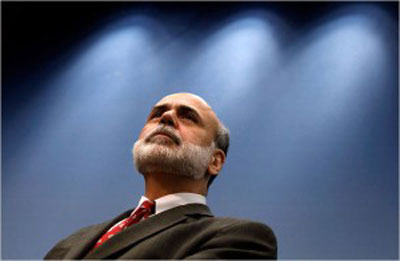
The first ever GAO (Government Accountability Office) audit of the Federal Reserve was carried out in the past few months due to the Ron Paul, Alan Grayson Amendment to the Dodd-Frank bill, which passed last year. Jim DeMint, a Republican Senator, and Bernie Sanders, an independent Senator, led the charge for a Federal Reserve audit in the Senate, but watered down the original language of the house bill (HR1207), so that a complete audit would not be carried out. Ben Bernanke(pictured to the right), Alan Greenspan, and various other bankers vehemently opposed the audit and lied to Congress about the effects an audit would have on markets. Nevertheless, the results of the first audit in the Federal Reserve’s nearly 100 year history were posted on Senator Sander’s webpage earlier this morning.

What was revealed in the audit was startling:

$16,000,000,000,000.00 had been secretly given out to US banks and corporations and foreign banks everywhere from France to Scotland. From the period between December 2007 and June 2010, the Federal Reserve had secretly bailed out many of the world’s banks, corporations, and governments. The Federal Reserve likes to refer to these secret bailouts as an all-inclusive loan program, but virtually none of the money has been returned and it was loaned out at 0% interest. Why the Federal Reserve had never been public about this or even informed the United States Congress about the $16 trillion dollar bailout is obvious - the American public would have been outraged to find out that the Federal Reserve bailed out foreign banks while Americans were struggling to find jobs.

To place $16 trillion into perspective, remember that GDP of the United States is only $14.12 trillion. The entire national debt of the United States government spanning its 200+ year history is "only" $14.5 trillion. The budget that is being debated so heavily in Congress and the Senate is "only" $3.5 trillion. Take all of the outrage and debate over the $1.5 trillion deficit into consideration, and swallow this Red pill: There was no debate about whether $16,000,000,000,000 would be given to failing banks and failing corporations around the world.

In late 2008, the TARP Bailout bill was passed and loans of $800 billion were given to failing banks and companies. That was a blatant lie considering the fact that Goldman Sachs alone received 814 billion dollars. As is turns out, the Federal Reserve donated $2.5 trillion to Citigroup, while Morgan Stanley received $2.04 trillion. The Royal Bank of Scotland and Deutsche Bank, a German bank, split about a trillion and numerous other banks received hefty chunks of the $16 trillion.

"This is a clear case of socialism for the rich and rugged, you’re-on-your-own individualism for everyone else." - Bernie Sanders (I-VT)

When you have conservative Republican stalwarts like Jim DeMint(R-SC) and Ron Paul(R-TX) as well as self identified Democratic socialists like Bernie Sanders all fighting against the Federal Reserve, you know that it is no longer an issue of Right versus Left. When you have every single member of the Republican Party in Congress and progressive Congressmen like Dennis Kucinich sponsoring a bill to audit the Federal Reserve, you realize that the Federal Reserve is an entity onto itself, which has no oversight and no accountability.

Americans should be swelled with anger and outrage at the abysmal state of affairs when an unelected group of bankers can create money out of thin air and give it out to megabanks and super-corporations like Halloween candy. If the Federal Reserve and the bankers who control it believe that they can continue to devalue the savings of Americans and continue to destroy the US economy, they will have to face the realization that their trillion dollar printing presses will eventually plunder the world economy.

The list of institutions that received the most money from the Federal Reserve can be found on page 131 of the GAO Audit and are as follows..

Citigroup: $2.5 trillion ($2,500,000,000,000)
Morgan Stanley: $2.04 trillion ($2,040,000,000,000)
Merrill Lynch: $1.949 trillion ($1,949,000,000,000)
Bank of America: $1.344 trillion ($1,344,000,000,000)
Barclays PLC (United Kingdom): $868 billion ($868,000,000,000)
Bear Sterns: $853 billion ($853,000,000,000)
Goldman Sachs: $814 billion ($814,000,000,000)
Royal Bank of Scotland (UK): $541 billion ($541,000,000,000)
JP Morgan Chase: $391 billion ($391,000,000,000)
Deutsche Bank (Germany): $354 billion ($354,000,000,000)
UBS (Switzerland): $287 billion ($287,000,000,000)
Credit Suisse (Switzerland): $262 billion ($262,000,000,000)
Lehman Brothers: $183 billion ($183,000,000,000)
Bank of Scotland (United Kingdom): $181 billion ($181,000,000,000)
BNP Paribas (France): $175 billion ($175,000,000,000)
and many many more including banks in Belgium of all places

View the 266-page GAO audit of the Federal Reserve(July 21st, 2011): http://www.scribd.com/doc/60553686/GAO-Fed-Investigation

Source: http://www.gao.gov/products/GAO-11-696
FULL PDF on GAO server: http://www.gao.gov/new.items/d11696.pdf
Senator Sander’s Article: http://sanders.senate.gov/newsroom/news/?id=9e2a4ea8-6e73-4be2-a753-62060dcbb3c3

Source: unelected.org  - Click: The Silver Bear Cafe

(The Motto of the Silver Bear Cafe is: "Serving up a heaping helping of the Truth, with a generous side of Common Sense")

Saturday, March 28, 2009

Forrest Gump Explains The Banking Mess

Mortgage Backed Securities are like boxes of chocolates. Criminals on Wall Street stole a few chocolates from the boxes and replaced them with turds. Their criminal buddies at Standard & Poor rated these boxes AAA Investment Grade chocolates. These boxes were then sold all over the world to investors. Eventually somebody bites into a turd and discovers the crime. Suddenly nobody trusts American chocolates anymore worldwide.

Hank Paulson now wants the American taxpayers to buy up and hold all these boxes of turd-infested chocolates for $700 billion dollars until the market for turds returns to normal. Meanwhile, Hank’s buddies, the Wall Street criminals who stole all the good chocolates are not being investigated, arrested, or indicted.

Mama always said: ‘Sniff the chocolates first, Forrest’.

Quote of the day from a fund manager:

“This is worse than a divorce… I’ve lost half of my net worth and I still have my wife…”

The bailout–a different perspective:

Back in 1990, the Government seized the Mustang Ranch brothel in Nevada for tax evasion and, as required by law, tried to run it. They failed and it closed. Now we are trusting the economy of our country to a pack of nit-wits who couldn’t make money running a whore house and selling booze?

Posted in Banking, Nationalization, politics at 9:11 am by Administrator - 01.20.09

Permalink

Wednesday, October 8, 2008

A Rising Tide of 'UnderWater' Homeowners & John McCain's Plan

Image: Foreclosed homes

"It is very possible that there will ultimately be more homeowners underwater in this period than any time in our history," says Mark Zandi, chief economist for Moody's Economy.com.   

Justin Sullivan / Getty Images file

 Do Facts Matter?

ACORN, Obama and the Present Mortgage Mess

Pollsters facing election's perfect storm

A rising tide of ‘underwater’ homeowners

No bottom to stock market clearly in sight

Palin's family ties include FDR, Princess Diana

Bailout Politics

New bailout czar doesn’t want prodigy label

No bottom to stock market clearly in sight

Fed rate cuts 101:  What they can, and can’t do

Nearly 1 in 6 homeowners is ‘underwater’

Global rate cut does little to calm markets

U.S. Fed leads round of global rate cuts

Forecasters see U.S. leading global downturn

updated 2:58 p.m. PT, Wed., Oct. 8, 2008

The relentless slide in home prices has left nearly one in six U.S. homeowners owing more on a mortgage than the home is worth, raising the possibility of a rise in defaults — the very misfortune that touched off the credit crisis last year.

The result of homeowners being "underwater" is more pressure on an economy that is already in a downturn. No longer having equity in their homes makes people feel less rich and thus less inclined to shop at the mall.

And having more homeowners underwater is likely to mean more eventual foreclosures, because it is hard for borrowers in financial trouble to refinance or sell their homes and pay off their mortgage if their debt exceeds the home's value. A foreclosed home, in turn, tends to lower the value of other homes in its neighborhood.

About 75.5 million U.S. households own the homes they live in. After a housing slump that has pushed values down 30 percent in some areas, roughly 12 million households, or 16 percent, owe more than their homes are worth, according to Moody's Economy.com.

The comparable figures were roughly 4 percent underwater in 2006 and 6 percent last year, says the firm's chief economist, Mark Zandi, who adds that "it is very possible that there will ultimately be more homeowners underwater in this period than any time in our history."

Among people who bought within the past five years, it's worse: 29 percent are underwater on their mortgages, according to an estimate by real-estate Web site Zillow.com.

Bailout may help homeowners a little
The majority of homeowners still have equity, and even among those who don't, many continue to make their mortgage payments on time. The financial-bailout legislation could at least "keep things from getting much worse" by helping banks avoid the need to tighten credit further, says Celia Chen, director of housing economics at Economy.com. Still, she expects housing credit to remain tight and home prices to decline in much of the country for another year or so.

Prices are back to 2003 levels in the San Diego and Boston metropolitan areas, and back to 2004 levels in Las Vegas, Los Angeles, San Francisco, Fort Lauderdale, Fla., and Minneapolis, according to First American CoreLogic, a data firm in Santa Ana, Calif.

A sign is posted in front of a bank owned home that is for sale in Richmond, California.

Stephanie and Jason Kirschenman thought they were being prudent when they agreed in late 2004 to buy a new four-bedroom home in Lodi, Calif., for $458,000. They put a substantial 20 percent down and chose a loan with a fixed interest rate for the first 10 years. Two years later, they took out a second mortgage to pay off some bills.

At the time, the home was appraised for about $550,000. But a mortgage broker recently estimated its value at well below the $380,000 the family owes on it, says Ms. Kirschenman. "We were quite shocked," she says.

Cracked foundation graphic
History isn't about to repeat itself
Words to calm the woozy investor
Bailout includes key tax breaks

The Kirschenmans, who both work for a company that makes trailer hitches, thought about sending the keys to the lender. But their financial planner, Christopher Olsen, helped persuade them to stick with the house, noting that they could still afford the payments.

Others aren't so lucky. Among mortgages on one- to four-family homes, 9.16 percent were a month or more overdue or were in foreclosure in the second quarter, according to the Mortgage Bankers Association. That compared with 6.52 percent a year before and was the highest level since the association began such surveys 39 years ago.

Falling values have contributed to a sharp pullback in mortgage lending. In the third quarter, mortgage lending fell to the lowest level in eight years — down 44 percent in a year — says the publication Inside Mortgage Finance.

One reason is that as home values slip, growing numbers of would-be borrowers lack sufficient equity to refinance. The falling values also make mortgage lending look riskier to banks, spurring them to tighten credit standards.

Most mortgages in default were issued in 2006 and 2007, when lending standards were loosest and the housing market was peaking. Many who bought then made small down payments or none, so they had little equity in their homes from the start.

The performance of loans made earlier is getting worse, too, as price declines deplete the equity people built up. In Las Vegas, 6 percent of home loans made in 2004 are now 30 days or more overdue, up from 3.7 percent a year earlier, according to research firm LPS Applied Analytics.

In July, Congress enacted legislation designed to help borrowers who owe more than their homes are worth by allowing them to refinance into a government-backed loan, provided their mortgage company forgives part of their principal. It's not clear how many borrowers the program will help, because before reducing the principal, lenders would almost always try first to freeze or reduce borrowers' interest rate to make payments more affordable, says Tom Deutsch, deputy executive director of the American Securitization Forum, an industry group.

In contrast with the 12 million home borrowers estimated to be underwater, 64 million have equity in their homes. These include 24 million households who own their homes free and clear, and 40 million whose homes remain worth more than is owed on them.

Even so, some borrowers fret that declining prices and tighter lending standards could make it hard for them to tap their equity.

Steven Schneider, a mortgage broker in Miami, bought his home at the end of 1992. When he refinanced about four years ago, he pulled out $150,000 in cash that he intended to use to build an addition. The transaction raised his total debt to about $350,000, at a time when his home had a value of about $650,000.

Recently, Mr. Schneider pulled out roughly $90,000 by tapping a home-equity line of credit. He says he put the funds in a money-market account that yields less than the 5 percent interest rate on the loan. "I was afraid they were going to shut down" access to the credit line, says Mr. Schneider. He figures his home, once valued at $750,000, now is worth about $600,000.

Pain varies from place to place
How much pain homeowners feel varies greatly from place to place. The most severe drops in home values are in parts of California, Florida, Nevada, Arizona and other areas where speculation pushed prices up and builders far overestimated demand.

Within metro areas, neighborhoods with short commutes are holding up better than others. And in many parts of Texas and North Carolina, home prices have continued to rise slowly, have leveled off or have declined only modestly.

On a national basis, home prices peaked in mid-2006 after rising 86 percent since January 2000, according to the First American index. Since peaking, that index has fallen 13 percent.

The declines have made homes more affordable, bringing prices in many areas closer to their long-term relationship to incomes. In the second quarter, the median home price of about $203,000 was 1.9 times average pretax household income, according to Economy.com. That was close to 1.87 times income for 1985 through 2000, prior to the housing boom.

Housing markets don't tend to turn around quickly. The price slump in California in the early 1990s, for instance, was a long grind. According to the S&P/Case-Shiller home-price indexes, Los Angeles prices peaked in June 1990 and didn't bottom until March 1996. They didn't get back to their 1990 peak until 2000.

By James R. Hagerty and Ruth Simon

Letter From John McCain

My Friends,


Millions of Americans on Main Street are feeling the effects of our current economic crisis largely brought on by corruption and greed at Fannie Mae, Freddie Mac and Wall Street. Our next president must come into office with a plan to address the very root the failing housing market.


Last night, during my debate with Senator Obama, I announced my plan to fix the root of our problem and I'd like to share a little more with you today.


If elected president, I will direct my Treasury Secretary to implement an American Homeownership Resurgence Plan to keep families in their homes, avoid foreclosures, save failing neighborhoods, stabilize the housing market and attack the roots of our financial crisis.


America's families are bearing a heavy burden from falling housing prices, mortgage delinquencies, foreclosures, and a weak economy. It is important that those families who have worked hard enough to finance homeownership not have that dream crushed under the weight of the wrong mortgage.


For those that cannot make inflated payments or their mortgage exceeds the value of their home, mortgages must be re-structured to put losses on the books and put homeowners in manageable mortgages.


This Resurgence Plan would purchase mortgages directly from homeowners and mortgage servicers, and replace them with manageable, fixed-rate mortgages that will keep families in their homes.


By purchasing the existing, failing mortgages the resurgence plan will eliminate uncertainty over defaults, support the value of mortgage-backed derivatives and alleviate risks that are freezing financial markets.


I am ready to lead our country out of this financial crisis and I am ready to work with anyone and everyone who will help. Together, I know we can work together to find solutions for these challenging times. Please do your part today and spread the word about my new plan by forwarding my letter on on to your neighbors, friends, family and coworkers. Thank you for your time and support.
Sincerely,

John McCain

P.S. Homeownership represents the very core of our American economic system. This is not the time for politics. We must move aggressively to provide relief and stability for all Americans.

Tuesday, September 30, 2008

Thought For The Day - 09.30.08


“It Is Easy To Make the Party In Power the Scapegoat, And Even Easier To Make Yourself Look Good When You Are Willing to Shade the Truth… or Just Vote Present!”  …Thomas Sowell 

Bailout Politics 

By Thomas Sowell

Nothing could more painfully demonstrate what is wrong with Congress than the current financial crisis.

Among the Congressional "leaders" invited to the White House to devise a bailout "solution" are the very people who have for years created the risks that have now come home 

to roost.

Five years ago, Barney Frank vouched for the "soundness" of Fannie Mae 

and Freddie Mac, and said "I do not see" any "possibility of serious financial losses to the treasury."

Moreover, he said that the federal government has "probably done too little rather than too much to push them to meet the goals of affordable housing."

Earlier this year, Senator Christopher Dodd praised Fannie Mae and Freddie Mac for "riding to the rescue" when other financial institutions were cutting back on mortgage 

loans. He too said that they "need to do more" to help subprime borrowers get better loans.

In other words, Congressman Frank and Senator Dodd wanted the government to push financial institutions to lend to people they would not lend to 

otherwise, because of the risk of default.

The idea that politicians can assess risks better than people who have spent their whole 

careers assessing risks should have been so obviously absurd that no one would take it seriously.

But the magic words "affordable housing" and the ugly word 

"redlining" led to politicians directing where loans and investments should go, with such things as the Community 

Reinvestment Act and various other coercions and threats.

The roots of this problem go back many years, but since the crisis to which all this led 

happened on George W. Bush's watch, that is enough for those who think in terms of talking points, without wanting to be confused by the facts.

In reality, President Bush tried unsuccessfully, years ago, to get Congress to create some regulatory agency to oversee Fannie Mae and Freddie Mac.

N. Gregory Mankiw, his Chairman of the Council of Economic Advisers, warned in February 2004 that expecting a government bailout if things go wrong "creates an incentive for a company to take on risk and 

enjoy the associated increase in return."

Since risky investments usually pay more than safer investments, the incentive is for a government-supported 

enterprise to take bigger risks, since they get more profit if the risks pay off and the taxpayers get stuck with the losses if not.

The government does not guarantee Fannie Mae or Freddie Mac, but the widespread assumption has been that the government would step in with a bailout to 

prevent chaos in financial markets.

Alan Greenspan, then head of the Federal Reserve System, made the same point in testifying before Congress in 

February 2004. He said: "The Federal Reserve is concerned" that Fannie Mae and Freddie Mac were using this implicit reliance on a government bailout in a crisis to 

take more risks, in order to "multiply the profitability of subsidized debt."

Chairman Greenspan added his voice to those urging 

Congress to create a "regulator with authority on a par with that of banking regulators" to reduce the riskiness of Fannie Mae and 

Freddie Mac, a riskiness ultimately borne by the taxpayers.

Fannie Mae and Freddie Mac do not deserve to be bailed out, 

but neither do workers, families and businesses deserve to be put through the economic wringer by a collapse of credit markets, such as occurred during the Great 

Depression of the 1930s.

Neither do the voters deserve to be deceived on the eve of an election by the notion that this is a failure of free 

markets that should be replaced by political micro-managing.

If Fannie Mae and Freddie Mac were free market institutions they could not have gotten 

away with their risky financial practices because no one would have bought their securities without the implicit assumption that the politicians would bail them out.

It would be better if no such government-supported enterprises had been created in the first place and mortgages were in fact left to the free market. This bailout creates the 

expectation of future bailouts.

Phasing out Fannie Mae and Freddie Mac would make much more sense than letting 

politicians play politics with them again, with the risk and expense being again loaded onto the taxpayers.

And for a little reality check:

  •  These financial practices that have led us to our present financial problems started long before the Bush Administration.  One of the most radical groups in America, ACORN, that helped push the government toward forcing lenders to loan to people who couldn’t qualify under the old rules, is an organization with which Obama has direct ties.
  • Both McCain and Bush have warned about and asked for financial reforms during the past 8-years. 
  •  If you think change from what brought America to our present financial crisis means Obama and the democrats, you don’t have your facts straight. 
  • The example of Nancy Pelosi going to the House of Representatives today and causing the Republican House members, who had softened over the weekend, to definitely unit against the bailout, is the perfect example of the Democrats not being willing to work together and trying to place the blame of their bad policies on this administration and the Republicans.

Related Stories: 

The Rest of the Meltdown Story

 2008 Presidential Candidate Comparison

 McCain Shines – Bill Clinton Glad To See Him

 ACORN, Obama, and the Present Mortgage Mess


“The first 300,000 million of the 7 billion dollar plan should be divvied up and given to the American people… 1 million to every American Citizen and legal resident of the United States… and the rest can be used to bailout Wall Street and the Financial Industry.”  Russell Crowe

(I loved it, Russell, because I said the same thing and wrote an article saying just that last week.  Too bad nobody listens to us!  Marion…)