Tracy Lawrence, Notary Public Who Blew The Whistle On Massive Foreclosure Fraud, Found Dead
A sign hangs outside a foreclosed home in North Las Vegas, Nevada. (File photo by Ethan Miller/Getty Images)
The Huffington Post First Posted: 11/30/11 08:10 AM ET Updated: 11/30/11 08:10 AM ET
Tracy Lawrence, the notary public who blew the whistle on a massive foreclosure fraud scheme, was found dead in her Las Vegas home on Nov. 28, MSNBC reported.
Cause of death has not yet been determined, but Officer Jacinto Rivera, a Las Vegas Metropolitan Police Department spokesman, said the case was not being investigated as homicide. She was 43.
Earlier this month, Lawrence came forward and admitted to the Nevada Attorney General's Office that she notarized 25,000 fraudulent documents for Lender Processing Services, a Florida company used by most major banks to process home repossessions. The documents were filed with the Clark County Recorder's Office between 2005 and 2008, The Los Angeles Times reported.
Lawrence also accused two loan officers of allegedly running the massive robo-signing scheme, saying they forged signatures on tens of thousands of default notices. Nevada now alleges that Gary Trafford, 49, of Irvine, Calif., and Gerri Sheppard, 62, of Santa Ana, Calif., directed their employees to forge foreclosure documents, notarize the signatures on the documents they had forged and file the fraudulent paperwork in order to begin foreclosures on homes throughout the county.
Trafford and Sheppard have been indicted on more than 600 counts of offering false instruments for recording, false certification on certain instruments and notarization of the signature of a person not in the presence of a notary public. Authorities are currently negotiating the terms of their surrender, KSNV MyNews 3 reported.
Earlier this month, Lawrence pleaded guilty to one count of notarizing the signature of a person not in her presence, The Associated Press reported. Had Lawrence shown up at her sentencing hearing on Monday, she could have faced a potential sentence of up to one year in jail and a fine of up to $2,000.
On Nov. 17, Lender Processing Services issued a statement acknowledging that the signing procedures on some of documents were flawed. The company also agreed to fully cooperate with the attorney general's investigation.
"I am deeply committed to ensuring that LPS meets rigorous standards of professional conduct and operating excellence," newly appointed LPS President and CEO Hugh Harris stated. "I have full confidence in the ability of our leadership team and over 8,000 dedicated employees to deliver on that commitment."
We’re getting there! It was the sixth debate of the fall season Wednesday night series. CNBC’s debate was tag-lined “Your money. Your vote.” And yet by the time most of us had sat down and found a comfortable position for our legs, they were talking about Cain’s sexual harassment allegations. But while Cain isn’t off the hook for the accusations, he did very well for himself and it was the beginning of what could be a strong comeback. And in last night’s debate whenever the liberal media started to ask Cain about the on-going sexual harassment allegations the people in the audience booed. When the media went back to questions on the economy, they cheered. Hurray for everyone in that audience!
Cain said that the American people “deserve better than someone being tried in the court of public opinion based on unfounded accusations.”
He also said that since the allegations surfaced more than a week ago, “voters have voted with their dollars,” and supported his campaign.
Former Massachusetts Gov. Mitt Romney was asked about the allegations against Cain. Romney said Cain has responded to the questions and “people can make their own assessment.”
The questions about the Cain allegations generated boos from the audience at Oakland University.
The Media has been focused on “all “Herman Cain scandal, all the time. No Solyndra Solar scandal, no Fast and Furious Guns scandal... just Cain without end. How convenient… another created diversion?
ROCHESTER, Mich. (The Blaze/AP) — United in agreement for once, Republican presidential rivals warned forcefully Wednesday night the United States could be doomed to the same sort of financial crisis that is afflicting Europe unless federal deficits are drastically cut and the economy somehow revived.
Though sexual harassment allegations facing Herman Cain have dominated the GOP campaign for more than a week, the debate in economically ailing Michigan focused almost entirely on financial worries and proposed solutions in the U.S.
The candidates generally stuck to practiced speech lines – with a late exception…
Let’s not count Perry out quite yet, even though it looked like he clocked out two weeks ago. He had another one of those awkward moments… In the middle of one answer, Texas Gov. Rick Perry found himself unable to recall the names of the 3rd Cabinet-level government agency he plans to get rid of if elected, even leaning over to Rep. Ron Paul for help at one point. That couldn’t have been more uncomfortable had Herman Cain passed Perry a reminder of the third agency’s name engraved on a rock.
“The third agency of government I would do away with – the Education, the Commerce. And let’s see. I can’t. The third one I can’t. Oops,” he said, forgetting for a moment that he wants to abolish the Department of Energy.
On one specific issue that Congress must address soon, the candidates generally backed an extension of the Social Security payroll tax cut scheduled to expire at the end of the year. That was a rare moment of accord with President Barack Obama and many congressional Democrats, who have been warning that consumers could be hurt if the reduction is not renewed.
“I‘m not prepared to raise taxes on working Americans in the middle of a recession that’s this bad,” said former House Speaker Newt Gingrich, a sentiment quickly seconded by former Massachusetts Gov. Mitt Romney.
Perry disagreed, and Rep. Michelle Bachmann of Minnesota said she opposed the one-year reduction when it was approved late last year. She said it had so far “blown a hole of $100 billion in the Social Security trust fund.”
Asked about Europe’s financial troubles, the candidates seemed to speak with one voice in saying Italy and other European countries should rise or fall on their own without any American bailout. And several of the White House hopefuls warned that unless U.S. deficits are cut and the economy invigorated, America is headed for the same type of downward spiral.
“Europe is able to take care of their own problems. We don’t want to step in and bail out their banks and their economies,” former Massachusetts Gov. Mitt Romney said as he and GOP rivals met for the first time in three weeks in campaign debate.
Even so, he said the United States should continue contributing to organizations like the International Monetary Fund that are working to prevent a meltdown in troubled economies overseas.
Paul was more emphatic about the debt. “You have to let it liquidate. We took 40 years to build up this worldwide debt,” he added.
Cain said there wasn’t much the United States could do to directly to help Italy at present because the economy there is in such difficult shape. “We need to focus on the economy or we will fail,” he said, referring to the U.S. and calling for spending cuts, a strong dollar and measures to stimulate growth.
The Cain accusations did come up, though briefly.
“The American people deserve better than someone being tried in the court of public opinion due to unfounded accusations,” he said when the question came up early in the debate. “I value my character and my integrity more than anything else. And for every one person that comes forward with an unfair accusation there are probably, there are thousands who come forward and say none of that ever happened with Herman Cain.”
Romney, a former venture capitalist, was asked if he would keep Cain on the job as a CEO given the accusations. He responded, “Herman Cain is the person to respond to these questions. He just did.”
On another point, Cain felt it necessary to make a post-debate apology to House Democratic leader Nancy Pelosi, whom he had called “Princess Nancy” for sidetracking Republican legislation when she was speaker.
The announced topic for the evening was the economy, a subject that produced few if any early sparks among rivals who often spar energetically.
Perry, Gingrich, Bachmann and former Pennsylvania Sen. Rick Santorum joined Romney, Cain, Paul and Huntsman on stage at Oakland University in Michigan, a state where unemployment is 11.1 percent and well above the national 9 percent jobless rate.
The debate took place less than two months before Iowa’s kickoff caucuses, as the pace of campaign activity accelerates and public opinion polls suggest the race remains quite fluid. Romney and Cain currently share co-front-runner status in most surveys, with Perry and Gingrich roughly tied for third, within striking distance.
Not surprisingly, none of the contenders found much to like in Obama’s economic stewardship.
Perry said the next president should systematically judge all of the government regulations enacted since Obama took office on a standard of whether they created jobs. Any that failed should be repealed, he said.
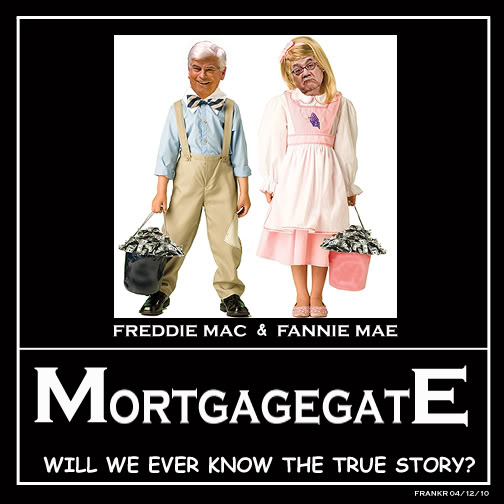
Bachmann sharply criticized Fannie Mae and Freddie Mac. She said the latter had recently given multimillion-dollar bonuses to executives even though it was seeking a new federal bailout.
Gingrich, who last held public office more than a decade ago, bristled when asked what advice his company had given Freddie Mac for a $300,000 fee. “Advice on precisely what they didn’t do,” he shot back – stop backing mortgages to applicants who aren’t credit-worthy.
The government rescued mortgage giants Fannie Mae and Freddie Mac in September 2008 to cover their losses on soured mortgage loans. Since then, a federal regulator has controlled their financial decisions.
The cost to taxpayers so far has been about $169 billion, the most expensive bailout of the financial crisis.
There was only scant mention of the Michigan auto industry, which benefited in 2008 and 2009 from a federal bailout that both President George W. Bush and Obama backed.
All eight Republicans on the debate stage say they wouldn’t have offered government assistance.
Not so Obama, who stood outside a factory not far from the debate site recently and said government bailouts of General Motors and Chrysler were a success that saved thousands of American jobs.
Side notes:
And then there was Mitt Romney‘s hair. It was actually a little messy. Granted, “messy” by Romney’s standard is like being “feminine” by Janet Napolitano‘s standards stated one of the event bloggers. But those five hairs haven’t seen this much freedom since birth and actually made him look ‘more real’ commented more than one viewer.
The things they can do with technology. It‘s a miracle there wasn’t a mic blowout for Jim Cramer, one of the moderator’s, who yelled every question like he was day trading on NASDAQ. Not even a little audio feedback when he said his “P”s or “B”s.
“It Is Easy To Make the Party In Power the Scapegoat, And Even Easier To Make Yourself Look Good When You Are Willing to Shade the Truth… or Just Vote Present!” …Thomas Sowell
Bailout Politics
By Thomas Sowell
Nothing could more painfully demonstrate what is wrong with Congress than the current financial crisis.
Among the Congressional "leaders" invited to the White House to devise a bailout "solution" are the very people who have for years created the risks that have now come home
to roost.
Five years ago, Barney Frank vouched for the "soundness" of Fannie Mae
and Freddie Mac, and said "I do not see" any "possibility of serious financial losses to the treasury."
Moreover, he said that the federal government has "probably done too little rather than too much to push them to meet the goals of affordable housing."
Earlier this year, Senator Christopher Dodd praised Fannie Mae and Freddie Mac for "riding to the rescue" when other financial institutions were cutting back on mortgage
loans. He too said that they "need to do more" to help subprime borrowers get better loans.
In other words, Congressman Frank and Senator Dodd wanted the government to push financial institutions to lend to people they would not lend to
otherwise, because of the risk of default.
The idea that politicians can assess risks better than people who have spent their whole
careers assessing risks should have been so obviously absurd that no one would take it seriously.
But the magic words "affordable housing" and the ugly word
"redlining" led to politicians directing where loans and investments should go, with such things as the Community
Reinvestment Act and various other coercions and threats.
The roots of this problem go back many years, but since the crisis to which all this led
happened on George W. Bush's watch, that is enough for those who think in terms of talking points, without wanting to be confused by the facts.
In reality, President Bush tried unsuccessfully, years ago, to get Congress to create some regulatory agency to oversee Fannie Mae and Freddie Mac.
N. Gregory Mankiw, his Chairman of the Council of Economic Advisers, warned in February 2004 that expecting a government bailout if things go wrong "creates an incentive for a company to take on risk and
enjoy the associated increase in return."
Since risky investments usually pay more than safer investments, the incentive is for a government-supported
enterprise to take bigger risks, since they get more profit if the risks pay off and the taxpayers get stuck with the losses if not.
The government does not guarantee Fannie Mae or Freddie Mac, but the widespread assumption has been that the government would step in with a bailout to
prevent chaos in financial markets.
Alan Greenspan, then head of the Federal Reserve System, made the same point in testifying before Congress in
February 2004. He said: "The Federal Reserve is concerned" that Fannie Mae and Freddie Mac were using this implicit reliance on a government bailout in a crisis to
take more risks, in order to "multiply the profitability of subsidized debt."
Chairman Greenspan added his voice to those urging
Congress to create a "regulator with authority on a par with that of banking regulators" to reduce the riskiness of Fannie Mae and
Freddie Mac, a riskiness ultimately borne by the taxpayers.
Fannie Mae and Freddie Mac do not deserve to be bailed out,
but neither do workers, families and businesses deserve to be put through the economic wringer by a collapse of credit markets, such as occurred during the Great
Depression of the 1930s.
Neither do the voters deserve to be deceived on the eve of an election by the notion that this is a failure of free
markets that should be replaced by political micro-managing.
If Fannie Mae and Freddie Mac were free market institutions they could not have gotten
away with their risky financial practices because no one would have bought their securities without the implicit assumption that the politicians would bail them out.
It would be better if no such government-supported enterprises had been created in the first place and mortgages were in fact left to the free market. This bailout creates the
expectation of future bailouts.
Phasing out Fannie Mae and Freddie Mac would make much more sense than letting
politicians play politics with them again, with the risk and expense being again loaded onto the taxpayers.
And for a little reality check:
These financial practices that have led us to our present financial problems started long before the Bush Administration. One of the most radical groups in America, ACORN, that helped push the government toward forcing lenders to loan to people who couldn’t qualify under the old rules, is an organization with which Obama has direct ties.
Both McCain and Bush have warned about and asked for financial reforms during the past 8-years.
If you think change from what brought America to our present financial crisis means Obama and the democrats, you don’t have your facts straight.
The example of Nancy Pelosi going to the House of Representatives today and causing the Republican House members, who had softened over the weekend, to definitely unit against the bailout, is the perfect example of the Democrats not being willing to work together and trying to place the blame of their bad policies on this administration and the Republicans.
“The first 300,000 million of the 7 billion dollar plan should be divvied up and given to the American people… 1 million to every American Citizen and legal resident of the United States… and the rest can be used to bailout Wall Street and the Financial Industry.”…Russell Crowe
(I loved it, Russell, because I said the same thing and wrote an article saying just that last week. Too bad nobody listens to us! Marion…)
Today... the U.S. Government bailed out AIG with a loan for $85 billion... yes billion with a "B".
Billions for AIG, Fannie Mae, Freddie Mac, Ernst and Young...and the list goes on. And then you hear that the people who ran these companies into the ground are getting severence packages for millions.
Hello... if Average Joe American screws up at work, they fire him, without a dime, and usually badmouth him as the door is hitting him in the fanny on his way out.
This is my idea... let all those companies fail. Let the people who live in the houses or have car loans with these failed companies keep them for free instead and then take the money you would have loaned these companies and divy it out among all the Americans and legal residents who didn't get a house or car paid for.