Showing posts with label NATIONALISM. Show all posts

Friday, March 16, 2012

China, the United States, and Global Governance: Shifting Foundations of World Order

First is a pdf file, with an excerpt then the article with the title in the subject line.

“China, the United States, and Global Governance: Shifting Foundations of World Order”

Workshop in Beijing, China  March 15 – 17, 2010

http://www.cfr.org/content/thinktank/CFR_CICIR_MeetingNote.pdf

Excerpt:

Prospects for effective multilateral cooperation on global and transnational problems in the twenty-first century will inevitably reflect the distinct national interests and international visions of the great powers. But the identity and number of the world’s leading states is changing, creating new challenges and opportunities for global governance. The world order that ultimately results from this transition period will reflect difficult negotiations between established powers—including the United States, European Union, and Japan—and emerging ones—including China, India, and Brazil.

Common World Order Visions?

Any discussion of divergences between American and Chinese global visions must begin with some historical perspective. Over the past four decades, China has shifted its foreign policy in a breathtak-ing fashion. Once a revolutionary power bent on overturning world order, China has become a prin-cipal beneficiary of globalization and a responsible member of most international regimes, from the Nuclear Nonproliferation Treaty (NPT) to the World Trade Organization (WTO). Possessing a per-manent seat in the United Nations Security Council (UNSC) and, since November 2008, a spot in the Group of 20 (G20), it is increasingly part of the global establishment. On balance, its aims tend to be modestly revisionist, focused on securing growing weight within international institutions (such as the World Bank and the International Monetary Fund) and peacefully expanding its economic and politi-cal influence, particularly within Asia. Consistent with Chinese president Hu Jintao’s concept of a “harmonious world,” China places heavy emphasis on multilateralism—and especially the United Na-tions—as a necessary approach to the exercise of power. In some areas, particularly when it comes to national sovereignty and nonintervention, China has emerged as a more conservative power than the United States. This was especially clear during the administration of George W. Bush (20012009), when the United States—far from being a status quo power—embraced a doctrine of contingent sove-reignty.

Workshop participants perceived an ongoing, impressive shift of global power toward Asia (including China), particularly in the wake of the global financial crisis, and stressed the importance of navigating this delicate power transition in a smooth and peaceful manner.

The United States, meanwhile, enters the second decade of the new millennium with its continued global leadership role increasingly in doubt, thanks to the nation’s fiscal strains, U.S. public fatigue with fighting two large wars, and the evaporation of the bipartisan Cold War internationalist consen-sus. Given these domestic constraints, some U.S. participants anticipated a period of diminished U.S. global ambition, perhaps even retrenchment. Notwithstanding President Barack Obama’s commit-ment to international institutional reform, most anticipated that the United States would continue to pursue a mixed strategy of reliance on formal, treaty-based institutions and more ad hoc, flexible coali-tions composed of a smaller number of capable states to pursue its global agenda.

Much, much more at link.

CFR Convenes “Council of Councils” Linking Leading Foreign Policy Institutes From Around the World

http://www.cfr.org/global-governance/cfr-convenes-council-councils-linking-leading-foreign-policy-institutes-around-world/p27612

The Council on Foreign Relations (CFR) has launched an international initiative to connect leading foreign policy institutes from around the world in a common conversation on issues of global governance and multilateral cooperation. The mission of the Council of Councils is to find common ground on shared threats, build support for innovative ideas, and inject remedies into the public debate and policymaking processes of member countries.

The founding membership of the Council of Councils includes leading institutions from nineteen countries, roughly tracking the composition of the Group of Twenty (G20). The network will facilitate candid, not-for-attribution dialogue and consensus building among influential opinion leaders from established and emerging nations.

CFR will convene the inaugural Council of Councils conference on March 12-13 in Washington, DC. Participants will tackle four major themes at this first gathering:

—the overall state of global governance and multilateral cooperation

—the status of the nuclear nonproliferation regime (with a focus on Iran)

—the dollar's future as the world's reserve currency

—the criteria for humanitarian intervention, in the wake of regime change in Libya and the ongoing crisis in Syria

Transcripts from two on-the-record sessions of the conference, featuring President of the World Bank Robert B. Zoellick and Undersecretary of State Robert D. Hormats, will be available on CFR.org after the event.

In addition to an annual conference, the Council of Councils will provide an ongoing exchange for research and policy collaboration among its members. CFR and its international partners will experiment with new technology, using state-of-the-art videoconferencing, wikis, and mobile platforms to collectively communicate and respond to breaking crises. The group will also consider long-term structural reforms that would enhance the global governance capacity of leading international institutions.

CFR President Richard N. Haass said, "The defining foreign policy challenges of the twenty-first century are global in nature. The Council of Councils draws on the best thinking from around the world to assess emerging threats and opportunities and formulate responses to them."

The Council of Councils initiative is funded by a generous grant from the Robina Foundation, as part of its ongoing support for CFR's International Institutions and Global Governance program.

Founding Council of Councils Member Organizations:
Australia: Lowy Institute for International Policy
Belgium: Center for European Policy Studies (CEPS)
Brazil: Getulio Vargas Foundation (FGV)
Canada: Center for International Governance Innovation (CIGI)
China: Shanghai Institutes for International Studies (SIIS)
France: French Institute of International Relations (IFRI)
Germany: German Institute for International and Security Affairs (SWP)
Indonesia: Center for Strategic and International Studies (CSIS)
Israel: Institute for National Security Studies (INSS)
Italy: Institute of International Affairs (IAI)

Japan: Genron NPO
Mexico: Mexican Council on Foreign Relations (COMEXI)
Russia: Institute of Contemporary Development (INSOR)
Singapore: S. Rajaratnam School of International Studies (RSIS)
South Africa: South African Institute of International Affairs (SAIIA)
South Korea: East Asia Institute (EAI)
Turkey: Global Relations Forum (GIF)

United Kingdom: Chatham House (The Royal Institute of International Affairs);
International Institute for Strategic Studies (IISS)
United States: Council on Foreign Relations (CFR)

***

The Council on Foreign Relations (CFR) is an independent, nonpartisan membership organization, think tank, and publisher dedicated to being a resource for its members, government officials, business executives, journalists, educators and students, civic and religious leaders, and other interested citizens in order to help them better understand the world and the foreign policy choices facing the United States and other countries. CFR takes no institutional positions on matters of policy.

CFR's International Institutions and Global Governance (IIGG) program aims to identify the institutional requirements for effective multilateral cooperation in the twenty-first century.

Related:

Globalist Imperial Network

OWS and the planned “endgame” for the U.S.

The Newt World Order… Worth a Look and Some Consideration

Kissinger in 2008:  There Will Be “Bi-Partisan” Push for New World Order, Whoever Is Elected President  -  They expected us to stay asleep and never counted on the tea party movement!

America’s Ruling Class and the Perils of Revolution

Brzezinski: Syria is Not Libya  -  Former Carter national security adviser and trusted Rockefeller minion Zbigniew Brzezinski has stated that military intervention in Syria will not work as it did in Libya. 

Tuesday, August 30, 2011

ABC: No Flags Please; We Are Americans

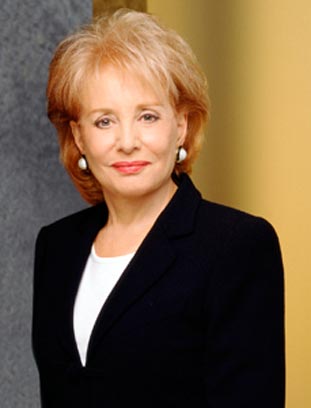
ABC News Bans flag and Patriotic lapel Pins’ Even Barbara Walter Complains

Yes, the mainstream media, in this case ABC "News" cannot do enough, quickly enough to destroy whatever independence, sovereignty and freedom we still have left. Now American Flag lapel pins are banned.

After the 9/11 terrorist attacks, there was a report that ABC News asked its on-air reporters not to wear American flag pins or red, what and blue ribbons. Some pointed out at that time that ABC seemed to have been singled out a, for what some said had previously been a standing policy by some news networks of no flag pins or patriotic displays. However that is questionable too, for Brit Hume has worn flag pins on air at CBS, NBC, CNN and FOX.

ABC seemed to loosen it’s policy for awhile as the wave of patriotism swept the nation after 9/11 but last week they reinstated their policy which is in line with the White House, to ban American Flag Lapel Pins for journalists. The tenth anniversary of 9/11 seems an odd time to reinstate this policy?!? (Obama wears one now again when he feels looking patriotic is to his advantage. You’ll see it a lot more as candidate Obama is out on the campaign trail.)

‘ABC News Joins Obama - Bans American Flag Lapel Pins’ was the headline - Barbara Walters said that this was going to hurt ABC bad, as it should. As you know she works for ABC.

Associated Press writer David Bauder quoted Barbara Walters as saying that ABC discouraged its reporters from wearing the flag because "...it may confuse the audience." She was also quoted as saying that there was concern whether someone who decided not to wear a flag in the midst of all the others might be viewed as less patriotic.

ABC NEWS BANS FLAG LAPEL PINS!

YESTERDAY THE BRASS AT ABC NEWS ISSUED ORDERS FORBIDDING REPORTERS TO WEAR LAPEL PIN AMERICAN FLAGS OR OTHER PATRIOTIC INSIGNIA. THEIR REASONING WAS THAT ABC SHOULD REMAIN NEUTRAL ABOUT 'CAUSES'.

SINCE WHEN IS SUPPORT FOR PREVENTING DEATH AND DESTRUCTION SOME SORT OF A 'CAUSE'? SINCE WHEN IS PATRIOTISM TO BE DISCOURAGED?  EVER? WE ARE AMERICANS.

IN REALITY THIS IS NOT A MOVE BY ABC TO REMAIN NEUTRAL ABOUT ‘CAUSES’, BUT RATHER ANOTHER MOVE BY ABC TO MARCH IN LOCK STEP WITH THE LEFTIST ANTI-PATRIOTIC OBAMA WHITE HOUSE AND ANOTHER WIN FOR POLITICAL CORRECTNESS, THE REVENGE OR MARXISM

I URGE YOU TO BOYCOTT ABC AND ITS SPONSORS AND AFFILIATES. WE ARE SLOWLY, NO, RAPIDLY LOSING EVERYTHING OUR COUNTRY STANDS FOR AND EVERYTHING OUR MEN AND WOMEN FOUGHT AND DIED TO PRESERVE!

THIS HAS BEEN VERIFIED THROUGH:  http://www.truthorfiction.com/rumors/a/abcflag.htm as well as at AskAbout.com/Urban Legends (Snopes has not been updated since 2008 on this subject… but they are becoming less and less reliable and leaning more and more to the left anyway.)

Friday, July 1, 2011

Conservatives are patriotic Americans, liberals are not…

This will not come as a shock to people in the Tea Party movement.  Conservatives are patriotic, liberals are not.  This is not just a saying we have in the conservative movement.  We now have proof!

What is the proof?

From Harvard University via US News and World Report.

Democratic political candidates can skip this weekend's July 4th parades. A new Harvard University study finds that July 4th parades energize only Republicans, turn kids into Republicans, and help to boost the GOP turnout of adults on Election Day.

"Fourth of July celebrations in the United States shape the nation's political landscape by forming beliefs and increasing participation, primarily in favor of the Republican Party," said the report from Harvard. [See political cartoons about the 2012 GOP field.]

"The political right has been more successful in appropriating American patriotism and its symbols during the 20th century. Survey evidence also confirms that Republicans consider themselves more patriotic than Democrats. According to this interpretation, there is a political congruence between the patriotism promoted on Fourth of July and the values associated with the Republican party. Fourth of July celebrations in Republican dominated counties may thus be more politically biased events that socialize children into Republicans," write Harvard Kennedy School Assistant Professor David Yanagizawa-Drott and Bocconi University Assistant Professor Andreas Madestam.

Their findings also suggest that Democrats gain nothing from July 4th parades, likely a shocking result for all the Democratic politicians who march in them.

The full story is here. http://www.usnews.com/news/blogs/washington-whispers/2011/06/30/har...

This is something any conservative could have told Harvard.  Liberals are not patriots.  Liberals do not love this country.  Liberals think America is the focus of evil in the modern world, not the greatest nation on the face of the world. 

The good news in that study is if you take kids to Fourth of July parades, they are much more likely to grow up conservative, support conservative causes and vote for conservative candidates.

Posted by Judson Phillips on July 1, 2011 at 8:48am in Tea Party Nation Forum  -  Send Message View Discussions

Taking traditional celebrations that build common values and patriotism out of the schools is part of the liberal plan… has been for years!

Friday, June 12, 2009

Power Grab

Obama Govt Control

The Obama administration is engaged in the most sweeping power grab in modern American history, but few people seem to care. In barely four months, we've witnessed the president and his minions taking over insurance companies, banks, and car companies, forcing private companies to sell off assets, appease unions, and stiff bondholders. Administration officials have insisted some companies take government handouts even if they don't want them and told others they can't pay back the money they've borrowed until the government gives them permission. Now, the president has decided he'll appoint a "compensation czar" whose job it will be to decide what constitutes fair pay for corporate executives. Why stop there? And, of course, they won't.

The latest move -- the appointment of Washington lawyer Kenneth Feinberg to oversee pay of the top employees at seven companies that have taken government funds -- may not seem radical, but it is. Earlier this year, in response to public criticism of the retention bonuses paid to some executives at the troubled insurance giant AIG, the administration proposed capping executive pay at $500,000 at firms receiving government assistance through the Troubled Asset Relief Program. But Treasury Secretary Tim Geithner abandoned that plan when he finally figured out that the execs would simply bail on the company, leaving the government without experienced and talented hands on deck.

So now the administration is moving to Plan B: Forget about pay caps per se but appoint a government overseer to set pay individually. Until now, in publicly traded companies that job fell to the board of directors and its compensation committee, whose legal and fiduciary responsibilities entail acting on behalf of shareholders. Directors are elected by the people who own the company: from individuals who own a few shares of stock to institutions and mutual funds that may own millions of shares.

The government, primarily through the Securities and Exchange Commission, oversees the board's stewardship, while other entities play a role as well. The securities exchanges -- the New York Stock Exchange, NASDAQ, etc. -- also have rules that govern the conduct of boards of directors, including restrictions on who sets executive compensation. The compensation committee at publicly traded companies must be composed of entirely of independent directors -- those who have no direct ties to the company or its management either by current or, in certain instances, former employment, for example.

Compensation committees act independent of management, but they don't act in a vacuum. They often hire compensation consultants (who must have no ties to the company) to advise them on the best pay practices. They evaluate their pay structure compared to other companies of similar size and complexity or who are in the same line of business. They evaluate the performance of key executives against financial results, the achievement of personal and company objectives, and other criteria. It is a long and arduous process (I know, for more than a decade I've served on and now chair the compensation committee of a NYSE company).

And the rules governing disclosure of executive compensation have become much stricter in recent years, especially since the enactment of Sarbanes-Oxley, federal legislation that passed in the wake of Enron and other recent corporate scandals. The law now requires that, in addition to a Compensation Committee Report on executive pay, management must produce an extensive compensation discussion and analysis to be included in proxy statements sent to all shareholders. The information includes a table showing exactly how much the CEO, chief financial officer, and three highest-paid employees in the company earn, including bonuses, stock options and grants, and what benefits and perquisites they are entitled to and their cost. Similar information is provided for director compensation. If shareholders don't think they're getting their money's worth from these executives or directors, they can dump the board of directors at the next election. Or at least that's how it is supposed to work.

But enter the Obama administration to rewrite the already extensive rules. Now one man -- the compensation czar -- is going to oversee this process at seven major corporations. And who oversees him?

From the president on down, the Obama administration is filled with people who have little or no idea how the market works. Most have never drawn a paycheck in the private sector, much less had to meet a payroll or make a profit. But they're convinced they know how to run things, down to the last detail. There's no word adequate to describe the sheer arrogance of this group.

Linda Chavez :: Townhall.com Columnist by Linda Chavez - Chairman of the Center for Equal Opportunity and author of Betrayal: How Union Bosses Shake Down Their Members and Corrupt American Politics

Source: Townhall.com

Posted: Daily Thought Pad

Related Resources: