Showing posts with label Society. Show all posts

Tuesday, October 8, 2013

Books, Knowledge, History, Memories… How Erasing Them Changes Cultures, Countries, The World - Updated

By Marion Algier – AskMarion

A little while back, I wrote about how our children and future generations can’t miss or value what they don’t know, what they don’t understand and what they never even learned or heard about.  This is obviously common sense as well as the basis for the American Progressive movement, which has roots in Socialism, Fabianism, Marxism and a long list of other “isms” whose leaders all knew if you can strip away people’s allegiance to Country, Family and Religion you can reprogram the upcoming youth and the disenfranchised to follow the newest version of the power elitists’ plan whatever it is… right now it is globalism, and our government is full of Progressives who have been united in the dumbing down and manipulation of the populace of America for several generations now.

When you talk to Millenials most don’t know much about history, American or otherwise, most don’t go to church, and most don’t even know much about the background of their own families which generally includes a lack of solid holiday and personal traditions.

Then we, people who know history, love America and the Constitution, go to church or synagogue etc., and who value and want to pass on their family, American, and religious values and holiday traditions scratch our heads when younger people don’t understand why those are important; why they only read escapist and fictional (often dark) books and movies… if they read at all; and why they don’t believe in God or think it is a big deal when a Christmas Tree, Menorah, or worse yet a copy of our Constitution or the Ten Commandments can no longer be displayed in public buildings or the local town square.

We, from the ‘The Greatest Generation’ to the Baby-boomers to the parents right now missed the boat.  Everyone was too busy to notice that what made America great and what kept us free and united was being stripped out of our educational system, our activities and our daily lives and was being replaced my mind-numbing activities that were often more fun or just distracting yet often smattered with underlying anti-traditional messages or Propaganda… a book (Kindle)…  by Edward Bernays that is a must read for everyone.  We stopped talking to each other about things that matter and we stopped passing on to the each next  generation what was important to us both personally and collectively, but the Progressives were busy filling the vacuum.  And with all the new media, what mattered most has virtually been lost, re-written or replaced in the minds and lives of many in the present and will be lost to most in future generations.

Instead of teaching our children how to dream, how to think critically, how to search for knowledge, how to believe in things that are not always tangible tangible (from God to Santa Claus) and how to find the magic in the every day things of life, like bookstores, by both sharing from each of our hearts, histories and memories and by being an example, we are relegating our children to learn from educators who think individual and critical thinking are passé, from an American media who promote sex, violence and propaganda for our government, and from each other… a generation raised on social media, video games and often with little ‘live’ social interaction.  And instead of promoting our kids to develop their imaginations, which can lead to the development of future writers, movie-makers, inventors and even scientists, we are stifling their creativity by putting them into socialistic-style schools which promote conformity so everyone will think, act and be alike, so not to hurt anyone’s feelings. And we are robbing children as young as kindergartners of their time of innocence and beauty and replacing it with sex-education (awareness) classes that produce confusion and ugliness for psyches far too young to have to deal with that topic.

Recently I came across the article Views – The Wonders of Bookstores (below) by novelist Richard Russo.  It is this kind of love for knowledge, tradition (including types of medium) and special places and memories that we are no longer cultivating:

Views: The Wonder of Bookstores

Local hero Three Lives & Company has been charming readers since 1978. [Photo: Christopher L. Smith]

Novelist Richard Russo pays homage to the shop where he fell in love with reading — and to the crucial role bookstores can still play in our lives.

The first great bookstore in my life wasn’t really a bookstore. Alvord and Smith was located on North Main Street in Gloversville, N.Y., and if memory serves, they referred to themselves as stationers. I don’t recall the place being air-conditioned, but it was always dark and cool inside, even on a sweltering summer day. In addition to a small selection of books, the store sold stationery, diaries, journals, and high-end fountain and ballpoint-pen sets, as well as drafting and art supplies. The shelves went up and up the walls, and I remember wondering what was in the cardboard boxes beyond my reach. The same things on the shelves below? Other, undreamed-of wonders? Alvord and Smith was a store for people who—though I couldn’t have articulated it at the time—had aspirations beyond life in a grungy mill town. It was never busy.

Because she worked all week, my mother and I ran errands on Saturday mornings, and Alvord and Smith was usually our first stop. There, I’d plop down on the floor in front of the bottom two shelves where the children’s books were displayed: long, uniform phalanxes of the Hardy Boys and Nancy Drew mysteries, as well as the lesser-known but, to my mind, superior Ken Holt and Rick Brant series. I can still remember the thrill of coming upon that elusive number 11 or 17 in my favorite series, the one I’d been searching for for years, now magically there, where it hadn’t been the week before, filling me with wonder at the way the world worked, how you had to wait to the point of almost unbearable longing for the good stuff in life.

Coming out of Alvord and Smith, blinking in the sunlight, you could see all the way down Main Street to South Main, where the gin mills and pool hall were. Outside these stood dusky, shiftless, idle men, flexing at the knees and whistling at the pretty women who passed by. Occasionally my father was among them. Later, when I turned 18, I would join him in those same dives. Like the stationery store, they were cool and dark and mysterious, and for a while I preferred them, though I never really belonged. That’s what I’d felt as a boy, sitting on the floor at Alvord and Smith, touching, lovingly, the spines of books: Here was a place I belonged.

Many people love good bookstores, but writers? We lose our heads over them. We tell stories about them. We form lifelong attachments to our favorites. We do not hate e-books—well, okay, some of us do—but we owe our careers, at least my generation of writers do, to the great independents, so many of them long gone now. Those that remain gamely continue to fight the good fight, even as customers increasingly treat their stores as showrooms, then go home and surrender to the online retailer’s chilly embrace. They point and click and, without meaning to, undermine the next generation of writers and the one after that. Because it’s independent booksellers who always get the word out (as they did for me).

I’m an old fart, of course, more at home with paper and print than touch screens, and yes, I agree with those who argue that in the end it’s more about the message than the medium. But to me bookstores remain places of wonder. Like libraries, they’re the physical manifestation of the world’s longest, most thrilling conversation. The people who work in them will tell you who’s saying what. If you ask, they’ll tell you what Richard Russo’s up to in his new one, but more important, they’ll put in your hand something you just have to read, by someone you’ve never heard of, someone just entering the conversation, who wants to talk to you about things that matter.

Excerpted from My Bookstore: Writers Celebrate Their Favorite Places to Browse, Read, and Shop (Black Dog & Leventhal Publishers). Richard Russo’s latest book is Elsewhere: A Memoir (Kindle).

Online media… from novels to textbooks can be lost, changed and rewritten over-night.  In fact at many of the colleges and universities, the professors now have the ability to edit the books online that they assign to their students without notice.  That should be frightening to everyone!  Instead of teaching from original sources we are allowing liberal professors, or professors of any bent, to re-write any authors’ works.

And what about photos… How many people do you know that no longer print their photos and somewhere along the way have lost every single one because they weren’t backed up?

And the art of letter writing, keeping journals or even sending a quick handwritten note with a card or photo is almost extinct.  Yet how many beautiful and tragic histories would we not know if someone hadn’t kept a bundle of love letters (Kindle) or found the diary of a little girl named Anne Frank (Kindle)?

What if over night the grids we are all connected to mysteriously go off line, through a manmade or natural disaster?  What would you have left if every form of media and communication you have and had was on your computer, your phone, your a kindle type device?  Verses… what would you have left is you had printed photos, printed books, handwritten letters and journals?  It is certainly something to ponder!!  One only needs to watch Mad Max (Trilogy) or The Book of Eli [Blu-ray] to promote that thought process…

If you look at every aspect of American life, you will see the changes and many not for the better. It has been a process that has been going on for a long time, but with the election of Obama and the appointments of his like minded-administration, the process has been accelerated not only in speed, but into a final phase. Below is just a short reminder list or where we are and what has changed:

Things we thought to be impossible in America are now daily events and the window to change all this is becoming ever smaller!  For anyone who doesn’t believe that just checkout these Headlines from the past 24-hour news cycle:

Yet most people, unless they watch Fox Cable News, Fox Cable Business News, TheBlazeTV (on TV or online) or get the information from the blogs and Internet.  It has gotten so bad that even liberal Jon Stewart said on Obamacare’s Sebelius: ‘Maybe She is Just Lying to Me!?!’

And if there is any hope of turning this cycle around it lies in the laps of grandparents, concerned parents do know and see what is going on, patriotic American willing to stand up at every opportunity, history buffs, educators who haven’t been brainwashed and pulled into the Common Core myth and the religious community who need to engage our youth, our children and adults willing to listen immediately.

Wednesday, May 1, 2013

Watcher’s Council Nominations – May Day Edition

http://25.media.tumblr.com/tumblr_m9w94bufeY1qap9gno1_500.jpg

JoshuaPundit on May 01 2013 | Nominations

Yes, everyone it’s May Day!

The festivities used to look like this :

https://blogger.googleusercontent.com/img/b/R29vZ2xl/AVvXsEhgKEyYe6rgGrFFTx6nM9PmIh-zRVGMSY5dKa6FIteB1VKkaeSE7Fxo65HNLp7_z-G9X2DqNAQpO4zMF8YM867FdvQ_x5L-8ztlMDx3Y_Ih7aJs90RSj7Ss3dZ6nhw4Fh0HCzvaGbXpvnqd/s1600/May+Pole+Dance.jpg

But now….change!

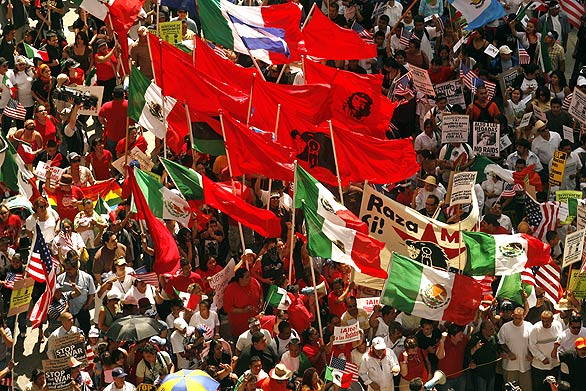
http://www.immigrantsolidarity.org/MayDay2010/Images/38395671%5B1%5D.jpg

Maybe it’s May Day in more than one sense.

Welcome to the Watcher’s Council, a blogging group consisting of some of the most incisive blogs in the ‘sphere, and the longest running group of its kind in existence. This is your essential weekly magazine for the best in opinion and commentary. Every week, the members nominate two posts each, one written by themselves and one written by someone from outside the group for consideration by the whole Council.Then we vote on the best two posts, with the results appearing on Friday.

Council News:

This week, Liberty’s Spirit, Right Truth and Ask Marion earned honorable mention status with some great pieces.

You can, too! Want to see your work appear on the Watcher’s Council homepage in our weekly contest listing? Didn’t get nominated by a Council member? No worries.

Simply head over to Joshuapundit and post the title and link to the piece you want considered along with an e-mail address ( which won’t be published) in the comments section no later than Monday 6PM PST in order to be considered for our honorable mention category. Then just return the favor by creating a post on your site linking to the Watcher’s Council contest for the week when it comes out Wednesday morning.

It’s a great way of exposing your best work to Watcher’s Council readers and Council members while grabbing the increased traffic and notoriety. And how good is that, eh?

So, let’s see what we have this week….

Council Submissions
Honorable Mentions
Non-Council Submissions

Enjoy! And don’t forget to like us on Facebook and follow us Twitter..’cause we’re cool like that!

Monday, December 3, 2012

God Rest Ye Merry Merchants - Christmas: An American Holiday and Tradition to Love and Preserve

Christmas: An American Holiday to Love and Preserve…

The War on Christmas verses the Spirit of Christmas Series at AskMarion – 3

Once upon a time not all that long ago – in fact, anyone over 50 will easily remember it – the word “Christmas” was everywhere during the month of December. Everywhere you looked – in stores, in town squares, in cities, in offices, and, of course, in private homes — there were Christmas trees, Christmas decorations, Christmas cards, Christmas gifts, Christmas parties, and Christmas vacations. Even Jews got into the act… Hanukkah Bushes, Christmas lights in blue and white and an embracement of all the festivities. Just ask Ben Stein.

Christmas was arguably the most beloved of American holidays. Independence Day, Memorial Day, and Thanksgiving were important too; but Christmas was something more. It gave rise to a whole “Christmas season” during which people got into the “Christmas spirit.” The first words of a popular song, recorded by Johnny Mathis as a platinum hit, summed it up perfectly: “It’s beginning to look a lot like Christmas / Everywhere you go…”

Then something strange began to happen. The very thing that made the “season” special started to disappear from the public arena. Stores no longer held “Christmas sales.” Businesses, and soon after, individuals, ceased to hold “Christmas parties.” And on and on. “Christmas” became a dirty word, and was replaced by “holiday.” The War on Christmas had begun.

We’ve grown so accustomed to the change that we’ve lost sight of just how significant it is. “Christmas” is loaded with meaning and rich in spirit. It imparts rich feelings unlike anything else. “Holiday,” by contrast, is a bland word that can signify anything from Independence Day to Labor Day to “Sweetest Day.” At most, it means a day that you might get off from work if you’re lucky. And nothing else. Saying “holiday” and meaning Christmas is like saying “a long dead politician” and meaning Abraham Lincoln. Technically, it’s not wrong. But the whole significance is lost.

Of course, this didn’t happen by accident. Ask most people how it happened, and they’ll just shrug and say, “political correctness.” And in fact, “PC” is a cruel master, uncaring about what it destroys, and swift to punish those who violate it. So most choose to bow and submit.

But not here. We are part of the The Battle for Christmas. We hope to reclaim the richness and beauty of Christmas. But it’s more. Christmas is a treasure and and part of our heritage that we all should be actively working to preserve our traditional American culture in any and all forms. Because that culture is worth keeping. It’s part of what holds us together and makes us American… including those of us who are not Christians.

So let’s fight back in the war on Christmas. And to all who feel the same we do… happy holidays and Merry Christmas!: Celebrating America’s Greatest Holiday

God Rest Ye Merry Merchants

“The Celebration of Christmas in America is not Just a Christian Holiday, but a Celebration of our National Past and Our Collective Wishes and Psyche as a Nation!”

In his mawkish 1942 hit "White Christmas," Bing Crosby yearned for a holiday "just like the one I used to know." The extraordinary popularity of Crosby’s nostalgic longing (the all-time top-selling single until it was eclipsed by "Candle in the Wind 1997," Elton John’s mawkish tribute to Princess Diana) suggests the holiday’s tremendous power to revive memories–perhaps only imaginary, idealized memories–of childhood and Christmases past. According to Karal Ann Marling, "Christmas is the universal memory" for contemporary Americans (whether they’re Christian or not), an event in which "virtually everybody has played a part." By telling the story of Americans’ celebration of Christmas, she promises to uncover a surprisingly neglected piece of not only our national past, but our collective wishes and psyche.

Marling, a prolific and inventive cultural historian at the University of Minnesota who has written books on topics ranging from George Washington (George Washington Slept Here: Colonial Revivals and American Culture, 1876-1986) and Norman Rockwell to Disneyland (Designing Disney’s Theme Parks: The Architecture of Reassurance) and Graceland (Graceland: Going Home with Elvis) and As Seen on TV: The Visual Culture of Everyday Life in the 1950s, now turns her attention to the history of America’s most lavishly celebrated holiday. Marling has a keen eye for offbeat topics, arresting detail and original interpretations, and refuses "to plug the contents of the national Christmas stocking into the socket of orthodox historical discourse" (certainly that sounds unadvisable). She insists instead that her goal is to unwrap the hidden meaning of quotidian, but telling objects and practices to reveal the holiday’s deeper significance.

Myriad "scraps of Christmas detritus"–and Christmas generates loads of detritus–supply Marling with ample material: Shortly after Halloween, America’s shopping malls and stores are festooned with red and green and stocked from floor to ceiling with Christmas gifts. In the days after Christmas, discarded trees, still dangling tinsel, lie amid trash bags stuffed with discarded wrapping paper and packaging on curbs across the nation. Somewhere in between the shopping bags and the trash bags, millions of Americans attend their annual office party, endure children’s pageants, spend billions of dollars buying presents, cook traditional feasts, and gather with family and friends to exchange gifts and celebrate the nation’s most extravagant holiday. Wrapping paper, lights, ornaments, store window displays, trees, cards, Santas and cookies fill the thematic chapters of Merry Christmas! The history of Christmas, as Marling observes promisingly, is in the details.

Americans commonly assume that Christmas endured for centuries as a solemn religious holiday, before being corrupted by consumer capitalism. As early as the 1870s, critics of Christmas were engaging in "breast-beating over soulless American materialism." In 1949, opponents of the holiday’s excess launched a crusade to "restore" its "original" character. Billboards, posters and bumper stickers urging Americans to "Put Christ Back into Christmas" were a common sight during the holiday season throughout the 1950s. Like many tales of decline, this Christmas story proves a fable. In colonial America, Christmas was either not celebrated at all (it was actually illegal to celebrate the holiday in many Puritan communities), or an occasion for boisterous, drunken revelry.

In fact nearly all of Americans’ Christmas rituals and icons are 19th-century inventions, created to venerate home and family, not the birth of Jesus. Christmas trees, artfully bedecked with ornaments, became the focal point of Americans’ Christmas celebrations in the 1850s. Santa Claus became an icon in the 1860s and 1870s, springing from the pen of cartoonist Thomas Nast. Gift-giving became commonplace in the 1870s and 1880s, as more Americans adopted the practice of purchasing inexpensive, factory-made trinkets–"gewgaws" and "gimcracks"–and wrapping the presents to produce surprise. By century’s end, Christmas had become a legal holiday in every state, and the year’s most eagerly anticipated holiday for millions. In the 1920s, advertisers transformed Santa into a jovial salesman, whose girth and cheerfulness embodied consumer abundance: According to Marling, St. Nick, not that gangly, gaunt Uncle Sam, best personifies America.

As Marling observes, Americans’ celebration of Christmas grew along with material abundance and consumer culture, and the department store window, not the Nativity scene, has always furnished the holiday’s central icon. "Christmas," she writes, "is all about stores and shopping." Conversely, stores and shopping rely heavily on Christmas. Last year, Americans spent a record $184 billion during the Christmas shopping season (officially, the weeks between Thanksgiving and Christmas), and many retailers depend on Christmas sales for one quarter of their annual revenue.

But Marling is most interesting when she discusses the holiday’s paradoxes, which mingle materialism and generosity. Retailers and advertisers deliberately have exploited holidays to encourage consumption, but they have by no means stripped these "holy days" of their deeper meaning altogether. Marling notes that our most materialistic holiday is also ironically "the primary occasion for considering the harsh realities of the world, and those who have no trees and puddings."

As a result, charitable giving to the poor has accompanied the holiday since the 19th century. Charles Dickens’ A Christmas Carol, which has ranked among Americans’ most beloved Christmas stories since its publication in 1843, offers a largely secular plea on behalf of the less fortunate. Funding charity dinners for the poor at Christmas time became an annual ritual of penance for the well-to-do in American cities in the late 19th century. Wealthy benefactors congratulated themselves for bestowing feasts and presents on their less fortunate neighbors, but could not have failed to recognize the troubling gulf, let alone the connection, between their abundance and others’ privation. Christmas’ mixture of materialism and charity remains paradoxical to our own day: Each December, as it has since 1912, the New York Times juxtaposes full-page advertisements for luxury gifts with small-font reminders urging readers to "Remember the Neediest."

If Christmas provides a "universal memory" for Americans, it is in large part because advertising and celebrating the holiday are so ubiquitous; even Unabomber Ted Kaczynski, railing against the evils on modern technology in his Montana cabin, took time to write Christmas cards to his neighbors each December. Christmas is so omnipresent that many nonbelievers celebrate the holiday, and even members of other faiths cannot altogether ignore it, try as they might. Stephen Nissenbaum, for example, prefaces his own history of the holiday, The Battle for Christmas, with a touching reminiscence of his boyhood memories of Christmas as an outsider growing up in an Orthodox Jewish household.

But surely different groups of Americans have distinct recollections of the holiday. Protestants and Catholics, rich and poor, white, Asian, black and Latino–all have celebrated on December 25, but they have not celebrated alike. Marling’s attempt to delineate the diversity of Christmas traditions, a grab-bag chapter on "Somebody Else’s Christmas," lumps together Christmas in warm climes, white Northerners’ sentimental but patronizing fascination with black Southerners’ humble Christmas celebrations in the 19th century, immigrants’ Christmas traditions, even Kwanzaa. A more systematic discussion would fulfill Marling’s ambition of recasting our understanding of the holiday. And yet, though Merry Christmas! does not completely transform our view of the Christmas we "used to know," it does detail the little gestures and objects that supply the stuff of which Christmases are made.

Chris Rasmussen teaches American history at the University of Nevada, Las Vegas. During this holiday season, he urges Americans of all faiths to "Put the Christ Back into Christmas."It is part of American heritage and tradition! (Originally Posted in December 2009)

By Karal Ann Marling – Author of Merry Christmas! : Celebrating America’s Greatest Holiday

On Glenn Beck’s 2010 Post-Thanksgiving Review Program Rabbi Daniel Lapin (who founded the American Alliance of Christians and Jews) said: Although I am Jewish and do not celebrate Christmas I respect the traditions and the holiday and like the holiday for two good reasons: It helps the economy and it makes people better… (95% of the money spent at Christmastime is for others… rather than for ourselves).

Lapin has spoken against the secularization of Christmas, saying that "We see obsequious regard for faiths like Judaism and even Islam, while Christianity is treated with contempt". He is opposed to replacing the "Merry Christmas" greeting with "Happy Holidays", saying instead "Let us all go out of our way to wish our many wonderful Christian friends a very merry Christmas… Nationwide, Christmas Nativity scenes are banned from city halls and shopping malls but Chanukah menorahs are permitted.  One of the latest incidents: School Replaces Baby Jesus With Frosty The Snowman After Pressure From Obama Admin.

Merry Christmas! : Celebrating America’s Greatest Holiday

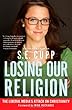
A great book on Losing Our Religion by atheist S. E. Cupp, who says she is he perfect person for this book because she has no dog in the hunt, takes on the all too often avoided question and discussion of religion in America…

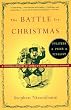
The Battle for Christmas

Related:

Advent – The Season of Anticipation and Hope

The War on Christmas verses the Spirit of Christmas Series at AskMarion

Red Kettles & Bell Ringers

Atheists intimidate Santa Monica into eliminating Nativity… And So the War on Christmas and Freedom of Religion Continues

Black Friday Holiday Shopping Kick-off Overshadows True Meaning of Christmas

What Movies in History Best Captures the Spirit of Thanksgiving?

“Holidays Are Great and Fun To Share With Our Pets, As Long As We Avoid the No-No Foods”

Wednesday, August 17, 2011

Social Degeneration (Parts 1 & 2)

Someone at long last has had the courage to tell the plain, honest truth about race.

After mobs of young blacks rampaged through Philadelphia committing violence -- as similar mobs have rampaged through Chicago, Denver, Milwaukee and other places -- Philadelphia's black mayor, Michael A. Nutter, ordered a police crackdown and lashed out at the whole lifestyle of those who did such things.

"Pull up your pants and buy a belt 'cause no one wants to see your underwear or the crack of your butt," he said. "If you walk into somebody's office with your hair uncombed and a pick in the back, and your shoes untied, and your pants half down, tattoos up and down your arms and on your neck, and you wonder why somebody won't hire you? They don't hire you 'cause you look like you're crazy," the mayor said. He added: "You have damaged your own race."

While this might seem like it is just plain common sense, what Mayor Nutter said undermines a whole vision of the world that has brought fame, fortune and power to race hustlers in politics, the media and academia. Any racial disparities in hiring can only be due to racism and discrimination, according to the prevailing vision, which reaches from street corner demagogues to the august chambers of the Supreme Court of the United States.

Just to identify the rioters and looters as black is a radical departure, when mayors, police chiefs and the media in other cities report on these outbreaks of violence without mentioning the race of those who are doing these things. The Chicago Tribune even made excuses for failing to mention race when reporting on violent attacks by blacks on whites in Chicago.

Such excuses might make sense if the same politicians and media talking heads were not constantly mentioning race when denouncing the fact that a disproportionate number of young black men are being sent to prison.

The prevailing social dogma is that disparities in outcomes between races can only be due to disparities in how these races are treated. In other words, there cannot possibly be any differences in behavior.

But if black and white Americans had exactly the same behavior patterns, they would be the only two groups on this planet that are the same.

The Chinese minority in Malaysia has long been more successful and more prosperous than the Malay majority, just as the Indians in Fiji have long been more successful and more prosperous than the indigenous Fijians. At various places and times throughout history, the same could be said of the Armenians in Turkey, the Lebanese in Sierra Leone, the Parsees in India, the Japanese in Brazil, and numerous others

There are similar disparities within particular racial or ethnic groups. Even this late in history, I have had northern Italians explain to me why they are not like southern Italians. In Australia, Jewish leaders in both Sydney and Melbourne went to great lengths to tell me why and how the Jews are different in these two cities.

In the United States, despite the higher poverty level among blacks than among whites, the poverty rate among black married couples has been in single digits since 1994. The disparities within the black community are huge, both in behavior and in outcomes.

Nevertheless, the dogma persists that differences between groups can only be due to the way others treat them or to differences in the way others perceive them in "stereotypes."

All around the country, people in politics and the media have been tip-toeing around the fact that violent attacks by blacks on whites in public places are racially motivated, even when the attackers themselves use anti-white invective and mock the victims they leave lying on the streets bleeding.

This is not something to ignore or excuse. It is something to be stopped. Mayor Michael Nutter of Philadelphia seems to be the first to openly recognize this.

This needs to be done for the sake of both black and white Americans -- and even for the sake of the hoodlums. They have set out on a path that leads only downward for themselves.

Although much of the media have their antennae out to pick up anything that might be construed as racism against blacks, they resolutely ignore even the most blatant racism by blacks against others.

That includes a pattern of violent attacks on whites in public places in Chicago, Denver, New York, Milwaukee, Philadelphia, Los Angeles and Kansas City, as well as blacks in schools beating up Asian classmates -- for years -- in New York and Philadelphia.

These attacks have been accompanied by explicitly racist statements by the attackers, so it is not a question of having to figure out what the motivation is. There has also been rioting and looting by these young hoodlums.

Yet blacks have no monopoly on these ugly and malicious episodes. Remarkably similar things are being done by lower-class whites in England. Anybody reading "Life at the Bottom" by Theodore Dalrymple will recognize the same barbaric and self-destructive patterns among people with the same attitudes, even though their skin color is different.

Anyone reading today's headline stories about young hoodlums turning the streets of London into scenes of shattered and burning chaos, complete with violence, will discover the down side of the brotherhood of man.

While the history and the races are different, what is the same in both countries are the social policies and social attitudes long promoted by the intelligentsia and welfare state politicians.

A recent study in England found 352,000 households in which nobody had ever worked. Moreover, two-thirds of the adults in those households said that they didn't want to work. As in America, such people feel both "entitled" and aggrieved.

In both countries, those who have achieved less have been taught by the educational system, by the media and by politicians on the left that they have a grievance against those who have achieved more. As in the United States, they feel a fierce sense of resentment against strangers who have done nothing to them, and lash out violently against those strangers.

During the riots, looting and violence in England, a young woman was quoted as saying that this showed "the rich" and the police that "we can do whatever we want." Among the things done during these riots was forcing apparently prosperous looking people to strip naked in the streets.

The need to bring people down in humiliation that marked the mass violence against the Armenians in Turkey nearly a century ago, and that later marked the Nazi persecutions of the Jews in Germany, is still alive and well in people who resent those who have achieved more than they have.

A milder but revealing episode in England some time back involved burglars who were not content to simply steal things but also vented their hostility by scrawling on the wall: "RICH BASTARDS."

In the United States, young black thugs attacked whites with baseball bats and took their belongings in Denver, while voicing their hatred of whites. But it is all a very similar attitude to what has been found in other countries and other times.

Today's politically correct intelligentsia will tell you that the reason for this alienation and lashing out is that there are great disparities and inequities that need to be addressed.

But such barbarism was not nearly as widespread two generations ago, in the middle of the 20th century. Were there no disparities or inequities then? Actually there were more.

What is different today is that there has been -- for decades -- a steady drumbeat of media and political hype about differences in income, education and other outcomes, blaming these differences on oppression against those with fewer achievements or lesser prosperity.

Moreover, there has been a growing tolerance of lawlessness and a growing intolerance toward the idea that people who are lagging need to take steps to raise themselves up, instead of trying to pull others down.

All this exalts those who talk such lofty talk. But others pay the price -- and ultimately that includes even those who take the road toward barbarism.

Thomas Sowell


Thomas Sowell is a senior fellow at the Hoover Institute and author of The Housing Boom and Bust.


Related:

Political Correctness

Multiculturalism

High School Principal With Principles

The Left’s Race Card

Tuesday, January 5, 2010

Intellectuals and Society

There has probably never been an era in history when intellectuals have played a larger role in society. When intellectuals who generate ideas are surrounded by a wide range of others who disseminate those ideas-- whether as journalists, teachers, staffers to legislators or clerks to judges-- the influence of intellectuals on the way a society evolves can be huge. Trying for years to understand the nature of that influence eventually led me to write the book "Intellectuals and Society," which has just been published.

Intellectuals generate ideas and ideas matter, whether those ideas are right or wrong, and they matter far beyond the small segment of society who are intellectuals. Ideas affect the fate of whole nations and civilizations. Nowhere is that more true than in our own times, when some people make suicidal attacks to kill strangers who have done nothing to them, as on 9/11, because the attackers are consumed with a set of ideas-- a vision-- and driven by the emotions generated by those ideas and that vision.

Whether in war or peace, and whether in economics or religion, something as intangible as ideas can dominate the most concrete things in our lives. What Karl Marx called "the blaze of ideas" has set whole nations on fire and consumed whole generations.

Those whose careers are built on the creation and dissemination of ideas-- the intellectuals-- have played a role in many societies out of all proportion to their numbers. Whether that role has, on net balance, made those around them better off or worse off is one of the key questions of our times.

The quick answer is that intellectuals have done both. But certainly, for the 20th century, it is hard to escape the conclusion that intellectuals have on net balance made the world a worse and more dangerous place. Scarcely a mass-murdering dictator of the 20th century was without his supporters, admirers or apologists among the leading intellectuals-- not only within his own country, but in foreign democracies, where intellectuals were free to say whatever they wanted to.

Given the enormous progress made during the 20th century, it may seem hard to believe that intellectuals did so little good as to have that good outweighed by particular wrong-headed notions. But most of those who promoted the scientific, economic and social advances of the 20th century were not really intellectuals in the sense in which that term is most often used.

eam of human beings flying, were by no means intellectuals. Nor were those who conquered the scourge of polio and other diseases, or who created the electronic marvels that we now take for granted.

All these people produced a tangible product or service and they were judged by whether those products and services worked. But intellectuals are people whose end products are intangible ideas, and they are usually judged by whether those ideas sound good to other intellectuals or resonate with the public.

Whether their ideas turn out to work-- whether they make life better or worse for others-- is another question entirely.

The ideas that Karl Marx created in the 19th century dominated the course of events over wide portions of the world in the 20th century. Whole generations suffered, and millions were killed, as a result of those ideas. This was not Marx's intention, nor the intentions of many supporters of Marxian ideas in countries around the world. But it is what happened.

Some of the most distinguished intellectuals in the Western world in the 1930s gave ringing praise to the Soviet Union, while millions of people there were literally starved to death and vast numbers of others were being shipped off to slave labor camps.

Many of those same distinguished intellectuals of the 1930s were urging their own countries to disarm while Hitler was rapidly arming Germany for wars of conquest that would have, among other things, put many of those intellectuals in concentration camps-- slated for extermination-- if he had succeeded.

The 1930s were by no means unique. In too many other eras-- including our own today-- intellectuals of unquestionable brilliance have advocated similarly childish and dangerous notions. How and why such patterns have existed among intellectuals is a challenging question, whose answer can determine the fate of millions of other people.

Thomas Sowell :: Townhall.com Columnistby Thomas Sowell - a senior fellow at the Hoover Institute and author of The Housing Boom and Bust