Showing posts with label ATHEISTS. Show all posts

Sunday, January 5, 2014

The Wrap at Ask Marion 12.29.13 Thru 1.05.14

Its a Wrap

Our weekly wrap… Sunday to Sunday… Please share! Ask Marion

Quote of the Week: “Only in America can you find a movement of People who aren’t satisfied with the Freedom they have to Believe or Not Believe, but rather have to go on the attack against the beliefs of others.”

The Atheist War on Christmas and Religious Freedom – WoC 2013/14

Read this normally… and then read it again from the bottom up.

Atheist vs Christian View of Life

Also See:

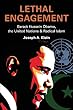
Book of the Week – Lethal Engagement

“The Iraq/Afghani War Has Cost Nearly 3-Trillion Dollars and 51,778 U.S. Casualties, Including 4489 Killed…” So Why Would We Have Pulled Out Against the Advice of All The Leadership and Troops on the Ground?  It Makes No Sense!

Full constitutional rights for foreign Islamic terrorist detainees. Apologies to the Muslim world for American 'misdeeds,' and promises to make amends even if the security of the American people is placed in peril. Welcoming radical Muslim sympathizers into high positions of authority. Abridging freedom of expression. And much, much more. Lethal Engagement documents how in these and other ways President Barack Hussein Obama has forsaken the oath of office he took to 'preserve, protect, and defend the Constitution of the United States.' Lethal Engagement exposes how radical Muslims are re-branding their barbaric ideology to fool their gullible audience in the West and how they play the racism victim card, all with President Obama's help. Lethal Engagement systematically lays out the dangerous entanglement of Obama with the United Nations, which radical Muslims are manipulating to promulgate international law to their liking, and how his nomination of more activist judges willing to throw away the Constitution allows radical Muslims to subvert American law. Lethal Engagement also reveals the radical Muslim plan to destroy the value of the dollar and use the United Nations to replace it with a new global reserve currency, all helped along by the Obama administration's disastrous economic policies. After connecting all these dots, Joseph Klein explains the steps 'we the people' must take to rescue our country.

Iraqi Army Shells Fallujah As Street Fights Rage In Ramadi

Fallujah falls fully into hands of al-Qaida group 

McCain, Graham blast Obama for Al Qaeda-related takeover of ...

If You R Not Outraged...

If You Like Your Plan


We are living in amazing times, good and bad, the kind of times that truly try men’s (and women’s) souls and that make or break countries and shape (or reshape) societies. Please get involved, pray for guidance, prepare for the worst (for yourself and to help others), then educate yourself and share what you learn with as many people as you can. All our futures depend on it!!

Its_a_Wrap

Be sure to come visit us here at Ask Marion regularly and subscribe to receive the latest posts first… as well as visit: Just One More Pet, True Health Is True Wealth!!, Knowledge Is Power, and the Daily Thought Pad.

Memorable Photos…

Ameridcas Demon

Obama’s ring: ‘There is no god but Allah’

Saggy Pants

Wednesday, December 4, 2013

God Rest Ye Merry Merchants – Christmas: An American Holiday and Tradition to Love and Preserve – WoC 2013

Christmas: An American Holiday to Love and Preserve…

The War on Christmas verses the Spirit of Christmas Series by Marion Algier - AskMarion – 4

Once upon a time not all that long ago – in fact, anyone over 50 will easily remember it – the word “Christmas” was everywhere during the month of December. Everywhere you looked – in stores, in town squares, in cities, in offices, and, of course, in private homes — there were Christmas trees, Christmas decorations, Christmas cards, Christmas gifts, Christmas parties, and Christmas vacations. Even Jews got into the act… Hanukkah Bushes, Christmas lights in blue and white and an embracement of all the festivities. Just ask Ben Stein.

Christmas was arguably the most beloved of American holidays. Independence Day, Memorial Day, and Thanksgiving were important too; but Christmas was something more. It gave rise to a whole “Christmas season” during which people got into the “Christmas spirit.” The first words of a popular song, recorded by Johnny Mathis as a platinum hit, summed it up perfectly: “It’s beginning to look a lot like Christmas / Everywhere you go…”

Then something strange began to happen. The very thing that made the “season” special started to disappear from the public arena. Stores no longer held “Christmas sales.” Businesses, and soon after, individuals, ceased to hold “Christmas parties.” And on and on. “Christmas” became a dirty word, and was replaced by “holiday.” The War on Christmas had begun.

We’ve grown so accustomed to the change that we’ve lost sight of just how significant it is. “Christmas” is loaded with meaning and rich in spirit. It imparts rich feelings unlike anything else. “Holiday,” by contrast, is a bland word that can signify anything from Independence Day to Labor Day to “Sweetest Day.” At most, it means a day that you might get off from work if you’re lucky. And nothing else. Saying “holiday” and meaning Christmas is like saying “a long dead politician” (Kindle) and meaning Abraham Lincoln (Kindle). Technically, it’s not wrong. But the whole significance is lost.

Of course, this didn’t happen by accident. Ask most people how it happened, and they’ll just shrug and say, “political correctness.” And in fact, “PC” is a cruel master, uncaring about what it destroys, and swift to punish those who violate it. So most choose to bow and submit.

But not here. We are part of the The Battle for Christmas. We hope to reclaim the richness and beauty of Christmas. But it’s more. Christmas is a treasure and and part of our heritage that we all should be actively working to preserve our traditional American culture in any and all forms. Because that culture is worth keeping. It’s part of what holds us together and makes us American… including those of us who are not Christians.

So let’s fight back in the war on Christmas. And to all who feel the same we do… happy holidays and Merry Christmas!: Celebrating America’s Greatest Holiday (Kindle).

God Rest Ye Merry Merchants

“The Celebration of Christmas in America is not Just a Christian Holiday, but a Celebration of our National Past and Our Collective Wishes and Psyche as a Nation!”

In his mawkish 1942 hit "White Christmas," Bing Crosby yearned for a holiday "just like the one I used to know." The extraordinary popularity of Crosby’s nostalgic longing (the all-time top-selling single until it was eclipsed by "Candle in the Wind 1997," Elton John’s mawkish tribute to Princess Diana) suggests the holiday’s tremendous power to revive memories–perhaps only imaginary, idealized memories–of childhood and Christmases past. According to Karal Ann Marling, "Christmas is the universal memory" for contemporary Americans (whether they’re Christian or not), an event in which "virtually everybody has played a part." By telling the story of Americans’ celebration of Christmas, she promises to uncover a surprisingly neglected piece of not only our national past, but our collective wishes and psyche.

Marling, a prolific and inventive cultural historian at the University of Minnesota who has written books on topics ranging from George Washington (George Washington Slept Here: Colonial Revivals and American Culture, 1876-1986) and Norman Rockwell to Disneyland (Designing Disney’s Theme Parks: The Architecture of Reassurance) and Graceland (Graceland: Going Home with Elvis) and As Seen on TV: The Visual Culture of Everyday Life in the 1950s, now turns her attention to the history of America’s most lavishly celebrated holiday. Marling has a keen eye for offbeat topics, arresting detail and original interpretations, and refuses "to plug the contents of the national Christmas stocking into the socket of orthodox historical discourse" (certainly that sounds unadvisable). She insists instead that her goal is to unwrap the hidden meaning of quotidian, but telling objects and practices to reveal the holiday’s deeper significance.

Myriad "scraps of Christmas detritus"–and Christmas generates loads of detritus–supply Marling with ample material: Shortly after Halloween, America’s shopping malls and stores are festooned with red and green and stocked from floor to ceiling with Christmas gifts. In the days after Christmas, discarded trees, still dangling tinsel, lie amid trash bags stuffed with discarded wrapping paper and packaging on curbs across the nation. Somewhere in between the shopping bags and the trash bags, millions of Americans attend their annual office party, endure children’s pageants, spend billions of dollars buying presents, cook traditional feasts, and gather with family and friends to exchange gifts and celebrate the nation’s most extravagant holiday. Wrapping paper, lights, ornaments, store window displays, trees, cards, Santas and cookies fill the thematic chapters of Merry Christmas! The history of Christmas, as Marling observes promisingly, is in the details.

Americans commonly assume that Christmas endured for centuries as a solemn religious holiday, before being corrupted by consumer capitalism. As early as the 1870s, critics of Christmas were engaging in "breast-beating over soulless American materialism." In 1949, opponents of the holiday’s excess launched a crusade to "restore" its "original" character. Billboards, posters and bumper stickers urging Americans to "Put Christ Back into Christmas" were a common sight during the holiday season throughout the 1950s. Like many tales of decline, this Christmas story proves a fable. In colonial America, Christmas was either not celebrated at all (it was actually illegal to celebrate the holiday in many Puritan communities), or an occasion for boisterous, drunken revelry.

In fact nearly all of Americans’ Christmas rituals and icons are 19th-century inventions, created to venerate home and family, not the birth of Jesus. Christmas trees, artfully bedecked with ornaments, became the focal point of Americans’ Christmas celebrations in the 1850s. Santa Claus became an icon in the 1860s and 1870s, springing from the pen of cartoonist Thomas Nast. Gift-giving became commonplace in the 1870s and 1880s, as more Americans adopted the practice of purchasing inexpensive, factory-made trinkets–"gewgaws" and "gimcracks"–and wrapping the presents to produce surprise. By century’s end, Christmas had become a legal holiday in every state, and the year’s most eagerly anticipated holiday for millions. In the 1920s, advertisers transformed Santa into a jovial salesman, whose girth and cheerfulness embodied consumer abundance: According to Marling, St. Nick, not that gangly, gaunt Uncle Sam, best personifies America.

As Marling observes, Americans’ celebration of Christmas grew along with material abundance and consumer culture, and the department store window, not the Nativity scene, has always furnished the holiday’s central icon. "Christmas," she writes, "is all about stores and shopping." Conversely, stores and shopping rely heavily on Christmas. Last year, Americans spent a record $184 billion during the Christmas shopping season (officially, the weeks between Thanksgiving and Christmas), and many retailers depend on Christmas sales for one quarter of their annual revenue.

But Marling is most interesting when she discusses the holiday’s paradoxes, which mingle materialism and generosity. Retailers and advertisers deliberately have exploited holidays to encourage consumption, but they have by no means stripped these "holy days" of their deeper meaning altogether. Marling notes that our most materialistic holiday is also ironically "the primary occasion for considering the harsh realities of the world, and those who have no trees and puddings."

As a result, charitable giving to the poor has accompanied the holiday since the 19th century. Charles Dickens’ A Christmas Carol (Kindle), which has ranked among Americans’ most beloved Christmas stories since its publication in 1843, offers a largely secular plea on behalf of the less fortunate. Funding charity dinners for the poor at Christmas time became an annual ritual of penance for the well-to-do in American cities in the late 19th century. Wealthy benefactors congratulated themselves for bestowing feasts and presents on their less fortunate neighbors, but could not have failed to recognize the troubling gulf, let alone the connection, between their abundance and others’ privation. Christmas’ mixture of materialism and charity remains paradoxical to our own day: Each December, as it has since 1912, the New York Times juxtaposes full-page advertisements for luxury gifts with small-font reminders urging readers to "Remember the Neediest."

If Christmas provides a "universal memory" for Americans, it is in large part because advertising and celebrating the holiday are so ubiquitous; even Unabomber Ted Kaczynski, railing against the evils on modern technology in his Montana cabin, took time to write Christmas cards to his neighbors each December. Christmas is so omnipresent that many nonbelievers celebrate the holiday, and even members of other faiths cannot altogether ignore it, try as they might. Stephen Nissenbaum, for example, prefaces his own history of the holiday, The Battle for Christmas (Kindle), with a touching reminiscence of his boyhood memories of Christmas as an outsider growing up in an Orthodox Jewish household.

But surely different groups of Americans have distinct recollections of the holiday. Protestants and Catholics, rich and poor, white, Asian, black and Latino–all have celebrated on December 25, but they have not celebrated alike. Marling’s attempt to delineate the diversity of Christmas traditions, a grab-bag chapter on "Somebody Else’s Christmas," lumps together Christmas in warm climes, white Northerners’ sentimental but patronizing fascination with black Southerners’ humble Christmas celebrations in the 19th century, immigrants’ Christmas traditions, even Kwanzaa. A more systematic discussion would fulfill Marling’s ambition of recasting our understanding of the holiday. And yet, though Merry Christmas! does not completely transform our view of the Christmas we "used to know," it does detail the little gestures and objects that supply the stuff of which Christmases are made.

Chris Rasmussen teaches American history at the University of Nevada, Las Vegas. During this holiday season, he urges Americans of all faiths to "Put the Christ Back into Christmas."It is part of American heritage and tradition! (Originally Posted in December 2009)

By Karal Ann Marling – Author of Merry Christmas! : Celebrating America’s Greatest Holiday (Kindle)

On Glenn Beck’s 2010 Post-Thanksgiving Review Program Rabbi Daniel Lapin (who founded the American Alliance of Christians and Jews) said: Although I am Jewish and do not celebrate Christmas I respect the traditions and the holiday and like the holiday for two good reasons: It helps the economy and it makes people better… (95% of the money spent at Christmastime is for others… rather than for ourselves).

Lapin has spoken against the secularization of Christmas, saying that "We see obsequious regard for faiths like Judaism and even Islam, while Christianity is treated with contempt". He is opposed to replacing the "Merry Christmas" greeting with "Happy Holidays", saying instead "Let us all go out of our way to wish our many wonderful Christian friends a very merry Christmas… Nationwide, Christmas Nativity Scenes are banned from city halls and shopping malls but Chanukah/Hannukah menorahs are permitted.  One of the latest incidents: School Administrators Reportedly Instruct Teachers to Remove Christmas Cards From Hallways.
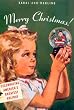
Merry Christmas!: Celebrating America’s Greatest Holiday (Kindle)
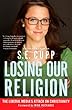
A great book on Losing Our Religion(Kindle) by atheist S. E. Cupp, who says she is he perfect person for this book because she has no dog in the hunt, takes on the all too often avoided question and discussion of religion in America…
The Battle for Christmas (Kindle)

Related:

Where Does the War on Christmas Come From? A Worthwhile Read – WoC 2013

The War on Christmas verses the Spirit of Christmas Series 2013 at AskMarion – WoC 2013

ANOTHER FAILED IDEA: Woman gets laughed at after bringing up Obamacare at Thanksgiving…

The Twelve Days of ObamaCare

Disney scores big with biblical values

Advent – The Season of Anticipation and Hope – WoC 2013

The Thanksgiving Illusion

Obama Thanksgiving and Christmas Disgrace

Keeping Pets Safe for the Holidays: The “Not So Safe” or No-No Pet Food List

Sarah Palin on Politics and Religion • 11/10/13 With Susan Page

The Cross – Billy Graham’s Message To America

Best Holiday Movie Classics – A Merry Christmas From Hollywood

Two great new books for the holidays: ‘Good Tidings and Great Joy: Protecting the Heart of Christmas’ (Kindle) and The Romney Family Table: Sharing Home-Cooked Recipes & Favorite Traditions (Kindle)

Wednesday, December 12, 2012

NewsWeek and Jon Stewart Decree the War on Christmas is Over…

By Marion Algier – The War on Christmas verses the Spirit of Christmas Series at AskMarion – 12

Leftist comedian Jon Stewart recently introduced his annual skewering of the “war on Christmas” with a montage of Fox News personalities breathlessly reporting the latest outrages against the holiday’s religious origins. “Let’s face facts, the annual Fox ‘war on Christmas’ has become a little predictable”, Stewart said, kicking off his own predictable seasonal faux war on Fox and especially Bill O’Reilly.

What Happened to the War on Christmas?

Illustration by Sean McCabe; Source: Ryan McVay / Getty; Peter Breiehagen / Photographer's Choice-Getty; Stockbyte-Getty; Stockbyte-Getty; Jamie McCarthy / Getty)

The Daily Beast: For several years now, there have been signs the war on Christmas is running out of ammunition. Google Trends shows a peak in news articles mentioning the Christmas clashes in 2005, after which they slowed to a small annual blip. In 2007 the Springfield, Ill., State Journal-Register remarked that the paper had received hardly any letters about the war on Christmas. “If there still is a War on Christmas going on, its soldiers must have gone underground,” they wrote in a Christmas Eve editorial. Despite occasional flare-ups, like 2010’s “billboard war” between Catholics and atheist groups outside New York City, the battle over the December holidays gradually became the stuff of social-media memes, Onion parodies, and Daily Show takedowns.

Hmmm… or is it just that the mainstream media has stopped reporting on the War on Christmas?!?

How did this cultural flash point slide into oblivion, with Bill O’Reilly virtually the last person continuing to fight?, the Daily Beast asks.  Some Christmas soldiers say it’s because their side won. According to the American Family Association, 80 percent of the ­retailers the group profiled for its inaugural “naughty and nice” list in 2005 used religion-neutral terminology like “holidays” in their advertising and store signs. Now an overwhelming majority have ­reverted back to using the word “Christmas.” ­Randy Sharp, a spokesman for the AFA, says that “there has been a correction.” Retailers, he says, realized “people weren’t offended by being wished a ‘Merry Christmas,’ but those of us who celebrate the historical significance of the birth of Christ are offended when you downplay that.”

Bill Donohue, the president of the conservative Catholic League, which has skirmished with atheist groups over Christmas displays, said his organization has received far fewer reports of alleged discrimination against Christmas this year.

Though the war on Christmas may no longer be an annual ‘news’ event, its legacy remains in ongoing local battles over religious expression in schools and on government property. Anecdotally, some Americans say that anger over the perceived purging of Christmas from society was simply absorbed into the right’s more general resentment toward the forces of multicultural inclusion. “It’s become part of the background noise,” said Charlie Digiglio of Waxahachie, Texas, describing conversations he’s overheard among friends and co-workers. “For many people, it’s just an assumed reality that’s hardly worth mentioning anymore.”

Don’t tell these people the war on Christmas is over:  Atheists intimidate Santa Monica into eliminating Nativity… And So the War on Christmas and Freedom of Religion ContinuesChurches Thwart Nativity Ban By Putting Up Living Displays In Santa Monica Or how about the seniors who were told no Christmas Trees? Or the school that had to change their field trip to see a live version of A Charlie Brown Christmas because it was taking place at a church?

Jon Stewart addressed one of Bill O'Reilly's more impassioned "War on Christmas" moments during a Monday Monologue about guarding America from creeping secularism.

Video:  Bill O'Reilly Confronts Atheist Leader Over The War On Christmas

O'Reilly, who is the undisputed leader of "War on Christmas" coverage, had a slightly shouty (by which we mean it was surprising chairs weren't thrown) conversation with an atheist on his show last week. Besides calling his guest a "fascist," he also claimed that Christianity is a philosophy, not a religion.  Followed by an interview with Dennis Miller.

Video: The War On Christmas Discussed - Dennis Miller Time - Bill O'Reilly - 11-28-12

But we are here to say to the Daily Beast… “Not so fast!!”  The war on Christmas is alive and well and the war on religion… on Christians and Jews has accelerated in the United States and around the world!!  Let us all remember that just because the mainstream media isn’t reporting on something does not mean it isn’t so or isn’t happening.

Related:

The Need For A Christian Worldview of Freedom And Economics

BECK GOES GLOBAL, MEETS WITH CATHOLIC CLERGY & INTERNATIONAL TEA PARTY LEADERS IN ROME

Carolling… or Caroling and Christmas Music

Nativity – The Reason for the Season

Christmas Trees

Hanukkah, Hanukah, Chanukah

European Markets or Christkindlmarkts Capture the Christmas Spirit

St. Nickolas Day

So Where Is the War on Christmas Coming From? – A Worthwhile Read!

Best Holiday Movie Classics – A Merry Christmas From Hollywood

God Rest Ye Merry Merchants – Christmas: An American Holiday and Tradition to Love and Preserve

Advent – The Season of Anticipation and Hope

The War on Christmas verses the Spirit of Christmas Series at AskMarion – with comments from Ben Stein

Red Kettles & Bell Ringers

Black Friday Holiday Shopping Kick-off Overshadows True Meaning of Christmas

What Movies in History Best Captures the Spirit of Thanksgiving?

“Holidays Are Great and Fun To Share With Our Pets, As Long As We Avoid the No-No Foods” - Animal Nativity

Christianity & Gun Owners in the Crosshairs: Chilling Tactic Exposed

How Should Christians Respond to Atheist ‘Hatred’ & the War on Christmas? This Priest Has Some Advice

A great read: Losing Our Religion: The Liberal Media’s Attack on Christianity

Friday, December 7, 2012

European Markets or Christkindlmarkts Capture the Christmas Spirit

By Marion Algier – The War on Christmas verses the Spirit of Christmas Series at AskMarion – 7

“There is no ideal Christmas; only the one Christmas you decide to make as a reflection of your values, desires, affections, traditions.” — Bill McKibben “Make sure your children have traditions to remember and build on!”

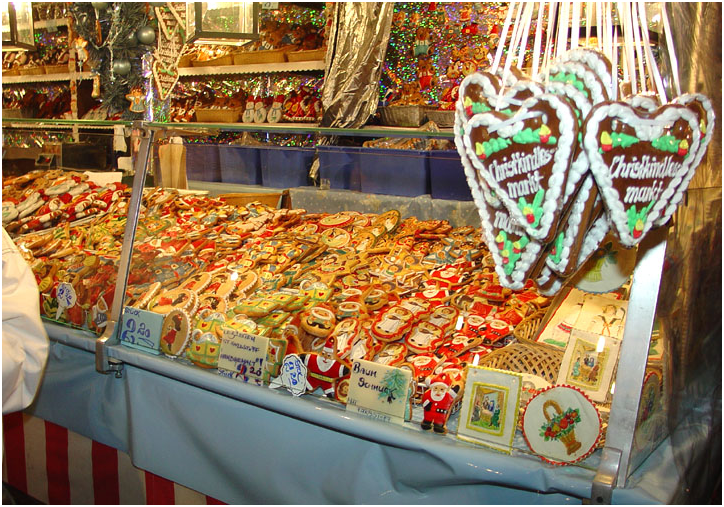
Beginning December 1st the Christmas spirit descends on the towns and cities of Germany in the form of Christkindlmarkts featuring wooden stalls laden with, toys, pretzels, wooden decorations and baked goodies of all shapes and sizes, including stollen.

image

There are more than 130 places in Germany that host Christmas markets, many in Austria and some good ones in Brussels, Prague and Copenhagen all focusing on regional specialties and local flair. It has developed into an art form, with elaborate nativity displays, handcrafted wooden ornaments, and scrumptious treats that would certainly tempt Santa and his reindeer to spend a little extra time at your house.

image

Nuremberg and Dresden compete for the position of oldest and most famous Christmas market. And although the markets have grown into major international tourist attractions, They also draw from locals and visitors from all over Germany and neighboring countries. The Markets draw from centuries of German Christmas traditions; in a country where the Protestant Reformation took root and where the current pope was born. Some customs date back to the Middle Ages.

image

Dresden, boasts of the Striezelmarkt, the oldest documented Christmas market in the country, dating to 1434. It is the home of the largest “Christmas pyramid” — a 45-foot-high wood structure lit with candles that spin the tiers of the decorated pyramid.

imageimage

Actual pyramid and a miniature made out of gingerbread (Lebkuchen)

The tradition for Christmas wood carving comes from the Erzgebirge, or “Ore mountains,” an old mining region south of the city that borders the Czech Republic. Nutcrackers and “smoking men” incense holders originally were created here.

The Stollen Festival is another highlight of the market, with the largest loaf of Christstollen — a buttery, spiced loaf weighing between 3 and 4 tons — which was cut here and served to visitors Dec. 4.

image

In Nuremberg in Bavaria, the city’s Christkindlmarkt is perhaps the most famous of all theNurnberg Christkindl in Chicago - Peter J. Schulz, City of Chicago markets, counting some 2 million visitors from Japan, the United States, China, all over Europe and elsewhere around the world every year.

They come for the Lebkuchen, a spicy gingerbread baked here since 1395, and “3 in a Weggla,” tiny Nuremberg wursts served three little sausages abreast in a bun with spicy mustard. The Christkind, an angelic or fairylike character, is the symbol of the market, and a woman with golden hair and a crown opens the market each year with her Christmas proclamation and hears the Christmas gift wishes of the children.

image

In Frankfurt am Main’s historical center, the Dom Roemer transforms from its post-World War II reconstruction of history into a wonderland of carousel music, bundled groups of people laughing around cauldrons of hot spiced wine called Gluehwein, and thick clusters of gingerbread hearts laden with hardened frosting.

imageimageimage

In Aachen, bakeries offer their famous Aachener Printen gingerbread and marzipan bread. In Berlin, the 17th-century Charlottenburger Palace is brilliantly illuminated behind the market, and the Jewish Museum hosts a combined Hanukkah-Christmas market with kosher delicacies.

image

The popularity of the Christmas markets has spread around the world, inspiring copies in Britain, the United States and elsewhere.

image

Christkindlmarket ChicagoThe German American Chamber of Commerce was inspired to create a market in Chicago after Nuremberg’s Christkindlmarkt, and even has the Nuremberg’s former Christkind, Eva Sattler, an original Nuremberger, opened the market with a traditional proclamation. 

Top Christkindlmärkte in Vienna (Wien), Salzburg, Innsbruck and Linz The centrally located Salzburger Christkindlmarkt, held on the Domplatz (Cathedral Innsbruck Christmas Market in Tyrol, Austria - © 2004 | TVB Innsbruck / IAI / Saringer Square) and Residenzplatz (Palace Square), takes place in the vicinity of the city’s cathedral. The twin-towered cathedral, known locally as the Dom-Kirche, was designed Santino Solari and built between 1614 and 1657. It is one of the earliest twin-towered churches north of the Alps, and seen as one of the finest examples of early Baroque architecture. It makes a fine backdrop for tourist snaps of the Christmas market. Evening carol concerts are held on the steps of the cathedral, contributing to the seasonal atmosphere around the stalls

GERMANY’S CHRISTMAS MARKETS: Find information about hundreds of Christmas markets and other holiday events in Germany at http://tinyurl.com/5c9n9d. It features a map of cities with markets with links for more information.

RDO: Six of the Best Christmas Markets in Europe

Christmas markets have been a highlight of the winter season since the Middle Ages and today they continue to light up old city centers all around Europe. Home-made food, warm mulled wine and handcrafted tree decorations and ornaments are all part of the charm along with carol singing and street musicians all adding to the festive community atmosphere. Here are six markets where you can experience the Christmas spirit to the full.

Cologne
This German city has no less than four Christmas markets around the city which attract up to two million visitors during December. The city’s old cathedral is one of the most visited monuments in the country and its most famous market is the Am Dom, a bustling, candlelit market with over 150 stalls set against the backdrop of the cathedral’s spires with a towering, glowing centerpiece – the town’s Christmas tree.

A smaller market takes place on the cobbled square of the Alter Markt close by, there’s a merry-go-round, puppet theatre, Santa’s Grotto and stalls packed with gingerbread, sweets and handcrafted toys – it’s definitely one of the markets that’s most fun for children.

Vienna
There are few cities more beautiful than Vienna when it snows and its Christkindlmarkt by the Town Hall is the city’s showcase Christmas market. It starts early, in mid-November, and continues to draw the crowds year after year. Millions of visitors come from all over the world to experience the magic.

During the Advent season, Vienna is ablaze with activity, including nativity displays, seasonal plays and concerts. The Christkindlmarkt stalls are lined with candied fruits, candyfloss and roast chestnuts and simple gifts such as beeswax candles; the small wooden stalls give the city a nostalgic feel of bygone times.

Dresden
The first record of Dresden’s Christmas market dates back to 1434, making it the oldest one on record in Germany.

This is the place for Striezel – or Stollen which is a traditional Christmas time fruitcake now sold all over Europe and baked in the form of a loaf and dusted with icing sugar. Dresden’s residents take their Stollen very seriously and celebrate with a Stollen Festival, held on the second Sunday in December. In the 16th century, the Stollen bakers would present their handmade cakes to the local prince, who would cut them into slices with a five-foot knife and distribute them to the poor. The tradition has changed somewhat today – this year, as in the past, a 3,000 kilogram cake will be paraded around Dresden accompanied by the town’s own “Miss Stollenmadchen”, the Stollen beauty queen.

The market is pretty and old fashioned, with around 250 stalls where you can browse traditional German Christmas wares, including colorful hand-blown glass baubles from the town of Lauscha and hand-fired blue and white ceramics from Saxony.

Brussels
The much-photographed Grand Place or Grote Markt in Brussels becomes center stage for its Christmas market at this time of year and it’s a good one for food gifts. Along with the mulled wine you’ll find beautifully wrapped clusters of the chocolates Belgium is famous for, hot plates of moules and Belgian speculoos which are a type of biscuit gingerbread shaped like Santa Claus.

Another attraction is The Fish Market. This transforms into the city’s Christmas ice rink; the skaters are surrounded by jugglers, street musicians and painters all sharing the festivities.

Prague
The Czech capital is beautiful any time of year, probably more so at Christmas. The city puts on plays, concerts, folk displays and its Christmas markets are family affairs, dotted in and around Prague.
While the snow shows off the city’s cobbled squares and fairytale buildings , and carol singers provide the soundtrack, visitors have rows of colorful wooden stalls to browse and explore, which sell hand-carved puppets, candles, jewelry and toys.

Copenhagen
Another picturesque setting, this time it’s Copenhagen. This Christmas market will delight lovers of glittering lights and outdoor skating. Held in the Tivoli Gardens, the place becomes a sparkling silvery winter wonderland decked out with hundreds of Christmas trees and half a million lights. The main lake doubles as the city’s winter skating rink and there are about sixty colorfully-painted stalls, all selling locally-made porcelain, wooden dolls and typical arts and crafts.

Copenhagen’s version of mulled wine is glögg, a warm heady wine mixed with liquor and spices – perfect for those sub-zero temperatures. Sip it with some hot apple dumplings as you wander the stalls, pose for a quick pic with Father Christmas and mingle with Denmark’s famous Christmas elves – called “nisser” – all festively dressed in red.

BronnerBronner's -  The World's Largest Christmas Store

The American version of a permanent Christkindlmarkt is Bronner’s Christmas Wonderland in Frankenmuth, Michigan… which lasts year round

Christmas City, Lehigh Valley Convention & Visitors Bureau

Christmas City – Lehigh Valley Convention & Visitors Bureau

For a true Christmas vacation, there are few places as caught up in the holiday spirit as Bethlehem, Pennsylvania, aka Christmas City. Here are tips on planning a trip.

Bethlehem was founded by Moravians on Christmas Eve 268 years ago, and the city’s traditions have been rooted in Christmas ever since. There are many activities wonderful for holiday visitors, from a host of Christmas events to holiday shopping to horse-drawn carriage rides to a Christmas market.

h/t to RDO, Bronner’s and Suite 101

“Christmas–that magic blanket that wraps itself about us, that something so intangible that it is like a fragrance. It may weave a spell of nostalgia. Christmas may be a day of feasting, or of prayer, but always it will be a day of remembrance–a day in which we think of everything we have ever loved.” …Augusta E. Rundel

Related:

St. Nickolas Day

So Where Is the War on Christmas Coming From? – A Worthwhile Read!

Best Holiday Movie Classics – A Merry Christmas From Hollywood

God Rest Ye Merry Merchants – Christmas: An American Holiday and Tradition to Love and Preserve

Advent – The Season of Anticipation and Hope

The War on Christmas verses the Spirit of Christmas Series at AskMarion – with comments from Ben Stein

Red Kettles & Bell Ringers

Atheists intimidate Santa Monica into eliminating Nativity… And So the War on Christmas and Freedom of Religion Continues - Churches Thwart Nativity Ban By Putting Up Living Displays In Santa Monica

Black Friday Holiday Shopping Kick-off Overshadows True Meaning of Christmas

What Movies in History Best Captures the Spirit of Thanksgiving?

“Holidays Are Great and Fun To Share With Our Pets, As Long As We Avoid the No-No Foods”

Christianity & Gun Owners in the Crosshairs: Chilling Tactic Exposed

A great read: Losing Our Religion: The Liberal Media’s Attack on Christianity

Thursday, December 6, 2012

St. Nickolas Day

By Marion Algier - The War on Christmas verses the Spirit of Christmas Series at AskMarion – 6

“There are three stages of a man’s life: He believes in Santa Claus or St Nickolas, he doesn’t believe in Santa Claus, he is Santa Claus.” …Unknown

Celebrate Saint Nicholas DayToday, in many parts of the world, Saint Nicholas delivers gifts on the eve of his Feast Day, December 6, and Christmas is reserved for the religious observance of Christ’s birth. It is a positive way to do both the gifts and the religious celebrations, while separating them!  in other places, like the United States the two holidays are intertwined.

Happy St. Nicolas Day!!

One of the lesser known aspects of Christmastime and St Nickolas Day, is the Krampus. Beware, boys and girls, for if you are naughty you may receive a visit from the Krampus! He has a whip and he isn’t afraid to use it!

The threat of a visit by the Krampus, who accompanied St Nicholas, was a deterrent to bad behavior. Think of the Grinch with a really, really bad temper and you are getting close. He gained popularity (if that’s what you can call it!) outside of the remote isolated Alpine areas in Northern Europe, due in part to the popularity of Christmas cards portraying him in the late nineteenth and early twentieth centuries.

My father, who grew up during World War I without a father, because he was off at war and never came home, in a small Alpine town outside of Linz, Austria told stories of St. Nickolas arriving on cross-country skis with the Krampus on a chain, often to homes where mothers were having problems with unruly children, especially boys. Most had an immediate attitude change after just seeing him, but there were stories of the Krampus tossing particularly incorrigible kids into his black sack and taking them on a harrowing ski ride from which all returned calmer and more agreeable children… at least for awhile. Some kids who had not been quite bad enough to deal with the Krampus, but were on the edge, would just hear the rattling of his chain as St Nickolas left them a lump of coal instead of goodies.

If you’ve never read Der Struwwelpeter (Struwwelpeter in English Translation) then you don’t know what you’re missing. It’s a children’s book which uses stories and wonderful illustrations to suggest that misbehavior is likely to end in disaster and even death. It’s a wonderful tool, but probably a little too politically incorrect for some these days.

There are those who complain about the “commercialization” of the Christmas season and that commercialism can detract from the holiday’s religious roots..

However, we must remember that Christmas has always been more than just a religious holiday. Today it is more secular than during some times in the  past, but it has always been celebrated with gifts and other festivities, and often with little regard to religion. And it should be remembered that the message of peace, brotherhood and good will which is central to the Christmas season is a message everyone can appreciate.

As to commercialization, we must also remember that St. Nicholas came from a wealthy family and did not hesitate to use his wealth to purchase the things he gave to those in distress. For the past seventeen centuries, parents have honored him by buying gifts on his feast or on Christmas and secretly giving them to their children as gifts from St. Nicholas.

So the season has always had its commercial aspects. After all, St. Nicholas is the patron saint of both the children who are the focus of much of the gift giving as well as the merchants who sell the gifts.

In countries like Germany and Austria where they celebrate the entire Christmas Season from Advent to the Holy 3-Kings Day or the Epiphany (December 2nd through January 6th) there are many celebrations and much family time, on-going gifts and fun as well as plenty of time for those who remember what Christmas is really about: to worship, reflect, be grateful and celebrate the birth of Jesus.

Interestingly enough in these same regions in addition to the Christmas Season Celebrations they also have Fasching (Mardi Gras) Group meetings and early celebrations that overlap and ultimately end with Lent.

Many of the purists or traditional conservative Christians dislike the meshing of Christianity and the old pagan festivals. In countries where children have a good grounding in their faith and family, the pagan and commercial additions add a little fun without distorting the true meaning of the season. It is in modern society, including present day Europe and America, where children and people in general have lost their grounding and understanding of their faith and history and embrace only the fun, where these extras or the blending have become a problem.

How to Celebrate St Nikolas Day:

  • Tell your kids the story of Bishop Nicholas and how he came to be the patron saint of children.
  • Hold a Saint Nicholas Day party and serve the spicy speculaas cookies that are associated with Saint Nick.
  • Help your children find the true spirit behind Santa Claus by emulating the Bishop’s kindness: encourage them to give part of their allowance to a cause that helps children or to buy gifts for a local toy drive. You could also help them gather up outgrown clothes or old toys and give them to a charity
  • Encourage your children to make gifts for the special people in their lives or to give them whatever help they need.

Speculaas Cookies or Spicy Sinterklass Cakes

Ingredients
    • 2 tablespoons milk
    • 2/3 cup dark brown sugar
    • 2 cups sifted all-purpose flour
    • 1 teaspoon ground cloves
    • 1 teaspoon ground cinnamon
    • 1/2 teaspoon ground nutmeg
    • 1/2 teaspoon ground ginger
    • 1/4 teaspoon baking powder
    • 1/4 teaspoon salt
    • 2 tablespoons chopped slivered almonds
    • 2 tablespoons chopped candied citron
    • 2/3 cup butter
    • 1/2 cup slivered almonds
      1. In a large bowl, dissolve the brown sugar in milk. Combine the flour, cloves, cinnamon, nutmeg, ginger, baking powder and salt. Stir the dry ingredients into the sugar and milk. Mix in 2 tablespoons of almonds and candied citron. Cut in the butter until it starts to form a dough, then knead on a lightly floured surface until smooth. Cover dough and chill for about 1 hour for easier handling.
      2. Preheat the oven to 350 degrees F (175 degrees C). Dust a wooden speculaas mold lightly with cornstarch. Firmly press the dough into the mold. Run a knife around the edges to trim off excess dough. Gently lift dough out of the mold or tap out onto a cookie sheet. Press remaining almond slivers into cookies to match the designs.
      3. Bake for 15 minutes in the preheated oven, just until the edges begin to darken. If your cookies are more than 1/2 inch thick, bake at 300 degrees F (150 degrees C) for up to 30 minutes. Cool cookies on wire racks to crisp. Store in an airtight container at room temperature for up to a month. The flavor will get better with age.
Directions
  • Amount Per Serving Calories: 83 | Total Fat: 4.2g | Cholesterol: 11mg

“One of the problems we have in this country is that too many adults believe in Santa Claus, and too many children don’t! …Lee Lauer

h/t to Wikipedia

Related:

So Where Is the War on Christmas Coming From? – A Worthwhile Read!

Best Holiday Movie Classics – A Merry Christmas From Hollywood

God Rest Ye Merry Merchants – Christmas: An American Holiday and Tradition to Love and Preserve

Advent – The Season of Anticipation and Hope

The War on Christmas verses the Spirit of Christmas Series at AskMarion - with comments from Ben Stein

Red Kettles & Bell Ringers

Atheists intimidate Santa Monica into eliminating Nativity… And So the War on Christmas and Freedom of Religion Continues - Churches Thwart Nativity Ban By Putting Up Living Displays In Santa Monica

Black Friday Holiday Shopping Kick-off Overshadows True Meaning of Christmas

What Movies in History Best Captures the Spirit of Thanksgiving?

“Holidays Are Great and Fun To Share With Our Pets, As Long As We Avoid the No-No Foods”

A great read: Losing Our Religion: The Liberal Media’s Attack on Christianity

Saturday, December 1, 2012

The War on Christmas verses the Spirit of Christmas Series at AskMarion

Once upon a time not all that long ago – in fact, anyone over 50 will easily remember it – the word “Christmas” was everywhere during the month of December. Everywhere you looked – in stores, in town squares, in cities, in offices, and of course… in private homes — there were Christmas trees, Christmas decorations, Christmas cards, Christmas gifts, Christmas parties, Christmas vacations and yes… Nativity Scenes. Even Jews got into the act… Hanukah Bushes, Christmas lights in blue and white and an embracement of all the festivities.

Just ask Ben Stein:

“The More We Enjoy Each Other’s Holidays and Traditions, the More Beautiful the World Looks!”

“I am a Jew and every single one of my ancestors was Jewish, and it does not bother me even a little bit when people call those beautifully lit-up, bejeweled trees ‘Christmas trees’.” …Ben Stein

Confessions for the Holidays by Ben Stein

clip_image001

*The following was written by Ben Stein and recited by him on CBS Sunday Morning Commentary, December 18, 2005.

Here at this happy time of year, a few confessions from my beating heart:

I have no freaking clue who Nick and Jessica are.

I see them on the cover of People and Us constantly when I’m buying my dog biscuits. I still don’t know. I often ask the checkers at the grocery stores who they are. They don’t know who Nick and Jessica are, either. Who are they? Will it change my life if I know who they are and why they’ve broken up? Why are they so darned important?

I don’t know who Lindsay Lohan is either, and I don’t care at all about Tom Cruise’s baby.

Am I going to be called before a Senate committee and asked if I’m a subversive? Maybe. But I just have no clue who Nick and Jessica are. Is this what it means to be no longer young? Hm, not so bad.

Next confession: I am a Jew and every single one of my ancestors was Jewish, and it does not bother me even a little bit when people call those beautifully lit-up, bejeweled trees Christmas trees.

I don’t feel threatened. I don’t feel discriminated against. That’s what they are — Christmas trees. It doesn’t bother me a bit when people say ‘Merry Christmas’ to me. I don’t think they’re slighting me or getting ready to put me in a ghetto. In fact, I kind of like it. It shows that we’re all brothers and sisters celebrating this happy time of year.

It doesn’t bother me one bit that there’s a manger scene on display at a key intersection at my beach house in Malibu.

If people want a creche, fine. The menorah a few hundred yards away is fine, too. I do not like getting pushed around for being a Jew, and I don’t think Christians like getting pushed around for being Christians. I think people who believe in God are sick and tired of getting pushed around, period. I have no idea where the concept came from that America is an explicitly atheist country. I can’t find it in the Constitution and I don’t like it being shoved down my throat. Or maybe I can put it another way. Where did the idea come from that we should worship Nick and Jessica and aren’t allowed to worship God as we understand him? I guess that’s a sign that I’m getting old, too. But there are a lot of us who are wondering where Nick and Jessica came from and where the America we used to know went to.

— by Ben Stein: "Confessions for the Holidays." CBS News Transcripts. 18 December 2005.

So let’s take a quick look at where many these traditions came from… that the Atheists and secularists now both fear and fight.

Video: CHRISTMAS - History Channel [ Part 1 of 5 ]

Video: CHRISTMAS - History Channel [ Part 2 of 5 ]

Video: CHRISTMAS - History Channel [ Part 3 of 5 ]

Video: CHRISTMAS - History Channel [ Part 4 of 5 ]

Video: CHRISTMAS - History Channel [ Part 5 of 5 ]

christmas-icons-posters-collage

How to Build a Christmas Photo Collage Using Wondershare Photo Collage Studio

Related:

Red Kettles & Bell Ringers

Atheists intimidate Santa Monica into eliminating Nativity… And So the War on Christmas and Freedom of Religion Continues

Black Friday Holiday Shopping Kick-off Overshadows True Meaning of Christmas

What Movies in History Best Captures the Spirit of Thanksgiving?

Sunday, November 25, 2012

Atheists intimidate Santa Monica into eliminating Nativity… And So the War on Christmas and Freedom of Religion Continues

nativity_scene-300x180LOS ANGELES (AP) - Damon Vix didn't have to go to court to push Christmas out of the city of Santa Monica. He just joined the festivities.

The atheist's anti-God message alongside a life-sized nativity display in a park overlooking the beach ignited a debate that burned brighter than any Christmas candle.

Santa Monica officials snuffed the city's holiday tradition this year rather than referee the religious rumble, prompting churches that have set up a 14-scene Christian diorama for decades to sue over freedom of speech violations. Their attorney will ask a federal judge Monday to resurrect the depiction of Jesus' birth, while the city aims to eject the case.

"It's a sad, sad commentary on the attitudes of the day that a nearly 60-year-old Christmas tradition is now having to hunt for a home, something like our savior had to hunt for a place to be born because the world was not interested," said Hunter Jameson, head of the nonprofit Santa Monica Nativity Scene Committee that is suing.

Missing from the courtroom drama will be Vix and his fellow atheists, who are not parties to the case. Their role outside court highlights a tactical shift as atheists evolve into a vocal minority eager to get their non-beliefs into the public square as never before.

National atheist groups earlier this year took out full-page newspaper ads and hundreds of TV spots in response to the Catholic bishops' activism around women's health care issues and are gearing up to battle for their own space alongside public Christmas displays in small towns across America this season.

"In recent years, the tactic of many in the atheist community has been, if you can't beat them, join them," said Charles Haynes, a senior scholar at the First Amendment Center and director of the Newseum's Religious Freedom Education Project in Washington. "If these church groups insist that these public spaces are going to be dominated by a Christian message, we'll just get in the game - and that changes everything."

In the past, atheists primarily fought to uphold the separation of church and state through the courts. The change underscores the conviction held by many nonbelievers that their views are gaining a foothold, especially among young adults.

The Pew Forum on Religion & Public Life released a study last month that found 20 percent of Americans say they have no religious affiliation, an increase from 15 percent in the last five years. Atheists took heart from the report, although Pew researchers stressed that the category also encompassed majorities of people who said they believed in God but had no ties with organized religion and people who consider themselves "spiritual" but not "religious."

"We're at the bottom of the totem pole socially, but we have muscle and we're flexing it," said Annie Laurie Gaylor, co-president of the Wisconsin-based Freedom from Religion Foundation. "Ignore our numbers at your peril."

The trouble in Santa Monica began three years ago, when Vix applied for and was granted a booth in Palisades Park alongside the story of Jesus Christ's birth, from Mary's visit from the Angel Gabriel to the traditional crèche.

Vix hung a simple sign that quoted Thomas Jefferson: "Religions are all alike -- founded on fables and mythologies." The other side read "Happy Solstice." He repeated the display the following year but then upped the stakes significantly.

In 2011, Vix recruited 10 others to inundate the city with applications for tongue-in-cheek displays such as a homage to the "Pastafarian religion," which would include an artistic representation of the great Flying Spaghetti Monster.

The secular coalition won 18 of 21 spaces. The two others went to the traditional Christmas displays and one to a Hanukkah display.

The atheists used half their spaces, displaying signs such as one that showed pictures of Poseidon, Jesus, Santa Claus and the devil and said: "37 million Americans know myths when they see them. What myths do you see?"

Most of the signs were vandalized and in the ensuing uproar, the city effectively ended a tradition that began in 1953 and earned Santa Monica one of its nicknames, the City of the Christmas Story.

The Santa Monica Nativity Scenes Committee argues in its lawsuit that atheists have the right to protest, but that freedom doesn't trump the Christians' right to free speech.

"If they want to hold an opposing viewpoint about the celebration of Christmas, they're free to do that - but they can't interfere with our right to engage in religious speech in a traditional public forum," said William Becker, attorney for the committee. "Our goal is to preserve the tradition in Santa Monica and to keep Christmas alive."

The city doesn't prohibit churches from caroling in the park, handing out literature or even staging a play about the birth of Jesus and churches can always set up a nativity on private land, Deputy City Attorney Jeanette Schachtner said in an email.

The decision to ban the displays also saves the city, which had administered the cumbersome lottery process used to award booths, both time and money while preserving the park's aesthetics, she said.

For his part, Vix is surprised - and slightly amused - at the legal battle spawned by his solitary act but doesn't plan anything further.

"That was such a unique and blatant example of the violation of the First Amendment that I felt I had to act," said the 44-year-old set builder. "If I had another goal, it would be to remove the `under God' phrase from the Pledge of Allegiance - but that's a little too big for me to take on for right now."

The First Amendment of the U.S. Constitution guarantees freedom of speech and religion, but also states that "Congress shall make no law respecting an establishment of religion." That has been interpreted by courts as providing for separation of church and state, barring government bodies from promoting, endorsing or funding religion or religious institutions.

Related:

Court sides with Christian publishing house

Did You Know… the Founding Fathers and God

Ben Stein on Christmas

God Rest Ye Merry Merchants

Losing Our Religion

For Fourth Straight Year, Obama’s Thanksgiving Message Doesn’t Thank God

A National Crisis in Character… So Let Us Recapture The Culture!