Showing posts with label WWII. Show all posts

Friday, June 6, 2014

D-Day Fallen and Veterans Honored on 70th Anniversary

dday4

In the military, D-Day is the day on which a combat attack or operation is to be initiated. The best known D-Day is June 6, 1944,  the day of the Normandy landing.

D-day-normandy-in-photos-2

The Normandy landings, codenamed Operation Neptune, were the landing operations of the Allied invasion of Normandy in  Operation Overlord during World War II. The largest seaborne invasion in history, the operation began the Allied invasion of German-occupied western Europe, led to the restoration of the French Republic, and contributed to an Allied victory in the war.

D-Day-Allied-Soldiers-Vehicles-and-equipment

This D-Day, the 70th Anniversary, could be the last… at least major anniversary, for many of these WWII veterans.

World leaders including President Barack Obama and Vladimir Putin gathered today in France for the celebration, as well as most of the heads of state of Europe, the EU; many wondering what Putin plans to do next and if his actions might bring us closer to WWIII. And as Obama gave his speech, many were certainly wondering how he had the nerve even to appear there with the all those heroes, the ghosts of tens of thousands of additional heroes and veterans that gathered, as the VA Scandal is raging back home and as last weekend’s scandal over the Bergdahl exchange for 5-Taliban Terrorist Commanders for what is looking more and more like a trade for a deserter and Taliban collaborator, which certainly endangers more troops, Americans everywhere and probably westerners in general, is growing.

As we look back at previous D-Day Celebrations, President Reagan’s famous 40th Anniversary speech is certainly worth hearing again.

Here are Reagan’s remarks to the veterans at Pointe du Hoc:

Video:  Normandy Speech: Ceremony Commemorating the 40th Anniversary of the Normandy Invasion, D-Day 6/6/84

We’re here to mark that day in history when the Allied armies joined in battle to reclaim this continent to liberty. For 4 long years, much of Europe had been under a terrible shadow. Free nations had fallen, Jews cried out in the camps, millions cried out for liberation. Europe was enslaved, and the world prayed for its rescue. Here in Normandy the rescue began. Here the Allies stood and fought against tyranny in a giant undertaking unparalleled in human history.

We stand on a lonely, windswept point on the northern shore of France. The air is soft, but 40 years ago at this moment, the air was dense with smoke and the cries of men, and the air was filled with the crack of rifle fire and the roar of cannon. At dawn, on the morning of the 6th of June, 1944, 225 Rangers jumped off the British landing craft and ran to the bottom of these cliffs. Their mission was one of the most difficult and daring of the invasion: to climb these sheer and desolate cliffs and take out the enemy guns. The Allies had been told that some of the mightiest of these guns were here and they would be trained on the beaches to stop the Allied advance.

The Rangers looked up and saw the enemy soldiers — the edge of the cliffs shooting down at them with machine guns and throwing grenades. And the American Rangers began to climb. They shot rope ladders over the face of these cliffs and began to climb over the face of these cliffs and began to pull themselves up. When one Ranger fell, another would take his place. When one rope was cut, a Ranger would grab another and begin his climb again. They climbed, shot back, and held their footing. Soon, one by one, the Rangers pulled themselves over the top, and in seizing the firm land at the top of these cliffs, they began to seize back the continent of Europe.

Two hundred and twenty-five came here. After 2 days of fighting, only 90 could still bear arms.

Behind me is a memorial that symbolizes the Ranger daggers that were thrust into the top of these cliffs. And before me are the men who put them there.

These are the boys of Pointe du Hoc. These are the men who took the cliffs. These are the champions who helped free a continent. These are the heroes who helped end a war.

Gentlemen, I look at you, and I think of the words of Stephen Spender’s poem. You are men who in your “lives fought for life . . . and left the vivid air signed with your honor.”

I think I know what you may be thinking right now — thinking “we were just part of a bigger effort; everyone was brave that day.” Well, everyone was. Do you remember the story of Bill Millin of the 51st Highlanders? Forty years ago today, British troops were pinned down near a bridge, waiting desperately for help. Suddenly, they heard the sound of bagpipes, and some thought they were dreaming. Well, they weren’t. They looked up and saw Bill Millin with his bagpipes, leading the reinforcements and ignoring the smack of the bullets into the ground around him.

Lord Lovat was with him — Lord Lovat of Scotland, who calmly announced when he got to the bridge, “Sorry I’m a few minutes late,” as if he’d been delayed by a traffic jam, when in truth he’d just come from the bloody fighting on Sword Beach, which he and his men had just taken.

There was the impossible valor of the Poles who threw themselves between the enemy and the rest of Europe as the invasion took hold, and the unsurpassed courage of the Canadians who had already seen the horrors of war on this coast. They knew what awaited them there, but they would not be deterred. And once they hit Juno Beach, they never looked back.

All of these men were part of a rollcall of honor with names that spoke of a pride as bright as the colors they bore: the Royal Winnipeg Rifles, Poland’s 24th Lancers, the Royal Scots Fusiliers, the Screaming Eagles, the Yeomen of England’s armored divisions, the forces of Free France, the Coast Guard’s “Matchbox Fleet” and you, the American Rangers.

Forty summers have passed since the battle that you fought here. You were young the day you took these cliffs; some of you were hardly more than boys, with the deepest joys of life before you. Yet, you risked everything here. Why? Why did you do it? What impelled you to put aside the instinct for self-preservation and risk your lives to take these cliffs? What inspired all the men of the armies that met here? We look at you, and somehow we know the answer. It was faith and belief; it was loyalty and love.

The men of Normandy had faith that what they were doing was right, faith that they fought for all humanity, faith that a just God would grant them mercy on this beachhead or on the next. It was the deep knowledge — and pray God we have not lost it — that there is a profound, moral difference between the use of force for liberation and the use of force for conquest. You were here to liberate, not to conquer, and so you and those others did not doubt your cause. And you were right not to doubt.

You all knew that some things are worth dying for. One’s country is worth dying for, and democracy is worth dying for, because it’s the most deeply honorable form of government ever devised by man. All of you loved liberty. All of you were willing to fight tyranny, and you knew people of your countries were behind you.

The Americans who fought here that morning knew word of the invasion was spreading through the darkness back home. They fought— or felt in their hearts, though they couldn’t know in fact, that in Georgia they were filling the churches at 4 a.m., in Kansas they were kneeling on their porches and praying, and in Philadelphia they were ringing the Liberty Bell.

Something else helped the men of D-day: their rockhard belief that Providence would have a great hand in the events that would unfold here; that God was an ally in this great cause. And, so, the night before the invasion, when Colonel Wolverton asked his parachute troops to kneel with him in prayer he told them: Do not bow your heads, but look up so you can see God and ask His blessing in what we’re about to do. Also that night, General Matthew Ridgway on his cot, listening in the darkenss for the promise God made to Joshua: “I will not fail thee nor forsake thee.”

These are the things that impelled them; these are the things that shaped the unity of the Allies.

When the war was over, there were lives to be rebuilt and governments to be returned to the people. There were nations to be reborn. Above all, there was a new peace to be assured. These were huge and daunting tasks. But the Allies summoned strength from the faith, belief, loyalty, and love of those who fell here. They rebuilt a new Europe together.

There was first a great reconciliation among those who had been enemies, all of whom had suffered so greatly. The United States did its part, creating the Marshall plan to help rebuild our allies and our former enemies. The Marshall plan led to the Atlantic alliance — a great alliance that serves to this day as our shield for freedom, for prosperity, and for peace.

In spite of our great efforts and successes, not all that followed the end of the war was happy or planned. Some liberated countries were lost. The great sadness of this loss echoes down to our own time in the streets of Warsaw, Prague, and East Berlin. Soviet troops that came to the center of this continent did not leave when peace came. They’re still there, uninvited, unwanted, unyielding, almost 40 years after the war. Because of this, allied forces still stand on this continent. Today, as 40 years ago, our armies are here for only one purpose — to protect and defend democracy. The only territories we hold are memorials like this one and graveyards where our heroes rest.

We in America have learned bitter lessons from two World Wars: It is better to be here ready to protect the peace, than to take blind shelter across the sea, rushing to respond only after freedom is lost. We’ve learned that isolationism never was and never will be an acceptable response to tyrannical governments with an expansionist intent.

But we try always to be prepared for peace; prepared to deter aggression; prepared to negotiate the reduction of arms; and, yes, prepared to reach out again in the spirit of reconciliation. In truth, there is no reconciliation we would welcome more than a reconciliation with the Soviet Union, so, together, we can lessen the risks of war, now and forever.

It’s fitting to remember here the great losses also suffered by the Russian people during World War II: 20 million perished, a terrible price that testifies to all the world the necessity of ending war. I tell you from my heart that we in the United States do not want war. We want to wipe from the face of the Earth the terrible weapons that man now has in his hands. And I tell you, we are ready to seize that beachhead. We look for some sign from the Soviet Union that they are willing to move forward, that they share our desire and love for peace, and that they will give up the ways of conquest. There must be a changing there that will allow us to turn our hope into action.

We will pray forever that some day that changing will come. But for now, particularly today, it is good and fitting to renew our commitment to each other, to our freedom, and to the alliance that protects it.

We are bound today by what bound us 40 years ago, the same loyalties, traditions, and beliefs. We’re bound by reality. The strength of America’s allies is vital to the United States, and the American security guarantee is essential to the continued freedom of Europe’s democracies. We were with you then; we are with you now. Your hopes are our hopes, and your destiny is our destiny.

Here, in this place where the West held together, let us make a vow to our dead. Let us show them by our actions that we understand what they died for. Let our actions say to them the words for which Matthew Ridgway listened: “I will not fail thee nor forsake thee.”

Strengthened by their courage, heartened by their value [valor], and borne by their memory, let us continue to stand for the ideals for which they lived and died.

Thank you very much, and God bless you all.

Ronald Reagan truly was the great communicator and he loved America and the troops.

Remembering D-Day When America had Real Leadership

Nancy Reagan Remembers Ronald Reagan on 10th anniversary of his Death With Wreath Laying

Friday, December 7, 2012

Pearl Harbor Day

Pearl Harbor veteran recalls bewilderment of attack

It's strange how wars are remembered -- and forgotten. On this day, Dec. 7, let's honor Pearl Harbor's fallen and never forget that the awful attack was one of several costly battles that day.

HONOLULU — Seventy-one years ago this week, Navy veteran Lou Gore was startled by the muffled thuds of explosions and a burst of commotion while cleaning up from breakfast below deck on the USS Phoenix, a cruiser docked at Pearl Harbor.

Hurrying topside, the 18-year-old seaman second-class was confronted by pandemonium he was unable to immediately comprehend — flames shooting skyward, roiling clouds of dark, acrid smoke, swarms of fighter-bombers buzzing low overhead.

Within moments that Sunday morning, it became clear that the U.S. Pacific fleet was under attack. As reflexes from training took over, Gore and others aboard the Phoenix jumped into action and began firing back with anti-aircraft guns.

“We didn’t know (at first) those were Japanese planes,” Gore, now 88 and visiting the islands with nine members of his family, recalled in a recent interview. “We didn’t know what was happening. I just did my job.”

Gore is one of 100 aging Pearl Harbor Survivors who will attend ceremonies on Wednesday on Oahu marking the 70th anniversary of the Japanese air and naval assault that claimed 2,390 American lives and drew the United States into World War Two.

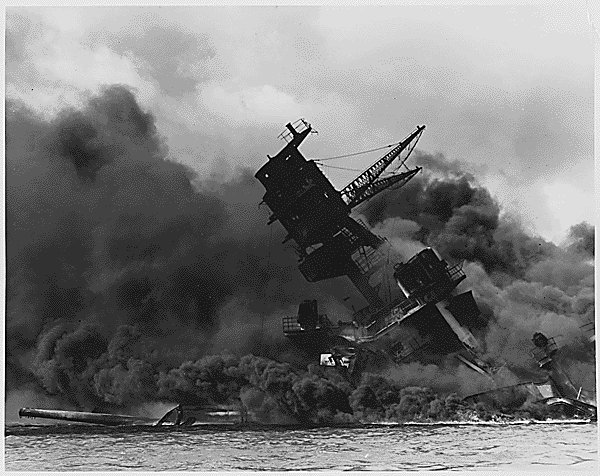
Nearly half of those who perished were sailors aboard the battleship USS Arizona, which Japanese torpedo bombers sank early in the attack, sending 1,177 of its 1,400-member crew to their deaths.

The USS Arizona Memorial, built over the remains of the ship, now forms a centerpiece of the World War Two Valor in the Pacific National Monument, an historic site administered by the National Park Service.

‘BODIES EVERYWHERE’

Gore’s vessel, the Phoenix, was anchored a short distance from the stretch of harbor known as Battleship Row, where the Arizona was moored when it was hit.

“I’ll never forget watching the … USS Arizona battleship jumping up out of the water, landing and rolling on its side,” Gore said. “There were bodies everywhere. Brooms floating in the water, canisters.”

Long after the two-hour surprise attack had ended, the base remained on edge, he recounted. “Everyone was keyed up. After the attack, at night, it wasn’t safe to be out. People were shooting at shadows.”

The Phoenix, among a handful of light cruisers and other vessels that got out of the harbor during or just after the attack, emerged unscathed.

Besides the nearly 2,400 who were killed, the attack left 1,178 people wounded, sank or heavily damaged a dozen U.S. warships and destroyed 323 aircraft, badly crippling the Pacific fleet.

As has been the practice of past anniversary ceremonies, visiting veterans, relatives and dignitaries will bow their heads for a moment of silence at 7:55 a.m. on Wednesday, the time when the attack began, as military jets soar overhead in a “missing-man” formation.

The guided-missile destroyer USS Chung-Hoon will render a salute to the fallen crew of the Arizona, and the morning service will end with a “walk of honor” by more than 100 Pearl Harbor Survivors and other World War Two veterans, many of them in their late 80s. The gathering is expected to include seven of the last known 18 survivors from Arizona’s crew.

The turnout by Pearl Harbor veterans on Wednesday is expected to be only about half of what it was last year, when about 200 attended.

Mal Middlesworth, former president of the National Pearl Harbor Survivors Association and current publisher of the Pearl Gram, a quarterly newsletter, estimates there are about 2,700 Pearl Harbor veterans still alive, approximately 5,000 total survivors.

For Gore, a resident of Seattle, this week marks his first visit to Hawaii since the 1960s, and his first opportunity to personally show his two sons, his daughter and a granddaughter where he was on the morning of the attack.

Gore went on to serve in Okinawa and New Guinea during World War Two and remained in the Navy for 30 years, including a brief stint in Korea and two tours of duty during the Vietnam War. He retired as a petty officer first-class.

Despite the tributes he is receiving this year as a Pearl Harbor veteran, Gore insists he is no hero.

“I’m grateful to still be alive. So many lost their lives for no reason. … I wish I had been able to save more” (lives), he said.

(This story corrects Gore’s rank in paragraph 2 to seaman second-class.)

How much news did you see on this today? How many of our kids learn about this school? How many of us even remembered it was the 71st Anniversary of Pearl Harbor Day??

It's Columbus man's way to pay tribute to his dad, declining number of Pearl Harbor attack survivors

Saturday, April 7, 2012

USS Arizona Eternal Peace

Video:  Eternal Peace

Remembering the Pacific is a video podcast series that presents the personal stories behind World War II's Pacific Theater. Hear American and Japanese servicemen tell their war stories from December 7, 1941 through the war to the ongoing reconciliation between the two countries. Witness the effects on the home front as American and Japanese civilians recount the emotions of the war years and come to terms with loved ones lost, sacrifices made and recognition of civil rights. Hear about the personal importance of the memorials and the lasting impacts of the Pacific War.

Video:  USS Arizona

h/t to Tony Caputo

Thursday, December 8, 2011

A Holocaust Survivors Opens up to Her Daughter


Ernest Finch

Holocaust Revelations

Mom kept over sixty years of her private war locked up inside her.

Mom is a survivor.

It was during one of my annual visits to New York when she decided to open up to me. That week in January was so cold: with record breaking minus fifteen-degree temperatures, we decided to stay inside. Besides, being in California for the past two decades left me with thin skin and tolerance, leaving me inadequate to brave the winds.

Mom and I decided to go through her bedroom closet and organize it. Being the taller of the two, I started to take things down from the top shelf. There was a shallow cardboard box wedged in the back corner. The package had a dusty, plastic sheet over it. It seemed clear to me the box may have been there since the move-in from the early 70s'. The carton and I made our way to her bed, where inside was a brown, worn leather portfolio containing photographs. Perhaps Mom forgot it was there but I was intrigued.

I motioned to Mom, "Come over and sit down with me for a minute." She was in the back of her closet admiring a pair of shoes. At eighty-four years old, Mom wouldn't be able to navigate in a heel that tall. We shared a laugh about the impossibility that either one of us could walk in those shoes. Mom joined me at the bed, and that minute turned into four hours. Inside the binder were photos she carried with her from a Deportation Camp in Germany in the year 1945 to Ellis Island, New York in 1949.

Those few hours, sitting on her bed was when I decided to write Mom's memoirs. Her memories are the basis of another story currently in the works. The story I'd like to tell you now is about my journey. How I came about finding the information to go forward to write about Mom's journey and the kindness of many strangers.

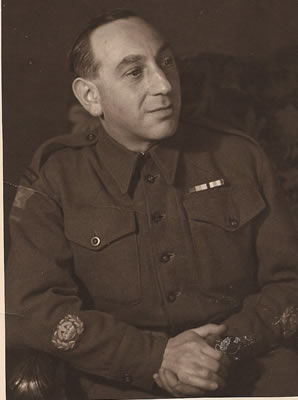
One particular black and white photograph I found in the binder piqued my interest-a man seated, wearing a uniform with a Royal crest on his sleeves. On the back, he wrote,

"Mein Lieber Rozi,

Als Erieuchtung.

Ernst Finch

Eutin, Marz 1946"

I asked Mom who Ernst Finch was, and she replied, "He's the soldier who saved my life." There was an awkward silence for what seemed like minutes but was only seconds.

"Ernst Finch," she said again without even turning the photo over to read the inscription. I asked her what he wrote and the translation was something like, "My dear Rozi, with inspiration, his name and Eutin, the name of the city and the year."

"Please tell me what you remember about him," I asked.

"The Germans put us on a train. I don't know where they took us but it was a relief from the marching we did for days. Above us, I heard the roar of plane engines, I think. Suddenly, a loud noise, lights of many colors flashing. Our train was bombed. My cousins and I ran toward the woods. I felt the warm, sticky feel of blood on my neck when I touched it, but I really don't think I felt anything at that point. I was not in pain. I just wanted to run to safety. I ran as far as we could, until I couldn't run anymore. Weak and barely able to breathe, I fell to the ground. I don't know how long I'd been there, but I saw a tank come to me. I remember thinking, 'they'll kill us for sure'. I must have passed out because the next thing I remember was waking up in a hospital bed. At that point, I don't know how much time had passed. In the corner, sitting in a chair, much like in the picture, I see him. Ernst Finch." She pointed to the photo.

She continued with her story, the details pouring out of her like water.

"He told me the story of how his Company saw me, and my two cousins bleeding in the woods. That day was May 3, 1945. He got us Red Cross and placed us in hospitals. He sent soldiers to stand guard for our safety and a few years later, he arranged for my relatives in New York to meet your Dad and I at Ellis Island, in America."

My head was spinning as I absorbed all this new information. 'I must write her story down,' I promised myself. Living three thousand miles away, I knew this wasn't going to be an easy task. So much dialogue would be by telephone. I didn't want it to sound like an interrogation. I'm confident she had a lot of that all those years ago. In the past, the Spielberg Foundation approached Mom for her testimony. She declined them many times. I'm sure she had been questioned extensively, and would not welcome more no matter how many years passed by.

One thought kept plaguing me. I needed to thank this man, Ernst Finch and his family. Mom told me she didn't remember thanking him after the war ended. He at least deserved that much.

And so, when I got back to the comfort of my home computer, my research began. I posted a note to BAOR-British Army Of The Rhine, and included Finch's photo. I posted the same notes and photos to all the British War Museum links I could find. I posted notes to Holocaust websites, and the DP Camp websites. Months went by and I didn't hear back from anyone. I was getting discouraged.

Finally, that September, I received e-mail from a lady in London, England named Lynne Finch. She told me Ernest Finch was her father. My heart raced when I finally thought all these months of research paid off. The pieces fit until she mailed me copies of photographs. Clearly, he was not the same soldier. My photo revealed a short man, with dark hair and eyes. Her father was tall and blond. Defeated but not down, we bonded a lasting friendship to this day. Lynne Finch is still searching for any information on her dad. I do what I can to help.

After many more months of research and "googling," I found a book written about the slave labor camp Muna Lubberstedt Mom was in after Auschwitz. I contacted the author and he kindly sent me the book no charge. It is entirely written in German. Rudy Kahrs has been invaluable to me with research. He sent me copies of letters and pictures and some interpretation of the book he wrote. My next mission is to find someone to read the book to me or take up the German language.

After a few months, I got a response from BAOR's website administrator whose name is Phil.

Phil wrote me, "The uniform Ernst Finch is wearing in the photo shows he was a Warrant Officer. He's someone very important in his Company. He will do more research and get back to me." I heard nothing for a while after.

A few days later, Alan Yates emails me with more information and book recommendations. Alan confirmed what Phil wrote. Ernest Finch was a Warrant Officer, Second Class in the Royal Regiment of Artillery. I'm elated because things are starting to piece together. Alan's months of hard work eventually led to information that Ernst Finch was once Ernst Fink, who fled Germany to go to England to fight with the Kings Army. Several books on the subject list these men and women as "Enemy Aliens."

Alan has been invaluable to me, and my research. If not for him, I don't know that I would have come this far. We have become very good friends but limited only to computer bytes. One day I would very much like to meet Alan Yates in person. I thank Alan every day for his research and persistence. Without him, I doubt I would have been able to connect the dots.

Through more research, we come to find Ernst Fink was a "Dunera Boy." This was a ship by the same name that sailed from England to Australia early on in the war. Great Britain was not all convinced these 'Enemy Aliens' could be trusted, so they sent thousands there. Later on, Britain sent these men and women back to England. Many were sent back to Germany toward war's end to serve as translators in POW camps.

Ernst Fink went back to England, and then sent to France and Germany to defend Great Britain. There he stayed until 1948, serving his Army as an interpreter in Germany and governed over the Deportation Camp my mother was placed in.

For a while this was as far as Alan and I got with information. I fretted, having come so far. How was I going to find where he went? I desperately wanted to thank him for saving my Mom. I tried "Googling" his name but came up short with every spelling variation. Alan was helping but coming up short too. Information slowed down for both of us.

Finally, through Alan Yates's diligence, we found Queen Mary ship registries showing Ernst Finch left England for the USA in 1948. The ship registry showed Ernst's wife name. I decided to "Google" it, and the first thing that Google brought up was an obituary. Ilsa Finch died in 2007. I got Goosebumps all over my body. I felt I was this close to thanking this family.

The obituary listed the names of two nieces living in San Diego. I used LinkedIn and Facebook to send messages. Two days later, I got a response back from one of the nieces. Her mother was Ilsa's great-niece. She offered me her mother's phone number. Indeed, Ernst Finch was her Great Uncle. He had lived in San Diego till 1972, where he died. We spoke at length and I offered my condolences and thanked her for his great deeds.

To think; Ernst Finch, the Officer who saved my mothers life lived only an hour from me. Imagine, if Ernst Finch lived and I found him after 1989, which was when I moved out here? Mom used to come to California every year and stay for six weeks at a time. Imagine if Ernst Finch and Mom reunited? I wonder to this day if it would have been utterly wonderful, awkward or uneventful given the fact that Mom buried her secrets so deep within her.

My research led me to other places with the help of Alan Yates, but I will save them for another time.

* * * * *

Alan Yates, thank you for all your hard work and kindness, and to Lynne, Phil and Rudy and Ilsa's nieces. You have helped me through the kindness of your hearts, expecting nothing in return, I thank you all~ one day I will pay if forward.

Mom, I love you and I know how difficult this is. Thank you.

The genesis of this story is based on a book I'm writing.

That book's working title is Because of Sergeant Finch.

Fondly,

Es Goodman

~~~~~~~

By Es Goodman from the December 2011 Edition of the Jewish Magazine

*There are many stories like this still out there but they are dwindling as survivors from the Holocaust and WWII are passing away daily.  If you know of someone who has saved their story deep inside talk to them now, listen, write it down.  One of our greatest failings is that we don’t share and pass down our past and that the young people today are no longer interested.  History repeats itself if we do not share it and then learn from it.  Let us all make sure that this never happens again!!

I have stories from the other side of this coin.  My parents and their families were young Germans and Austrians swept up in the times, without many choices.  Es Goodman has offered to help me find some background information and photos that I don’t have.  Share just one more survivor’s, victim’s, or hero's story.  We will all be better for it!  Marion Groetzmeier Algier~

Wednesday, December 7, 2011

Pearl Harbor Day’s Watcher’s Council

Pearl Harbor veteran recalls bewilderment of attack

HONOLULUSeventy years ago this week, Navy veteran Lou Gore was startled by the muffled thuds of explosions and a burst of commotion while cleaning up from breakfast below deck on the USS Phoenix, a cruiser docked at Pearl Harbor.

Hurrying topside, the 18-year-old seaman second-class was confronted by pandemonium he was unable to immediately comprehend -- flames shooting skyward, roiling clouds of dark, acrid smoke, swarms of fighter-bombers buzzing low overhead.

Within moments that Sunday morning, it became clear that the U.S. Pacific fleet was under attack. As reflexes from training took over, Gore and others aboard the Phoenix jumped into action and began firing back with anti-aircraft guns.

"We didn't know (at first) those were Japanese planes," Gore, now 88 and visiting the islands with nine members of his family, recalled in a recent interview. "We didn't know what was happening. I just did my job."

Gore is one of 100 aging Pearl Harbor Survivors who will attend ceremonies on Wednesday on Oahu marking the 70th anniversary of the Japanese air and naval assault that claimed 2,390 American lives and drew the United States into World War Two.

Nearly half of those who perished were sailors aboard the battleship USS Arizona, which Japanese torpedo bombers sank early in the attack, sending 1,177 of its 1,400-member crew to their deaths.

The USS Arizona Memorial, built over the remains of the ship, now forms a centerpiece of the World War Two Valor in the Pacific National Monument, an historic site administered by the National Park Service.

'BODIES EVERYWHERE'

Gore's vessel, the Phoenix, was anchored a short distance from the stretch of harbor known as Battleship Row, where the Arizona was moored when it was hit.

"I'll never forget watching the ... USS Arizona battleship jumping up out of the water, landing and rolling on its side," Gore said. "There were bodies everywhere. Brooms floating in the water, canisters."

Long after the two-hour surprise attack had ended, the base remained on edge, he recounted. "Everyone was keyed up. After the attack, at night, it wasn't safe to be out. People were shooting at shadows."

The Phoenix, among a handful of light cruisers and other vessels that got out of the harbor during or just after the attack, emerged unscathed.

Besides the nearly 2,400 who were killed, the attack left 1,178 people wounded, sank or heavily damaged a dozen U.S. warships and destroyed 323 aircraft, badly crippling the Pacific fleet.

As has been the practice of past anniversary ceremonies, visiting veterans, relatives and dignitaries will bow their heads for a moment of silence at 7:55 a.m. on Wednesday, the time when the attack began, as military jets soar overhead in a "missing-man" formation.

The guided-missile destroyer USS Chung-Hoon will render a salute to the fallen crew of the Arizona, and the morning service will end with a "walk of honor" by more than 100 Pearl Harbor Survivors and other World War Two veterans, many of them in their late 80s. The gathering is expected to include seven of the last known 18 survivors from Arizona's crew.

The turnout by Pearl Harbor veterans on Wednesday is expected to be only about half of what it was last year, when about 200 attended.

Mal Middlesworth, former president of the National Pearl Harbor Survivors Association and current publisher of the Pearl Gram, a quarterly newsletter, estimates there are about 2,700 Pearl Harbor veterans still alive.

For Gore, a resident of Seattle, this week marks his first visit to Hawaii since the 1960s, and his first opportunity to personally show his two sons, his daughter and a granddaughter where he was on the morning of the attack.

Gore went on to serve in Okinawa and New Guinea during World War Two and remained in the Navy for 30 years, including a brief stint in Korea and two tours of duty during the Vietnam War. He retired as a petty officer first-class.

Despite the tributes he is receiving this year as a Pearl Harbor veteran, Gore insists he is no hero.

"I'm grateful to still be alive. So many lost their lives for no reason. ... I wish I had been able to save more" (lives), he said.

(This story corrects Gore's rank in paragraph 2 to seaman second-class.)

How much news did you see on this today?  How many of our kids learn about this school?  How many of us even remembered it was the 70th Anniversary of Pearl Harbor Day??

The Watcher’s Council

Welcome to the Watcher’s Council, a blogging group consisting of some of the most incisive blogs in the ‘sphere and the longest running group of its kind in existence. Every week, the members nominate two posts each, one written by themselves and one written by someone from outside the group for consideration by the whole Council. Then we vote on the best two posts, with the results appearing on Friday.

This week’s contest is dedicated to the fallen… and to the living, who endured, preserved our beloved Republic and provided us with a path and an example for these times.

Council News:

This week, Liberty’s Spirit, 912 Super Seniors, The Independent Sentinel, Arthur Hu and Capitalist Preservation took advantage of my generous offer of link whorage and earned honorable mention status.

You can, too! Want to see your work appear on the Watcher’s Council homepage in our weekly contest listing? Didn’t get nominated by a Council member? No worries.

Simply head over to Joshuapundit and post the title and a link to the piece you want considered along with an e-mail address (which won’t be published) in the comments section no later than Monday 6 PM PST in order to be considered for our honorable mention category, and return the favor by creating a post on your site linking to the Watcher’s Council contest for the week.

It’s a great way of exposing your best work to Watcher’s Council readers and Council members, while grabbing the increased traffic and notoriety. And how good is that, eh?

So, let’s see what we have this week…

Council Submissions

Honorable Mentions

Non-Council Submissions

Friday, August 7, 2009

Veterans Fight to Keep 75-yr. old Mojave Desert Memorial Cross

WE SHOULD DO EVERYTHING WE CAN TO PREVENT THIS MEMORIAL FROM BEING TORN DOWN. MORE ACLU CRAZINESS!!

YouTube - Veterans Fight to Keep 75-yr. old Mojave Desert Memorial cross (www.don...

Quote: Removing This Cross Is Like Spitting In the Face of All Who Serve and Have Served To Keep Us Free!

After WWI many U.S. soldiers moved to the Californian desert to find physical and emotional healing. In 1934, they erected a memorial to honor their fallen comrades, a single white cross, - a symbol used around the world to memorialize those who paid the ultimate sacrifice for their country.

The site for the memorial was chosen because at a certain time of day, the sun casts a shadow on the rock which resembles a WWI doughboy. For more than 75 years, the memorial has stood as a reminder that there were those who fought and died for our freedoms. But sadly today, the ACLU and a federal judge in California, want to tear it down. In fact, the judge has ordered the memorial covered from view while the case is on appeal. Please join us in saying "donttearmedown." Sign our petition of support by adding your name at www.donttearmedown.com. We think Americans should honor their war heroes and the freedoms they so valiantly protect; and we're taking our case all the way to the U.S. Supreme Court this fall. Please join us in this battle, go to www.donttearmedown.com.

Posted: Daily Thought Pad

Related Posts:

Friday, May 29, 2009

Obama's Uncle: He's Using Buchenwald for Political Purpose

Barack Obama's great uncle offered some blunt language as to why his nephew is visiting the memorial at the former Buchenwald concentration camp next week during his trip to Europe and the Middle East.

“This is a trip that he chose, not because of me I'm sure, but for political reasons,” Charles Payne told the German magazine Spiegel. “Perhaps his visit also has something to do with improving his standing with (German Chancellor) Angela Merkel. She gave him a hard time during his campaign and also afterwards.”

Obama will visit Saudi Arabia, make a long-awaited speech to the Muslim world in Cairo, travel to Dresden and the Buchenwald Nazi concentration camp in Germany, and attend D-Day commemorations in France. His uncle said he'd love to tag along if he gets a lift on Air Force One.

Payne, 84, is no stranger to Americans: The Obama campaign used his WWII experiences last year to burnish the candidate’s all-American upbringing. But Obama made a gaffe when he said his great uncle liberated Auschwitz. In fact, Payne was part of the force that liberated Ohrdruf, a subcamp of the Buchenwald concentration camp, in April 1945.

Payne told Spiegel that he was shocked to see his war experience, especially his "liberation" of a concentration camp, used in campaign commercials. He said he had never spoken with his nephew about the matter, nor did Obama ever express any interest in Payne's experience.

“I was quite surprised when the whole thing came up and Barack talked about my war experiences in Nazi Germany,” Payne said. “We had never talked about that before.”

Payne doesn’t know where Obama came up with the fictitious Auschwitz connection.

“He couldn't have gotten it from me since we had never talked about this particular episode in the war,” said Payne. “My sister and her husband were both great storytellers and sometimes made up the details to go along with it.

“They told him about my deployment with the 89th Infantry Division and apparently they mixed up a few details,” Payne said. “Of course it came out immediately that he was wrong since there are enough people in America who know that Auschwitz is in the East and that the camp was liberated by the Red Army.”

After the mistake was made, Obama called Payne to get the correct details.

“He wanted to know where this camp was that I had helped liberate,” Payne said. “I told him that it was Ohrdruf and that it was a subcamp of the Buchenwald concentration camp. I described a little bit of what I had seen.”

Payne stressed that he has no political ax to grind. He is a life-long Democrat, but said he isn’t particularly close to his famous relative.

“Our relationship is warm and friendly, but I'm not part of his inner circle. We always have an interesting chat when we get in the same room together. He doesn't call me up and ask what I have to say about world policy or anything. And I never offer my opinions on any of this.”

In the article, Payne described an incident very similar to what many members of the “Greatest Generation” had experienced. A young man from Kansas, he had little knowledge of the world and few opinions about Germany or foreign policy in general before landing in Europe for the liberation.

“Everybody who was able-bodied was drafted,” Payne recalled. “I went down right at the time I graduated and told the lady that ran the Selective Service office. I said, ‘I'm ready to go,’ and she said: ‘Don't you worry about it, honey. You're on the list.’ Since I had been colorblind since birth, I was first turned down by the Air Force, then by the Navy and the Marines. Only the Army didn't care and put me into the infantry.”

Raised in Kansas, Payne did his basic training at North Camp Hood, Texas.

“What did you think about the Germans at the time?” Spiegel asked him.

“I am unable to tell you what I was thinking then. That was a long time ago, and as I told you, until Barack misspoke, I hadn't thought about any of this for a very, very long time,” Payne said.

“They were the enemy, evil incarnate, and we were the good guys coming to save the world. We were all for the war. We all wanted to be in it. That doesn't mean we enjoyed being in it, though,” he said. He then described his experiences in Europe.

“At first there was no front,” he said. “Because there were no facilities for our ship, we couldn't anchor in the harbor. Le Havre had been summarily bombed. They finally took us off in the middle of the night on landing barges. It was bitter cold and snowing. There was about three or four inches of water sloshing around in the bottom. So we landed at Le Havre in bitter cold with wet feet. Soon afterwards we had a large number of people who suffered from frostbite. The camp doctors were forced to amputate fingers, toes, and feet and send these soldiers back to the United States. For them the war was over.

“Ohrdruf was in that string of towns going across, south of Gotha and Erfurt,” Payne said, describing his arrival near the concentration camp. “Our division was the first one in there. When we arrived there were no German soldiers anywhere around that I knew about. There was no fighting with the Germans, no camp guards. The whole area was overrun by people from the camp dressed in the most pitiful rags, and most of them were in a bad state of starvation. The first thing I saw was a dead body lying square in the middle of the front gate.

“Inside the gate was an area where a bunch of the camp inmates had been machine gunned and were all lying on the ground,” Payne continued. “Each one had their tin cup in their hand or lying next to them.”

The interviewer asked him to describe his feelings when he was "confronted with these images.”

Payne said he doesn’t like to think about it, and hadn’t for a long time until Obama’s gaffe caused all the harsh memories of that time to come back in force.

“You know, I am unable to tell you what I was thinking then,” Payne said. “That was a long time ago, and as I told you, until Barack misspoke, I hadn't thought about any of this for a very, very long time. In fact, I guess I prefer not to think about it. I can assure you I was horrified by the lengths to which men will go to mistreat other men. This was, to me, almost unbelievable. There was more: There were sheds full of dead bodies that had been stripped and thrown in and then stacked up on top of each other. I don't know how many, but many high and the whole length of the room. They sprinkled lime to keep the smell down. That's about the extent that I remember actually seeing.

“I am puzzled by intelligent people who stand by and allow their country to be taken over and run by extreme radical types,” Payne said. “I'm still somewhat puzzled by that. And I am fully aware that it could happen and has almost happened in this country. You know, I lived through the McCarthy era in the 1950s, when it was getting dangerously close to that sort of thing.”

Source:  Newsmax

Comments:  "Hmmm... somebody should tell Mr Payne to look around!"

Posted:  Daily Thought Pad 

Related Articles:

Queen Elizabeth Snubbed! War Declared on France

Queen Elizabeth

By BRUCE CRUMLEY / PARIS - Thursday, May 28, 2009

Queen Elizabeth in May

Phil Noble / REUTERS

France and England have fought each other in the 100 Years' War, the Seven Years' War, the Napoleonic Wars and scads of less memorably named conflicts. And more recently, the French and English have treated the blood-and-tears clashes between their national rugby and soccer teams as fetishes for those battles of yore. The geysers of bile pouring forth from the London tabloids this week suggests a new chapter in Anglo-French enmity may be upon us. Call it the "Great D-Day Hissy Fit." 

The casus belli in the latest cross-Channel spat is the slight dealt by the French government to Queen Elizabeth II in failing to invite her to the June 6 ceremonies marking the 65th anniversary of the 1944 Allied invasion at Normandy. While the Queen has attended — and also skipped — various previous D-Day commemorations, this year's event seems to have been given heightened allure by the planned attendance of U.S. President Barack Obama, who remains the King of Pop on the diplomatic circuit. British tabloids have gone ballistic over what they see as French President Nicolas Sarkozy trying to hog the Obama-radiated limelight.

"A diminutive egomaniac, the stain of Nazi collaboration and why the French can't forgive us for saving them in the War", was Thursday's headline in London's Daily Mail, above an article filled with denunciation of the French and their leaders as cheese-eating surrender monkeys. For good measure, the paper ran a second story titled, "What did YOUR dad do in the war, Sarkozy?" The paper's answer to its own question was to claim Sarkozy's Hungarian-born father celebrated D-Day by fleeing collaborationist Budapest for Nazi-controlled Germany to escape advancing Soviet troops. The same story also alleges that the family of Sarkozy's current wife, industrial scion Carla Bruni Sarkozy, had been pretty chummy with Mussolini.

The D-Day contretemps began on Wednesday, after the British tabloids discovered that their sovereign had been snubbed by the French — and was reportedly not amused. And the vitriol went up a notch on Thursday after French officials didn't bother denying they hadn't invited the Queen.

"The June 6 celebration is foremost a Franco-American celebration," said French government spokesman Luc Chatel, noting the event takes place on U.S. territory in Normandy that houses the American military cemetery at Colleville-sur-Mer — a detail that appears to ignore the tens of thousands of British and Canadian troops that hit the beaches along with U.S. forces. Chatel provided further ammo for tabloid accusations that Sarkozy was looking to steal the show by stressing that the bilateral nature of the event was of particular significance this year, since it will be the first Obama attends as President.

The unapologetic candor from Paris had even the broadsheet Daily Telegraphon Thursday running the "gotcha" headline "France admits not inviting the Queen to 65th D-Day anniversary." France also appeared to try to shift responsibility onto the scandal-plagued British Prime Minister Gordon Brown. An invitation, French spokesmen noted, had been sent to the U.K. and was accepted by the Prime Minister. "The British wanted to be associated with this ceremony, and they are naturally welcome," Chatel said, oozing innocence and virtue. "(But) it is not up to France to designate British representation."

Amid the barrage from the London papers, perplexed French reporters covered the British pique with reports quoting Buckingham Palace officials denying that the Queen had been hacked off by the matter — royally or otherwise. Still, there was some sense of unease in France over the affair. French people young and old still express enduring gratitude for the sacrifices of the Allied forces that drove the Germans out of France — an effort that cost the Allies some 37,000 lives in queen_elizabeth_1943Normandy. That feeling prompted many in France to wince at the British tabloid accusations of wartime fecklessness and current ingratitude. Still, those French who are even aware of the British ranting are weathering it with Gallic shrugs. After all, how much is really new about a spat between the British crown and a diminutive French leader?

And to add additional insult to the matter, Queen Elizabeth is the only reigning Monarch and only living Head of State to have served in WWII.

Posted:  Daily Thought Pad